






Disposable Bamboo Cutlery and Compostable Utensil Sets for Foodservice and Catering Supply

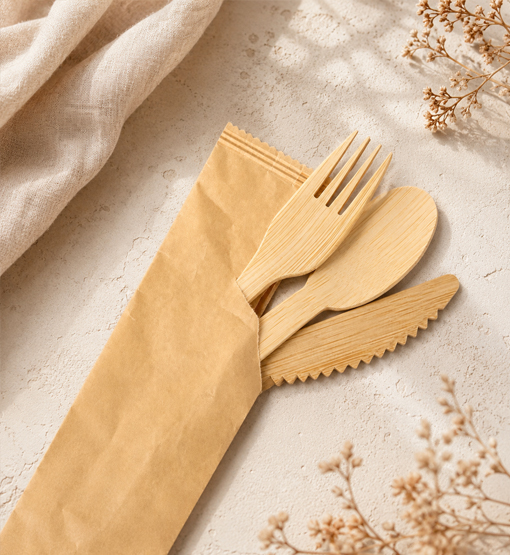
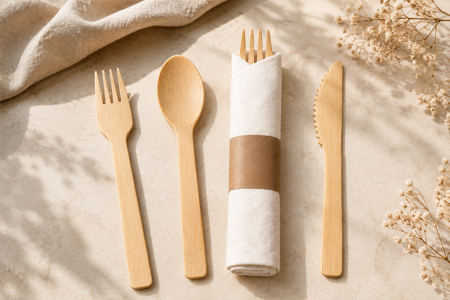
Disposable bamboo cutlery gives foodservice buyers a natural-looking alternative to plastic for takeout, catering, events, supermarkets, restaurant groups, and private label lines. The range includes spoon, fork, knife, straw, chopstick, napkin, and cutlery set options for buyers who need consistent packing, sample support, repeat supply, and clear product documentation.

Bamboo cutlery manufacturer range for OEM and private label orders

Bamboo Cutlery for Foodservice, Catering, and Retail Programs

These items are used when buyers want single-use serviceware with a clean appearance and convenient cleanup. They suit boxed meals, salad bars, hotel banquets, outdoor dining, tasting menus, airline-style meal service, picnic packs, corporate gathering service, and supermarket prepared food counters.

For procurement teams, the main task is matching each utensil to real menu use. Compare length, handle feel, edge finish, mouthfeel, carton packing, and loading strength before confirming a bulk order. Samples should be checked with hot food, cold dishes, sauces, rice, noodles, desserts, and takeaway meals.

Disposable Bamboo Cutlery Product Range: Spoon, Fork, Knife, Straw, and Cutlery Set

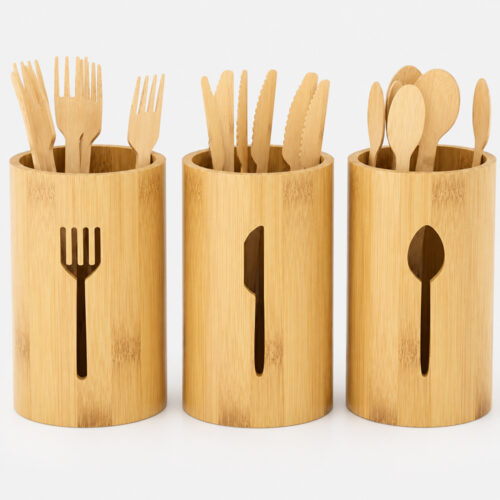
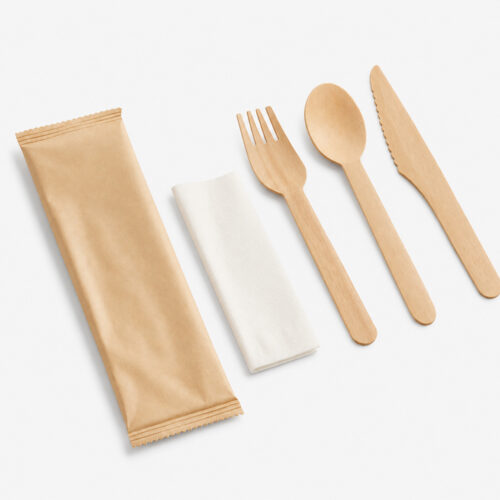
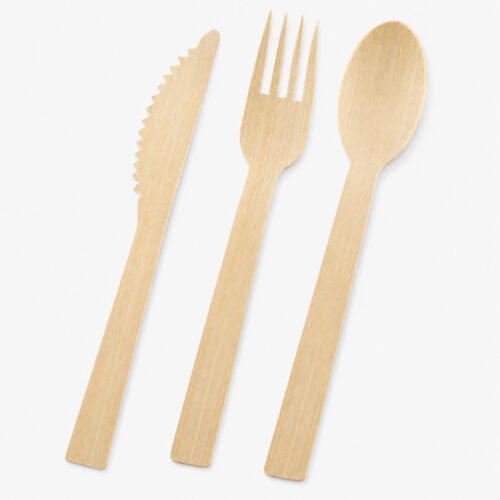
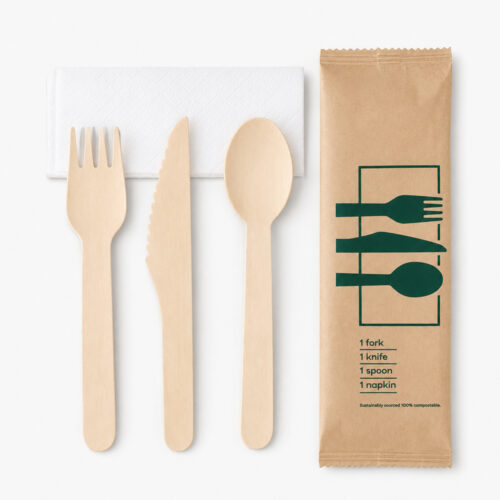
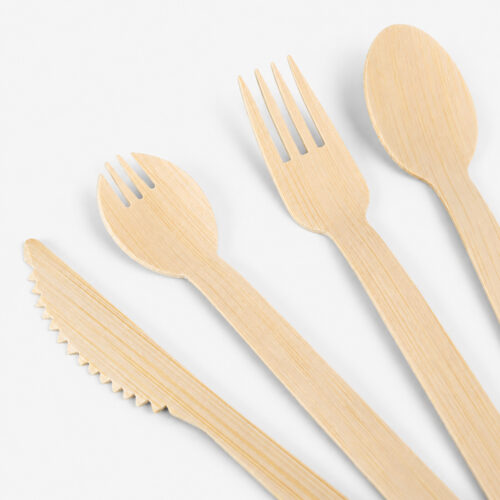
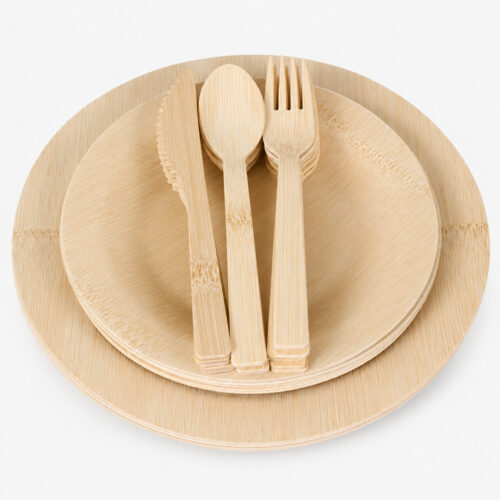
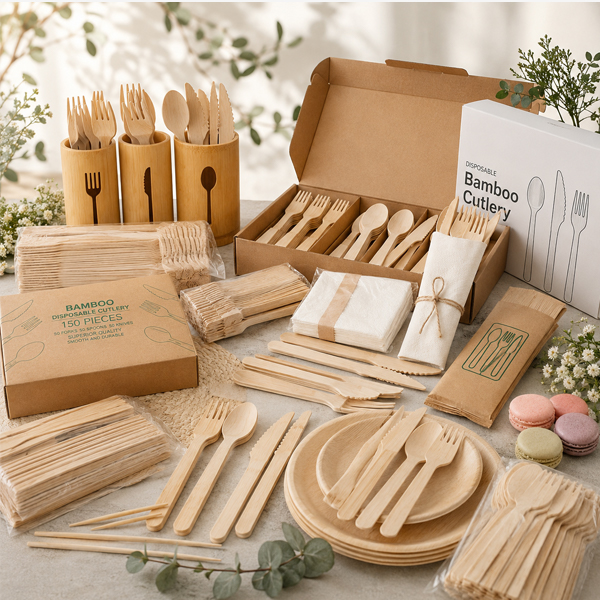
Our range can include bamboo spoon, bamboo forks, bamboo knives, individual pieces, wrapped pieces, mixed packs, and disposable bamboo cutlery set options. Matching straw items and packed meal kits can be supplied for food service programs, retail shelves, event packs, and private label assortments. Buyers may choose standard cartons or customized labeling based on their sales channel.

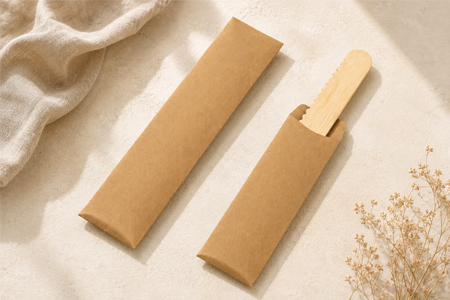
Bamboo cutlery for cafés food trucks and quick-service restaurants
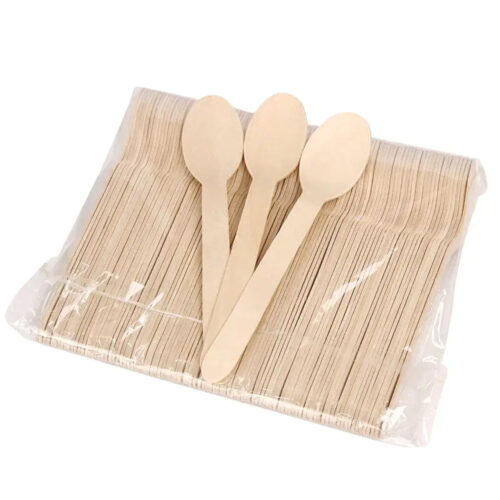
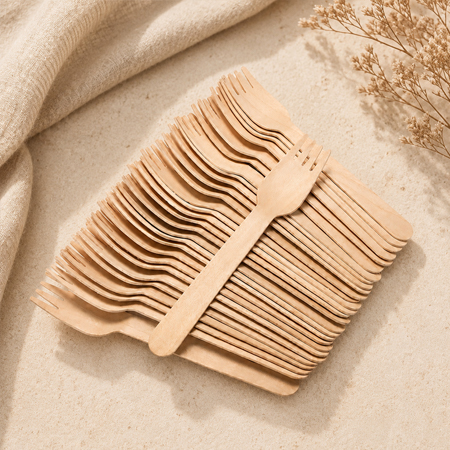
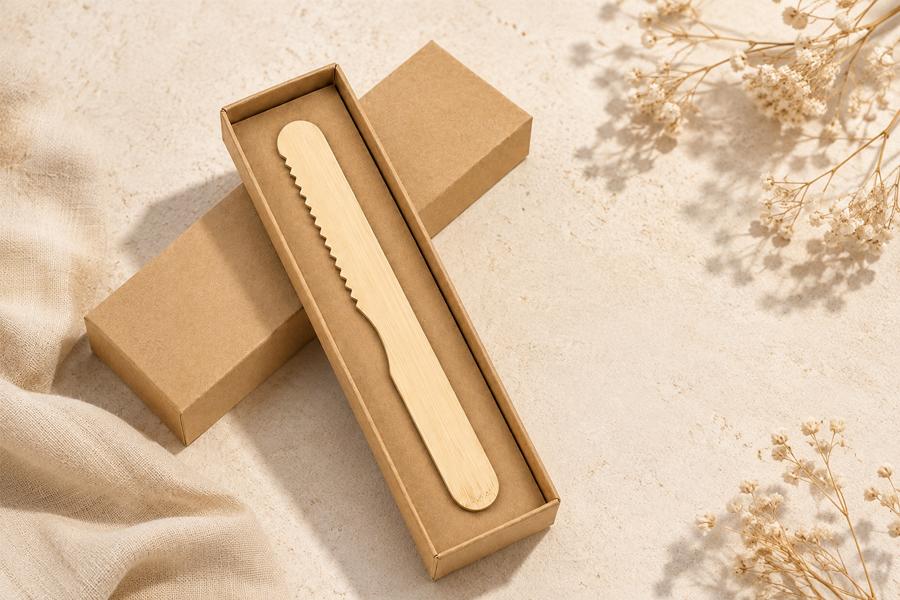
Bulk bamboo cutlery packed for wholesale distribution

Compostable Bamboo Cutlery for Eco-Friendly Tableware Programs

Bamboo items can support sustainable purchasing goals when the product, claim, and disposal route are checked carefully. Buyers should not rely only on a material name. The exact SKU, certificate scope, item number, and accepted end-of-life route should be reviewed before using any compostable or biodegradable wording.

For retail and foodservice distribution, the wording on labels and product pages matters. If a buyer wants to describe a product as an eco-friendly option, the statement should be specific, practical, and supported by documents. This helps avoid vague sustainability claims and makes the page more trustworthy for procurement teams.

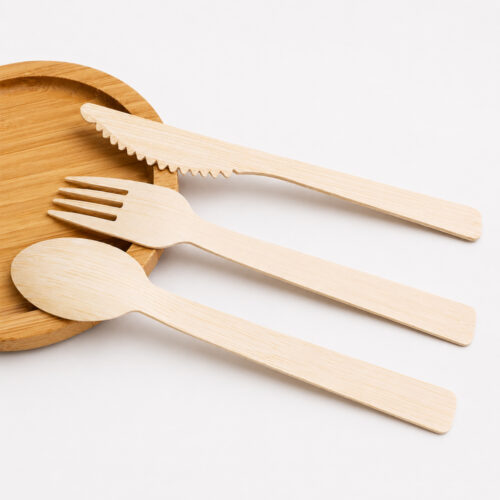
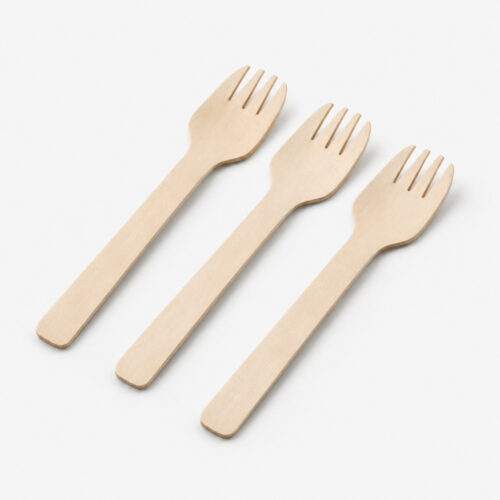
Bamboo Spoon, Bamboo Forks, and Bamboo Knives for Menu Use

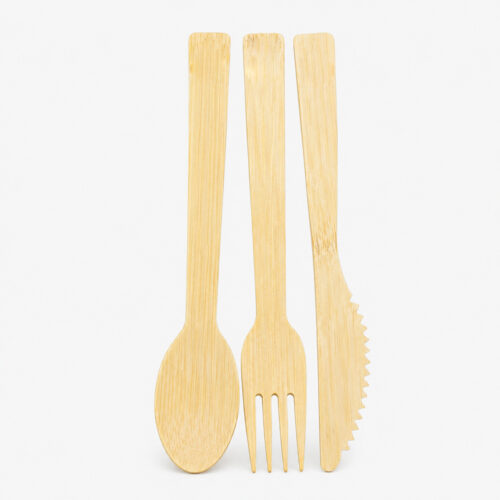
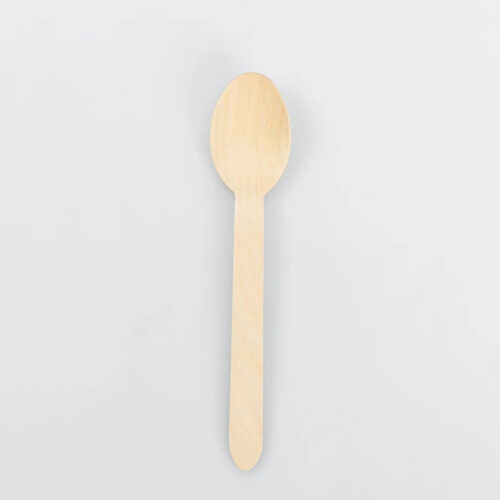
A spoon may need a deeper bowl for soup, dessert, rice, or tasting portions. A fork should hold salad, pasta, fruit, and prepared meals without feeling weak. A knife should be tested with the actual food it will cut, especially for dense meals or chilled items.

Durability depends on thickness, shaping, polishing, moisture exposure, and edge control. A durable product should feel sturdy during normal service, but it still needs real-use testing. Check whether the item bends, splinters, absorbs odor, or feels flimsy during handling.

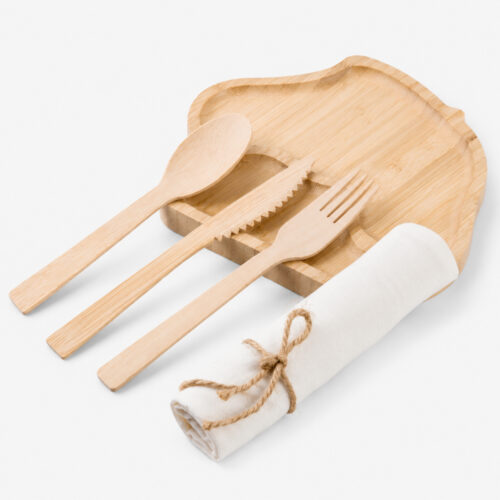
Bamboo cutlery set beside disposable food packaging

Bamboo Utensils vs Plastic Cutlery, Wooden Cutlery, and Wooden Utensils

Plastic cutlery is familiar and low cost, but many buyers are reviewing single-use plastic policies, plastic waste, and customer expectations around more responsible serviceware. Bamboo utensils offer a different material look, a natural texture, and a more stylish presentation for events, cafés, quick-service meals, and supermarket programs.

Wooden cutlery and wooden utensils are also common sustainable alternatives. Bamboo may offer a smooth surface and a clean natural appearance, while wood may have different price levels, supply conditions, and regional buyer preferences. The right choice depends on menu weight, budget, shipment plan, shelf display, and local disposal rules.

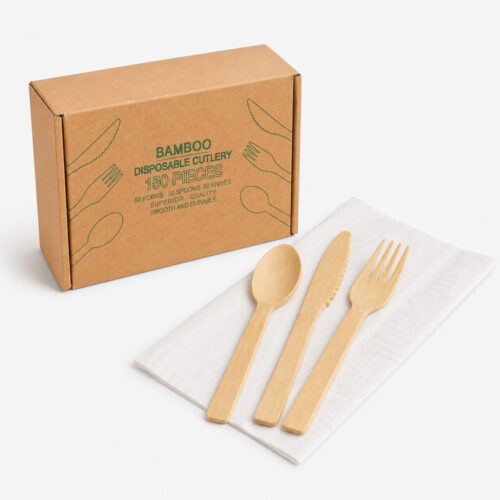
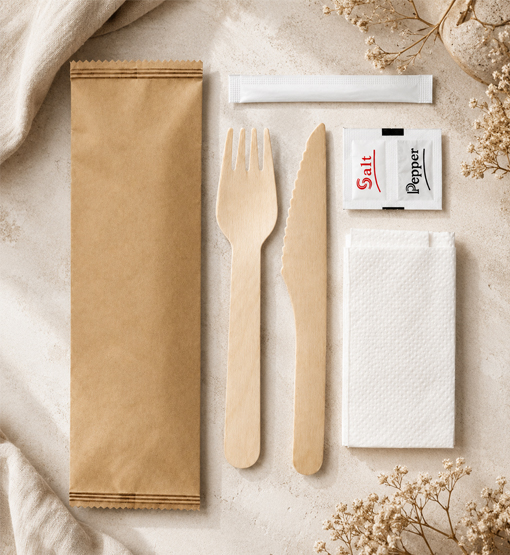
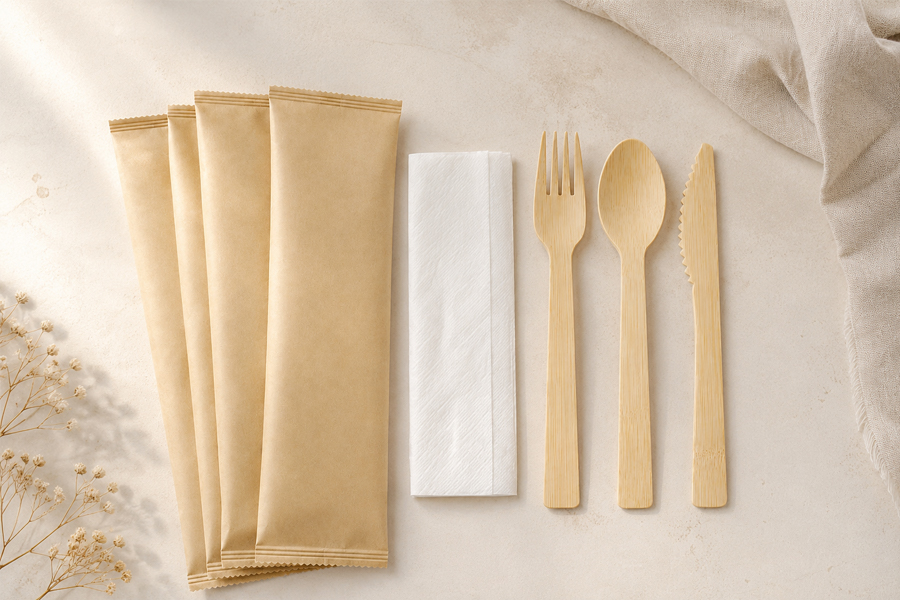
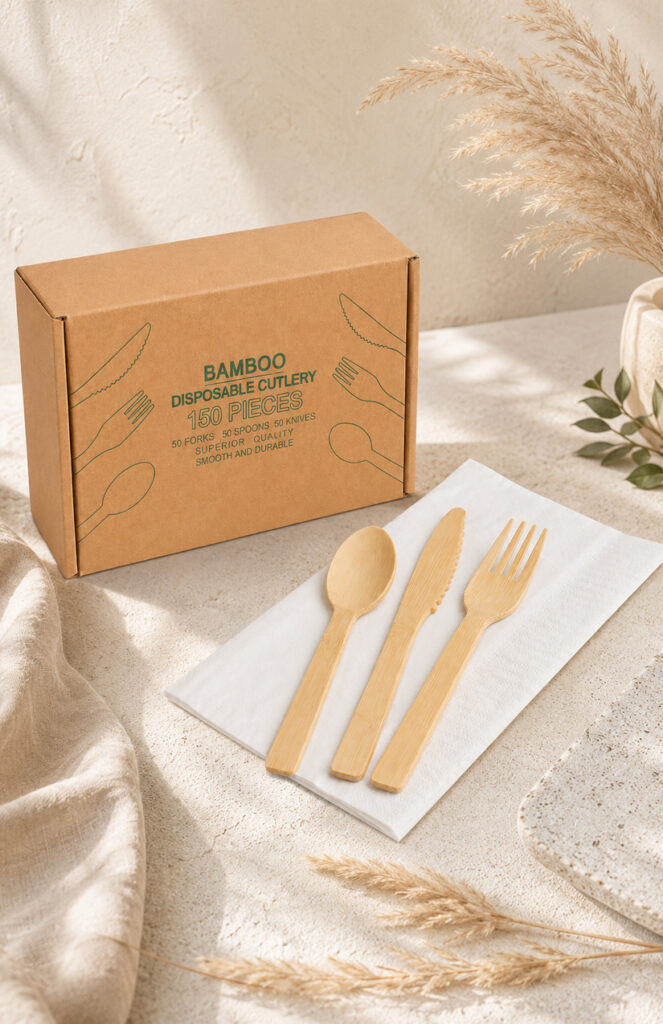
Bamboo cutlery set with spoon fork knife and napkin

Disposable Bamboo Cutlery Set Options for Takeout, Picnic, and Food Service

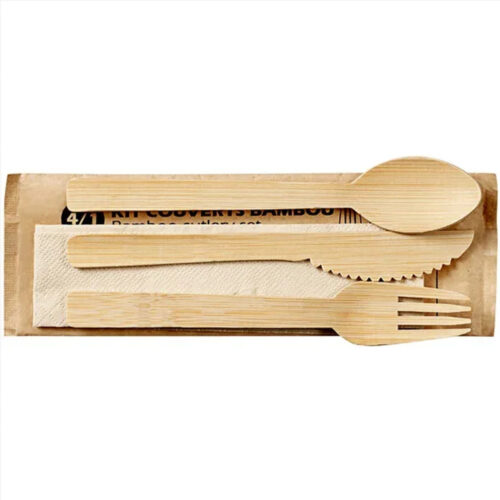
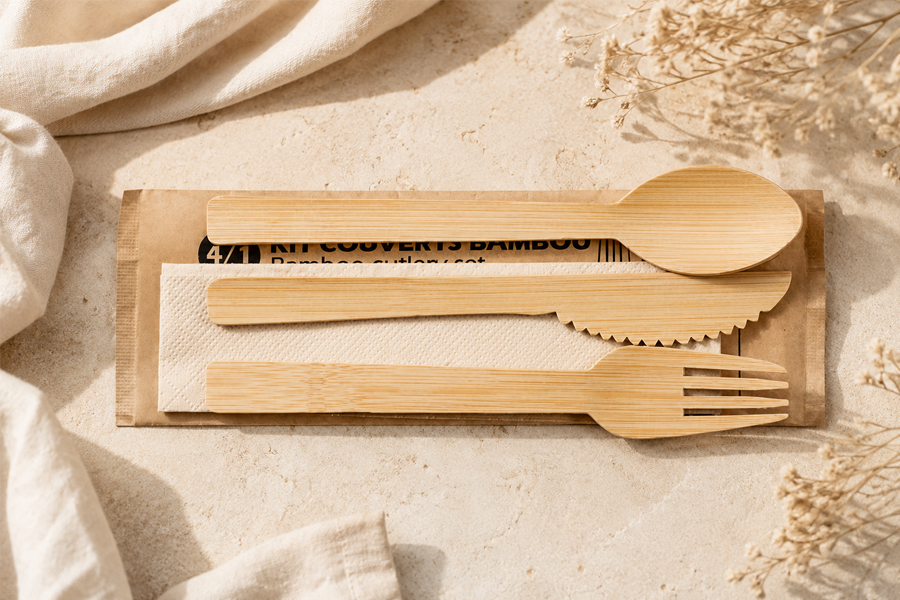
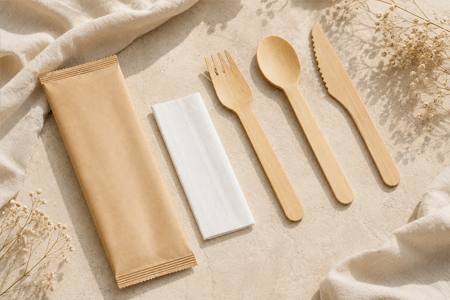
For meal kits, a packed set can reduce picking errors and simplify stock control. A bamboo cutlery set may include selected items for delivery bags, lunch boxes, airline-style trays, or event service. Buyers should confirm unit count, wrapping style, inner bag, hygiene needs, and whether the set fits existing food packaging.

For takeout and picnic service, the product should match the meal type and customer use. A light dessert order may need a small spoon, while a rice bowl, salad, or pasta meal may require stronger pieces. Testing with real food is more useful than judging only from catalog photos.

Wholesale Disposable Bamboo Utensils and OEM Packaging

Wholesale buyers usually care about MOQ, lead time, carton dimensions, pallet loading, mixed SKU options, and reorder stability. As a manufacturer and supply partner, we can help compare standard items with retail packs, wrapped units, and private label assortments.

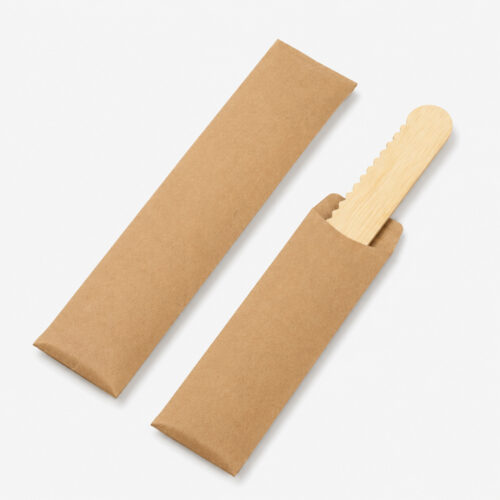
OEM projects may include printed sleeves, barcode labels, carton marks, inner bags, and kit combinations. Before artwork starts, confirm dimensions, material description, label language, certification marks, and whether outer packaging should be recyclable for distribution or retail display.

Compostable bamboo cutlery set for certified foodservice programs
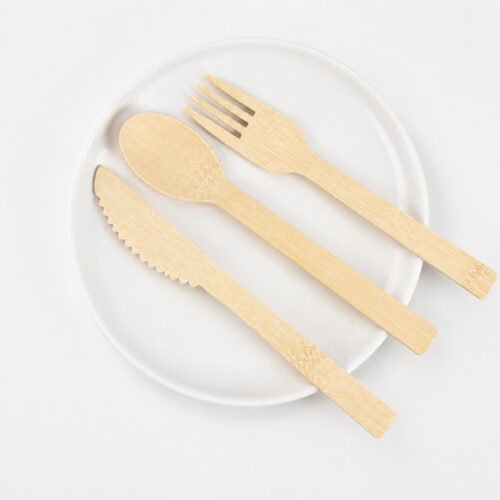
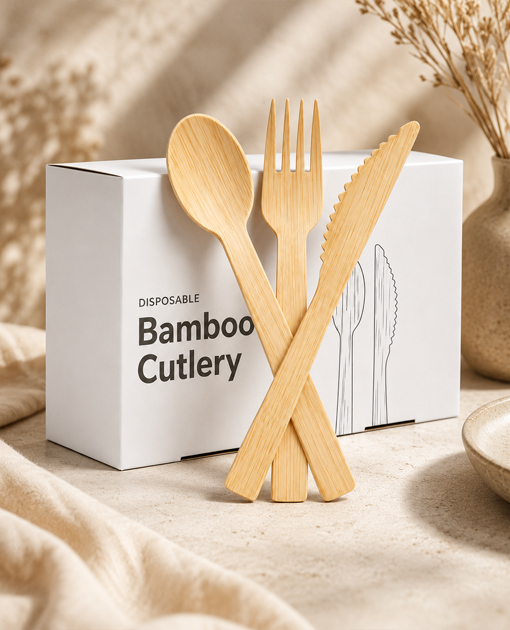
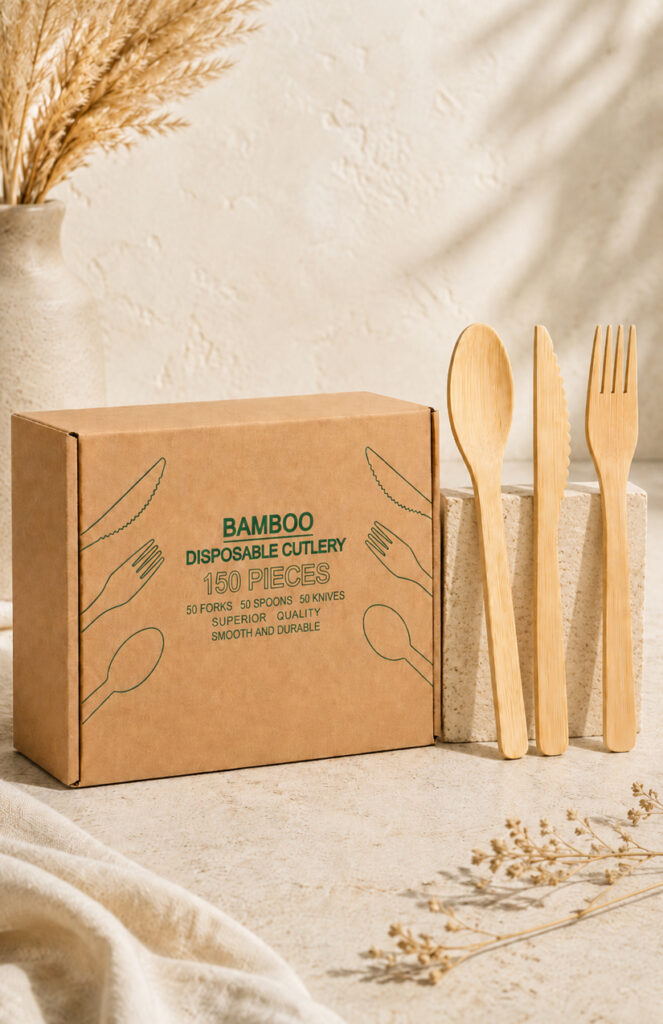
Bamboo spoon fork and knife set for takeaway meals

Eco-Friendly Bamboo Cutlery for Sustainability Programs

Eco-friendly bamboo cutlery can be a practical choice for buyers who want a more natural service item. It can support sustainability programs when claims are accurate, documents are checked, and customers receive clear disposal guidance.

Bamboo renewability is useful, but lifecycle results depend on farming, processing, shipping distance, use time, and end-of-life route. A responsible sourcing program should consider environmental impact, local waste rules, and actual use conditions instead of relying only on broad eco language.

Environmental Impact, Aesthetics, and Practicality for Bamboo Cutlery Buyers

For restaurants, caterers, and supermarkets, the product decision is not only about material. Buyers also compare aesthetics, practicality, cost, customer expectations, dining experience, and pollution concerns. A natural-looking item can create a more elegant presentation for eco-conscious buyers, but it still needs stable quality, consistent packing, and clear disposal guidance.

For many buyers, bamboo cutlery is an eco-friendly choice when the product matches the menu, the claim is supported by documents, and the local disposal route is clear. The final sourcing decision should still be based on real use, compliance documents, customer expectations, and whether the product supports an environmentally friendly procurement program without overstating its benefits.

Eco-friendly bamboo cutlery for restaurant meal service

Biodegradable Disposable Utensils, USDA Biobased, and Disposal Claims

Biodegradable disposable claims should be used carefully. Ask the supplier to certify the exact item, not only the raw material category. Buyers should also confirm whether the product is intended for a commercial composting facility, home compost conditions, or another accepted route.

If an item is described as fully compostable, request test reports, certificate scope, item number, and allowed wording for the target market. For U.S. programs, buyers may also ask whether USDA biobased information is available for the exact SKU. Do not print claim wording until the documents match the exact product being ordered.

Natural bamboo tableware for events and corporate catering

Renewability and Greener Material Selection for Bamboo Utensils

Bamboo is often selected because it is a renewable resource, but renewability alone does not answer every procurement question. Buyers should also review quality stability, shipment distance, production control, packing waste, and local disposal access.

A greener sourcing decision is usually based on multiple factors. Menu performance, customer acceptance, compliance documents, product consistency, and repeat supply all matter. This is why samples, specifications, and supplier communication are important before large-volume orders.

Quality Control for Bamboo Disposable Cutlery Orders

Orders should be reviewed before loading. Inspection points can include length, thickness, surface finish, color range, packing count, carton strength, moisture condition, and broken-piece rate. Buyers can also compare mass production samples with approved pre-production samples.

For chain restaurants, supermarkets, and distributors, consistency is often more important than one attractive sample. Clear specifications help the factory control size, finishing, wrapping, and carton marks across repeat orders. This is especially important for seasonal programs and private label launches.

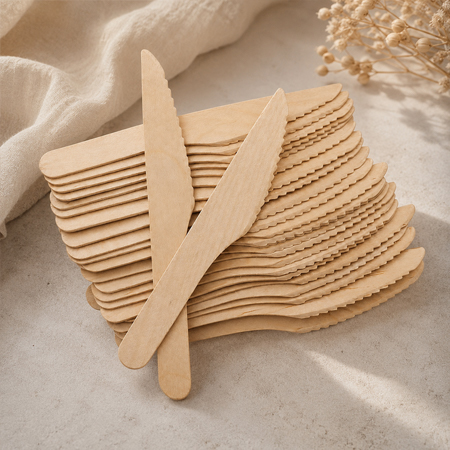
Bamboo knives for disposable foodservice table settings
Bamboo cutlery manufacturer range for OEM and private label orders

Frequently Asked Questions About Bamboo Disposable Cutlery

Some products may be fully compostable when the exact SKU has suitable documentation and local acceptance. Buyers should request certificate scope, item numbers, and disposal guidance before using compostable utensils claims on labels or product pages.

Yes. Buyers can request straw, chopstick, napkin, and mixed kit formats depending on the meal type and sales channel. Confirm MOQ, unit count, packing method, and artwork requirements before production.

Yes, it can. If any coating is requested, confirm how it affects food contact use, heat exposure, compostable claims, and recyclable statements. Do not use broad claims until the documents support the exact product.

They can be used as an alternative to plastic in many foodservice programs. The final decision depends on cost, strength, customer expectations, local rules, and available disposal routes.

Buyers should ask for food contact documents, material information, and supplier sourcing details. Avoid unsupported claims about harmful chemicals, antibacterial performance, or deforestation unless they are backed by reliable documentation.

End-of-life results depend on local waste systems, collection access, composting conditions, and landfill management. Lifecycle claims should be specific and supported by data instead of broad environmental wording.

Buyer Summary and Next Step

These products are a practical option for buyers who need natural-looking items for restaurants, supermarkets, events, distributors, and private label programs. They work best when the selected item matches the menu, packing method, compliance needs, and customer expectations.

Request samples, confirm specifications, review certification documents for the exact SKU, and confirm carton packing before production. Contact us to discuss bamboo serviceware, OEM packs, or private label product ranges for your next foodservice program.

Call To Action