Planen Sie ein Verpackungsprogramm? Sprechen Sie mit Unser Führungsteam
Teilen Sie uns Ihre Produktanforderungen, die gewünschte Menge und den Zielmarkt mit. Wir prüfen Ihre Anforderungen und helfen Ihnen dabei, geeignete Optionen, die Mindestbestellmenge, Anpassungsmöglichkeiten und die nächsten Schritte zu ermitteln.
Besprechen Sie Ihr Verpackungsprogramm mit unserem Managementteam
Unser Führungsteam
Sie sind sich nicht sicher, welches Material, welche Größe oder welches Produktformat für Ihre Anwendung geeignet ist? Teilen Sie uns bitte den Verwendungszweck Ihres Produkts, die voraussichtliche Menge, den Zielmarkt sowie Ihre Anforderungen hinsichtlich Branding und Dokumentation mit. Unser Team wird Ihnen geeignete Optionen vorschlagen und Sie bei der Klärung von Mindestbestellmengen, Mustern, Lieferzeiten, Verpackung und verfügbaren Konformitätsdokumenten unterstützen.
Hilfe bei Ihrer Anfrage
Produkt- und Materialabstimmung
Jährliche Mengen- und Kapazitätsplanung
Entwicklung eines Eigenmarken-Portfolios
Qualitäts-, Compliance- und Liefermanagement
Benötigen Sie ein schnelles Angebot? Sprechen Sie mit Unser Vertriebsteam
Teilen Sie uns Ihre Produktanforderungen, die gewünschte Menge und den Zielmarkt mit. Wir helfen Ihnen dabei, geeignete Optionen, die Mindestbestellmenge, die Preise und die nächsten Schritte zu klären.
Benötigen Sie ein schnelles Angebot oder Hilfe bei der Auswahl des richtigen Produkts?
Unser Produkt- und Export-Support-Team
Teilen Sie uns Ihren Produkttyp, die Abmessungen, die voraussichtliche Menge, den Zielmarkt und Ihre Anforderungen an die individuelle Anpassung mit. Unser Vertriebsteam hilft Ihnen dabei, geeignete Optionen zu finden, und klärt Fragen zu Preisen, Mindestbestellmengen, Mustern, Lieferzeiten, Verpackung und verfügbaren Konformitätsunterlagen.
Hilfe bei Ihrer Anfrage
Produkt- und Materialabstimmung
Mindestbestellmenge, Muster und Lieferzeit
OEM-Druck- und Verpackungsoptionen
Unterlagen für Zielmärkte
Planen Sie ein Verpackungsprogramm? Sprechen Sie mit Unser Führungsteam
Teilen Sie uns Ihre Produktanforderungen, die gewünschte Menge und den Zielmarkt mit. Wir prüfen Ihre Anforderungen und helfen Ihnen dabei, geeignete Optionen, die Mindestbestellmenge, Anpassungsmöglichkeiten und die nächsten Schritte zu ermitteln.
Besprechen Sie Ihr Verpackungsprogramm mit unserem Managementteam
Unser Führungsteam
Sie sind sich nicht sicher, welches Material, welche Größe oder welches Produktformat für Ihre Anwendung geeignet ist? Teilen Sie uns bitte den Verwendungszweck Ihres Produkts, die voraussichtliche Menge, den Zielmarkt sowie Ihre Anforderungen hinsichtlich Branding und Dokumentation mit. Unser Team wird Ihnen geeignete Optionen vorschlagen und Sie bei der Klärung von Mindestbestellmengen, Mustern, Lieferzeiten, Verpackung und verfügbaren Konformitätsdokumenten unterstützen.
Leitfaden zu Materialien, Beschichtungen und Lebensmittelsicherheit bei Bagasse-Tellern
Niemand verbrennt sich an dem Foto auf dem Teller
Die Probe sah in Ordnung aus.
So fängt es meistens an: ein beiger Teller aus Zuckerrohr, fühlt sich trocken an, hat einen sauberen Rand, riecht nicht auffällig, hinterlässt keinen Faserstaub an den Fingern. Die Einkaufsabteilung ist mit dem Stückpreis zufrieden. Der Vertrieb schätzt das ökologische Konzept. Der Lieferant schickt ein paar Zertifikate in einer ZIP-Datei, und alle sind ein wenig beruhigt.
Dann stellt die Qualitätssicherung die kleine Frage.
“Aus welchem Material besteht die Beschichtung?”
Stille.
Hier ist die bittere Wahrheit: Die meisten Probleme mit Bagasseplatten haben ihren Ursprung nicht in der Zuckerrohrfaser. Sie beginnen mit der Diskrepanz zwischen einer schönen “pflanzlichen” Angabe und den tatsächlichen Daten zur Lebensmittelechtheit, die dahinterstehen – Zusatzstoffe, Nassfestigkeitsmittel, Ölbeständigkeit, PFAS-Nachweise, Migrationsbedingungen, Verwendungszweck und die Frage, ob der Bericht tatsächlich mit der ausgelieferten Artikelnummer übereinstimmt.
Ich habe erlebt, dass Einkäufer ein Zertifikat zur Kompostierbarkeit so behandeln, als würde es die Sicherheit im Lebensmittelkontakt gewährleisten. Das tut es jedoch nicht. Ich habe gesehen, wie in einer Verkaufspräsentation der Vermerk “FDA-konform” verwendet wurde, ohne dass Angaben zu den Verwendungsbedingungen, zur Migrationslogik, zur Beschichtung oder eine werksspezifische Erklärung enthalten waren. Das ist keine Konformität. Das ist reine Augenwischerei.
Und ja, ich drücke mich absichtlich so unverblümt aus.
Bagasse-Teller sind Erzeugnisse aus Fasern – kein Feenstaub
Nimmt man einen Bagasse-Teller in die Hand, wirkt er fast schon zu ehrlich: beigefarbene Fasern, trockene Oberfläche, vielleicht eine leichte Rauheit am Rand, wenn die Form nicht gut poliert wurde. Der größte Teil stammt zwar tatsächlich aus Zuckerrohr-Bagasse – dem faserigen Brei, der nach der Saftgewinnung übrig bleibt –, doch das ist nur der Hauptbestandteil, nicht die gesamte Zusammensetzung.
Da ist der Zellstoff. Und dann gibt es noch alles, was nötig ist, damit sich der Zellstoff wie eine Verpackung verhält.
Im tatsächlichen Fabrikbetrieb benötigt die Platte möglicherweise Chemikalien zur Nassfestigkeit, Öl- und Wasserbeständigkeit, Formhilfsmittel, Farbkontrolle und manchmal eine Barriereschicht, über die niemand sprechen möchte, bis die Qualitätssicherung nach den Grenzwerten der Rezeptur fragt. An dieser Stelle geht es weniger um “Pflanzenfasern” und mehr um “Zeig mir die Prüfdatei”.”
Ich habe mir solche Anbieterseiten angesehen Ressource zu Standards und Konformität für kompostierbares Geschirr aus Bagasse. Die Reihe von Zertifizierungen nach EN 13432, OK Compost, FDA, LFGB, BPI und der Angabe „PFAS-frei“ wirkt auf den ersten Blick beruhigend. Aber eine Ansammlung von Logos ist kein Materialdossier. Es ist eine Verkaufspräsentation mit schickeren Schuhen.
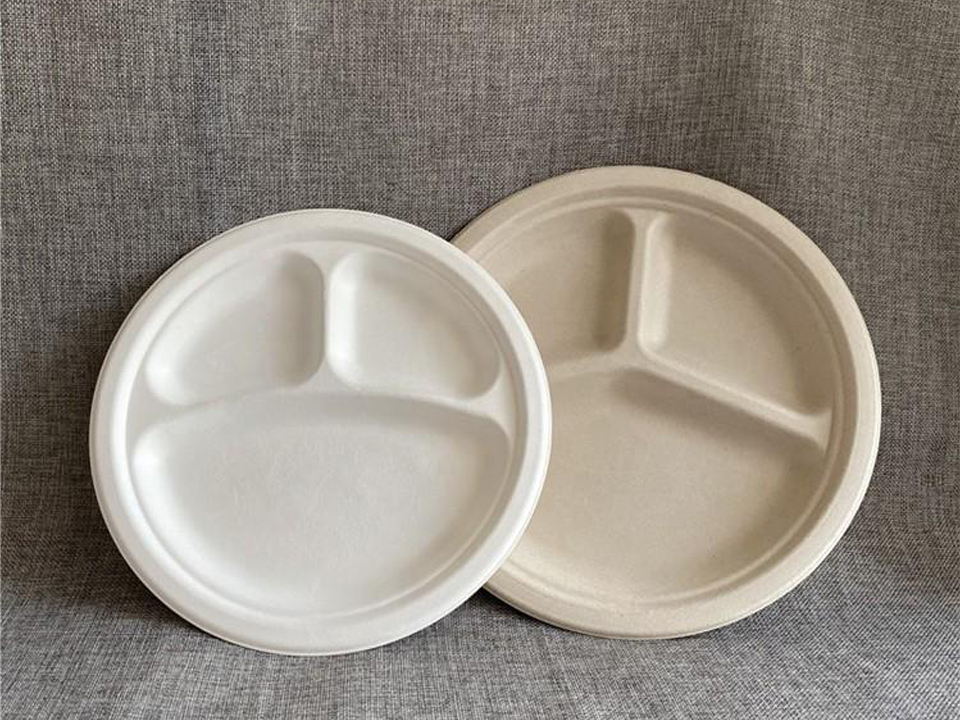
Ein einfaches Runder Teller aus Bagasse für Catering und Gastronomie hat ein bestimmtes Risikoprofil. Ein Mehrkammer-Speiseteller, der für Reis, Curry, frittierte Speisen, Soßen, Eingelegtes und heiße Speisen zum Mitnehmen verwendet wird, weist ein anderes auf. Wenn Importeure beide als “gleiche Bagasse, gleiche Sicherheit” behandeln, geraten sie in Schwierigkeiten.
Zur gleichen Faserbene.
Ein anderes Risiko.
Die Frage nach der Beschichtung kommt zu spät. Viel zu spät.
Die meisten Beschichtungen oder Behandlungen für Bagasse-Teller gibt es aus einem ganz praktischen Grund: Formfaser neigt dazu, Wasser und Öl aufzunehmen. Das wollen Restaurants nicht. Genauso wenig wie die Händler, die Anrufe wegen Undichtigkeiten, Verformungen, Ölflecken, weichen Böden oder Tellern erhalten, die mitten im Mittagsservice zusammenbrechen.
Deshalb entwickeln die Hersteller Lösungen, die diese Schwachstelle umgehen.
Manchmal handelt es sich um eine interne Dimensionierung. Manchmal handelt es sich um eine oberflächenaufgebrachte Behandlung. Manchmal ist es eine biologisch abbaubare Polymerschicht. Manchmal ist es eine mineralstoffreiche Barrieretechnologie. Manchmal spricht der Lieferant von “natürlicher ölabweisender Technologie”, was fast alles bedeuten kann, bis jemand das Sicherheitsdatenblatt, den Migrationsbericht, die Formulierungsgrenzen und die Erklärung zur bestimmungsgemäßen Verwendung anfordert.
Dieser Satz stört mich.
“Wasserfest.” “Ölbeständig.” “Lebensmittelecht.”
Das sind keine Antworten. Das ist Messesprache.
Das Rahmenwerk der FDA für Materialien mit Lebensmittelkontakt ist anwendungsspezifisch. Im Rahmen ihres „Food Contact Notification“-Programms (FCN) wird geprüft, ob ein Stoff für einen bestimmten Verwendungszweck sicher ist, und die Behörde weist darauf hin, dass FCNs speziell auf das Unternehmen, das die Meldung einreicht, und den angegebenen Verwendungszweck des Stoffes zugeschnitten sind. Siehe die Erläuterung der FDA zu wie es Stoffe regelt, die mit Lebensmitteln in Berührung kommen.
Also nein, man kann sich nicht einfach so die „Trostdecke“ eines anderen Anbieters ausleihen.
Die FDA Verzeichnis der gültigen Meldungen zu Stoffen, die mit Lebensmitteln in Berührung kommen Enthält Angaben zum Lebensmittelkontaktstoff, zum Anmelder, zum Hersteller, zum Verwendungszweck, zu Einschränkungen, zu Spezifikationen, zum Datum des Inkrafttretens und zur Umweltentscheidung. Diese Angaben sind wichtig. Der Hersteller ist wichtig. Der Verwendungszweck ist wichtig. Die Verwendungsbeschränkungen sind wichtig.
Nicht die richtige Stimmung.
Eine praktische Risikokarte für Beschichtungen
Besonderheit der Platte
Warum das Risiko durch Beschichtungen und Additive steigt
Was die Qualitätssicherung anfordern sollte
Teller mit trockenen Snacks
Wenig Öl, wenig Feuchtigkeit, kurze Kontaktzeit
Erklärung zur Lebensmittelechtheit, Schwermetalle, Migration von Grundstoffen oder Konformitätserklärung des Lieferanten
Salat-/Soßenteller
Säure, Wasser, Dressing, längere Einwirkzeit
Gesamtmigration, gegebenenfalls spezifische Migration, Öl-/Wasserbeständigkeitstest, Bedingungen der bestimmungsgemäßen Verwendung
Teller mit frittierten Speisen
Heißes Öl, Fett, erhöhte Temperaturen
Migrationstest unter den ungünstigsten zu erwartenden Zeit-Temperatur-Bedingungen, PFAS/TOF-Bericht, Nachweis der Fettbeständigkeit
Teller mit drei Fächern
Mehrere Lebensmittelarten, die mit einem Produkt in Berührung kommen
Eignung für Lebensmittel, Kompartimentintegrität, Nassfestigkeitsprüfung, Lieferantenerklärung nach Artikelnummer
Hinweis zur Verwendung in der Mikrowelle
Die Beschleunigung durch Hitze verändert das Migrationsrisiko
Nachweis der Migration bei der Verwendung in der Mikrowelle, Angabe der maximalen Zeit und Temperatur, Überprüfung des Wortlauts der Kennzeichnung
Verwendung als Soßenbecher oder zum Auflegen auf den Deckel
Vollständige Materialdeklaration, Migrationsprüfung, Prüfung der Kompatibilität von Verschluss und Deckel
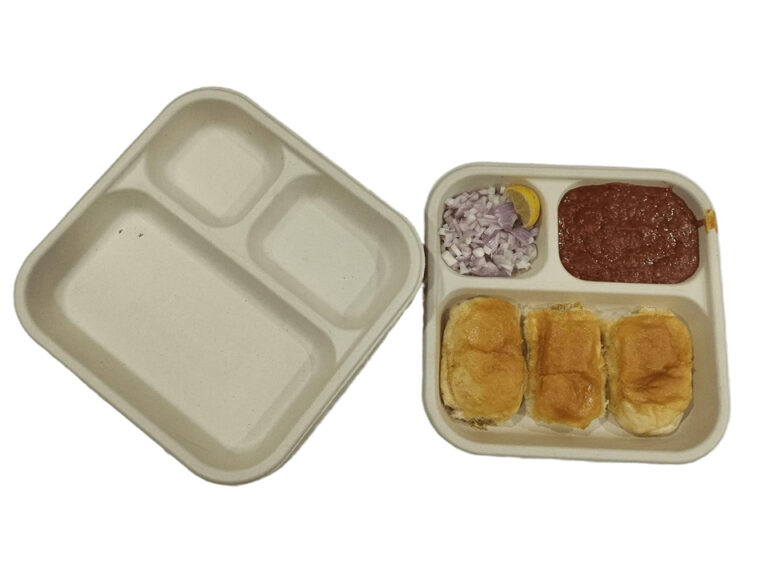
Ein Soßenbecher kann Ihr gesamtes “System für sichere Mahlzeiten” schneller ruinieren als der Teller. Geringes Volumen. Hoher Kontaktanteil. Feuchte Lebensmittel. Saure Würzmittel. Kontaktfläche mit dem Deckel. Deshalb würde ich Folgendes dokumentieren: Bagasse-Soßenbecher mit Deckel für Gewürze zum Mitnehmen getrennt, auch wenn der Lieferant darauf besteht, dass es sich um “dasselbe Material” handelt.”
Vielleicht ist es das.
Vielleicht ist es das ja nicht.
„PFAS-frei“ ist kein Luxusversprechen mehr
Jetzt werde ich vielleicht etwas hart klingen: PFAS-freies Geschirr aus Bagasse sollte im Jahr 2026 nicht als Premium-Wundermittel verkauft werden. Es sollte vielmehr die Grundvoraussetzung sein.
Ich habe bereits solche Erklärartikel zum Thema PFAS-freie Bagasse gelesen Leitfaden für PFAS-freies Geschirr aus Bagasse, und die besseren davon machen eines deutlich: Die Branche hat nicht nach PFAS-Alternativen gesucht, weil die Käufer plötzlich eine Vorliebe für Chemie entwickelt hätten. Es geschah, weil die Fettbeständigkeit ein schmutziges Geheimnis barg und die Regulierungsbehörden endlich aufgehört haben, so zu tun, als würden sie es nicht sehen.
Die Fallstudie „Greener Solutions“ der UC Berkeley brachte das Problem auf den Punkt: PFAS-Verbindungen wurden häufig zur Verbesserung der Öl- und Wasserbeständigkeit von Lebensmittelverpackungen, darunter auch Formfaserprodukte, eingesetzt, und es wurde nach sichereren Alternativen gesucht, da die bisherigen chemischen Verfahren ein ernstes Abfall- und Expositionsproblem verursachten. Die vollständige Fallstudie ist hier lesenswert: Fallstudie zu Lebensmittelverpackungen von Greener Solutions.
Das ist der Kompromiss.
Leistung versus Chemie.
Die FDA stellte ihre Aktualisierung vom 28. Februar 2024 nicht als niedlichen Meilenstein in Sachen Nachhaltigkeit dar. Sie teilte mit, dass PFAS-haltige fettabweisende Substanzen von Herstellern auf dem US-Markt nicht mehr für den Kontakt mit Lebensmitteln verkauft würden, und die Behörde brachte diese Substanzen mit Lebensmittelverpackungen aus Papier und Pappe in Verbindung – Fast-Food-Verpackungen, Mikrowellen-Popcorn-Beutel, Take-away-Behälter und die üblichen fettabweisenden Verdächtigen. Lesen Sie die Mitteilung der FDA hier: Die FDA gibt bekannt, dass PFAS, die in Fettschutzmitteln für Lebensmittelverpackungen verwendet werden, nicht mehr auf dem US-Markt verkauft werden dürfen.
Das ist keine unbedeutende Randbemerkung.
Dies verändert die Art und Weise, wie Einkäufer jede Angabe zur “Ölbeständigkeit” im Datenblatt einer Bagasseplatte interpretieren sollten.
Wenn mir also ein Lieferant sagt, sein Produkt sei “PFAS-frei”, juble ich nicht gerade.
Ich bitte um den Test.
Die BPI-Vorschrift zu fluorierten Chemikalien trat am 1. Januar 2020 in Kraft. Produkte dürfen nur dann als BPI-zertifiziert ausgewiesen werden, wenn sie die Bedingungen der Richtlinie erfüllen, darunter der Verzicht auf absichtlich zugesetzte fluorierte Chemikalien und ein Laborbericht, der einen Gesamtgehalt an organischem Fluor von weniger als 100 ppm nachweist. BPI erläutert die Richtlinie hier: BPI-Richtlinie zu fluorierten Chemikalien.
Keine Meldung? Kein Anspruch.
Das ist meine Voreingenommenheit, und ich entschuldige mich nicht dafür.
Bei den Migrationstests wird das Verkaufsargument auf den Prüfstand gestellt
Bei Migrationstests wird das vielversprechende Angebot des Lieferanten ins Labor gebracht und muss dort konkrete Fragen beantworten: Was kann aus dieser Platte austreten, in welche Art von Lebensmitteln, bei welcher Temperatur und wie lange?
Das klingt etwas trocken.
Das ist es nicht.
Bei Bagasse-Tellern ist dies der entscheidende Unterschied zwischen einer brauchbaren, für den Kontakt mit Lebensmitteln geeigneten Datei und einer rein dekorativen PDF-Datei, da sich Beschichtungen, Nassfestigkeitsmittel, Farbstoffe und Öl-Wasser-Barrierebehandlungen nicht alle gleich verhalten, sobald heißes Öl, saure Soßen, Dampf oder lange Warmhaltezeiten ins Spiel kommen.
Dass ein Gericht den Test mit Trockennahrung bei Zimmertemperatur besteht, sagt mir nicht viel darüber aus, wie sich ein heißes Curry verhält, das 45 Minuten lang auf einem Take-away-Teller steht.
Nicht “FDA-konform”. Nicht “lebensmitteltauglich”. Nicht “wir verkaufen nach Amerika”.”
Wenn Ihr Kunde den Teller für heiße, fettige Speisen verwendet, müssen die Laborbedingungen für heiße, fettige Speisen geeignet sein. Wenn das Produkt für das Aufwärmen in der Mikrowelle vermarktet wird, muss die Dokumentation diese Angabe untermauern. Wenn der Teller nur für Backwaren bei Zimmertemperatur geeignet ist, weisen Sie darauf hin, bevor der Kunde des Käufers dies erst während des Mittagsansturms feststellt.
Unordentlich? Ja.
Doch die Einhaltung der Vorschriften zum Kontakt mit Lebensmitteln ist meist ein unkontrolliertes Durcheinander.
Der Dokumentenstapel, dem ich tatsächlich vertrauen würde
Ein zuverlässiges Dokument zur Lebensmittelsicherheit von Bagasse-Tellern sollte auf Artikelnummernebene und nicht auf Kategorieebene erstellt werden. Ein allgemeines “Zertifikat für Bagasse-Geschirr” mag dem Vertriebsteam zwar helfen, für die Freigabe durch die Qualitätssicherung ist jedoch eine genauere Rückverfolgbarkeit erforderlich.
Für eine Bagasse-Teller mit 3 Fächern für die Gastronomie, würde ich die konkrete Produktfamilie, die Zeichnung, die Maße, die Zusammensetzungsgrenzen, die Beschreibung der Beschichtung, den Wortlaut zum Verwendungszweck und die Migrationsbedingungen benötigen. Vor allem, wenn der Käufer fettige Speisen serviert.
Eine Fächerplatte ist nicht einfach nur eine Platte mit Trennwänden. Sie besteht aus drei Kontaktzonen, drei Möglichkeiten für das Auslaufen von Soße und drei Möglichkeiten für ein Versagen der Nassfestigkeit.
Ein kleines Detail.
Hohes Schadenrisiko.
Mindestanforderungen an die Unterlagen
Dokument
Warum das wichtig ist
Warnsignal
Konformitätserklärung des Lieferanten
Definiert das Material, die Eignung für den Kontakt mit Lebensmitteln und den Verwendungszweck
Keine Artikelnummer, kein Herstellername, kein Datum
Gesamtbericht zur Migration
Überprüft die Summe der übertragbaren Stoffe unter ausgewählten Bedingungen
Testbedingungen schwächer als im tatsächlichen Einsatz
Spezifische Migrations- und chemische Prüfungen
Bezieht sich gegebenenfalls auf regulierte oder verdächtige Stoffe
“Nicht zutreffend” ohne Erklärung
Bericht zu PFAS / Gesamtgehalt an organischem Fluor
Unterstützt die Angabe „PFAS-frei“ oder „ohne absichtlich zugesetzte PFAS“
Nur eine mündliche Behauptung oder ein veralteter Bericht
Bericht über Schwermetalle
Erfüllt die Anforderungen an Sicherheit und Verpackungsrecht
Der Bericht bezieht sich ausschließlich auf den Rohstoff, nicht auf die fertige Platte.
Zertifikat zur Kompostierbarkeit
Unterstützt die Behauptung bezüglich des Verfallsdatums, nicht jedoch die Lebensmittelsicherheit an sich
Wird als Ersatz für Migrationstests verwendet
Unterstützung durch die FDA im Bereich Lebensmittelkontakt
Zeigt den Zulassungsweg oder die Logik für zugelassene Stoffe an
Allgemeine Formulierung “Von der FDA zugelassenes Material”
Es sind keine Höchsttemperatur und keine maximale Zeit angegeben
Welches wird am häufigsten übersprungen?
Erklärung zum Verwendungszweck.
Weil es zur Rechenschaftspflicht zwingt.
Ein Lieferant kann sich hinter der Aussage “Prüfung bestanden” verstecken, bis man nachfragt: Bestanden für welches Lebensmittel, bei welcher Temperatur, zu welcher Uhrzeit, mit welcher Beschichtungsvariante, an welchem Produktionsstandort?
Dann wird es im Raum stiller.
Kalifornien zeigt Käufern, wie die Zukunft aussieht
Das Rahmenwerk des kalifornischen Gesetzesentwurfs SB 1335 betrachtet Verpackungen nicht als bloßes „nettes“ Nachhaltigkeits-Accessoire. Es bündelt Materialart, Grenzwerte für chemische Stoffe, Kennzeichnung, Sammlung und die Annahme durch Entsorgungsanlagen zu einem einzigen Beschaffungsfilter.
CalRecycle fragt nicht nur, ob ein Teller kompostierbar klingt. Die staatlichen Kriterien für Verpackungen im Gastronomiebereich prüfen, ob das Produkt in die tatsächlichen Sammel- und Verarbeitungssysteme passt. Für kompostierbare Produkte liegt die Schwelle für die Sammlung und Annahme bei 50% der entsprechenden Programme für organische Abfälle und Kompostieranlagen; ab dem 1. Januar 2026 steigt dieser Wert auf 75%. Formfaser aus Zuckerrohr/Bagasse wird als kompostierbarer Werkstofftyp aufgeführt, sofern sie kunststofffrei ist. Die Kriterien von CalRecycle finden Sie hier: Gesetz über nachhaltige Verpackungen für den Bundesstaat Kalifornien von 2018.
Das ist der Teil, den viele Verkäufer überspringen.
Eine Angabe zur Kompostierbarkeit, die schon in der Mülltonne ins Leere läuft, ist immer noch ein Problem.
CalRecycle gibt außerdem an, dass Verpackungen für Lebensmittel nicht mehr als 100 ppm Gesamtfluor enthalten dürfen, wobei dieser Wert als Indikator für absichtlich zugesetzte PFAS dient. Blei, Quecksilber, Cadmium und sechswertiges Chrom dürfen zusammen einen Gewichtsanteil von 100 ppm nicht überschreiten. Auf derselben Seite von CalRecycle werden diese chemischen Grenzwerte hier erläutert: Kriterien für Verpackungen im Gastronomiebereich in Kalifornien.
Chemie und Infrastruktur werden mittlerweile in einem Atemzug genannt.
Das wurde auch Zeit.
Auch Europa macht keine Zugeständnisse
Die EU hat gleichzeitig sowohl im Bereich Abfall als auch im Bereich Chemikalien die Schraube angezogen.
Reuters bezifferte das Verpackungsproblem in Europa konkret: Der Verpackungsabfall in der EU war im Laufe des letzten Jahrzehnts um mehr als 20% gestiegen, wobei die Europäer pro Person und Jahr fast 190 kg Verpackungsabfall verursachten. Die Vereinbarung von 2024 legte zudem Reduktionsziele fest – 5% bis 2030 und 15% bis 2040 – und beinhaltete ein Verbot von PFAS in Verpackungen mit Lebensmittelkontakt. Lesen Sie den Reuters-Bericht hier: EU einigt sich vorläufig auf Gesetz zur Reduzierung von Verpackungsabfällen.
Also nein, Europa verlangt von den Lieferanten nicht nur, umweltfreundlichere Formulierungen zu verwenden.
Dabei werden die Chemikalienakte, die Abfallakte und die Schadensfallakte gleichzeitig aktualisiert.
Am 20. Januar 2025 berichtete Reuters dann, dass die Europäische Kommission beabsichtige, ein PFAS-Verbot für Verbraucherprodukte vorzuschlagen, dabei jedoch Ausnahmen für unverzichtbare industrielle Anwendungen in Betracht ziehe. Den Bericht finden Sie hier: EU plant Verbot von „Forever Chemicals“ in Konsumgütern.
Wenn Ihr Lieferant sich in Bezug auf die Chemie der Ölbeständigkeit immer noch vage ausdrückt, warten Sie nicht darauf, dass der Kunde das Problem entdeckt.
Jetzt finden.
Denn die Geduld des Marktes gegenüber der Aussage “Vertraut uns, es ist umweltfreundlich” schwindet zusehends.
Fünf Fragen, die ich stellen würde, bevor ich einen Teller in meine Lieferkette aufnehme
1. Woraus bestehen die Bagasseplatten genau?
Erkundigen Sie sich nach der Faserstruktur, dem Bleichstatus, den Zusatzstoffen, den Bindemitteln, dem Barrieresystem und danach, ob Polymere, Mineralien, silikonähnliche Behandlungen oder andere oberflächenchemische Verfahren zum Einsatz kommen. “Zuckerrohrbagasse” ist das Ausgangsmaterial, nicht die vollständige Zusammensetzung.
2. Wie sehen die tatsächlichen Einsatzbedingungen aus?
Warme Speisen? Kalte Speisen? Fettige Speisen? Saure Speisen? Aufwärmen in der Mikrowelle? Lagerung im Gefrierschrank? Einwirkzeit? Maximale Temperatur? Geben Sie sich nicht mit dem Begriff “normaler Lebensmittelgebrauch” zufrieden. Dieser Ausdruck hat bei der Prüfung von Angaben keinerlei Aussagekraft.
3. Wird die Behauptung, das Produkt sei PFAS-frei, durch Beweise gestützt?
Glauben Sie nicht einfach der Angabe “PFAS-frei”, nur weil sie in einem Katalog abgedruckt ist. Verlangen Sie eine Prüfung des Gesamtgehalts an organischem Fluor, eine Erklärung, dass keine PFAS absichtlich zugesetzt wurden, eine Überprüfung der Sicherheitsdatenblätter der Inhaltsstoffe sowie Berichte, die sich auf das aktuelle Beschichtungssystem beziehen – und keine alten Prüfberichte eines früheren Lieferanten, einer früheren Rezeptur oder eines früheren Produktionsjahres.
Die Hersteller ändern die Beschichtungen still und leise.
Genau da tappen Käufer in die Falle.
4. Stimmt der Migrationstest mit dem Menü des Kunden überein?
Der Verkauf von Trockenbackwaren und der Verkauf von warmem Curry zum Mitnehmen stellen nicht dasselbe Expositionsszenario dar. In den Leitlinien der FDA wird eindeutig festgelegt, dass die Migrationsprüfungen die strengsten Zeit- und Temperaturbedingungen widerspiegeln sollten, die für die vorgesehene Verwendung zu erwarten sind.
Ein Dokument kann zwar ordentlich aussehen, aber dennoch Schwächen aufweisen.
5. Bezieht sich das Dokument auf die SKU-Ebene?
Ein runder Teller, ein tiefer Teller, ein unterteiltes Essens Tablett und ein winziger Soßenbecher können alle aus derselben Formfaser-Produktlinie stammen – aus derselben Zellstoffanlage, derselben allgemeinen Materialgruppe, vielleicht sogar nach derselben Vorlage für die Lieferantenerklärung. Doch sobald Lebensmittel darauf kommen, verhalten sie sich unterschiedlich.
Die Kontaktfläche ändert sich. Die Wandstärke ändert sich. Die Ölmenge ändert sich. Die Soße verteilt sich an verschiedenen Stellen.
Gleiche Fabrik, anderes Risiko.
Deshalb mag ich Antworten wie “Ein Zertifikat deckt alles ab” nicht. Sie klingen zwar effizient, sind aber meistens einfach nur vage.
Häufig gestellte Fragen
Woraus bestehen Bagasse-Teller?
Bagasse-Teller werden aus Zuckerrohr-Bagasse hergestellt, den faserigen Reststoffen, die nach dem Auspressen des Saftes übrig bleiben. So weit, so einfach. Was dabei oft übersehen wird, ist alles, was nach dem Formpressen geschieht – Formdruck, Trocknungstemperatur, Oberflächenbeschaffenheit, Nassfestigkeit, Fettbeständigkeit und manchmal eine Barrierebehandlung, die das Verhalten des Tellers im Kontakt mit echten Lebensmitteln verändert.
Das ist die hilfreiche Antwort.
Die Ballaststoffe verleihen dem Teller zwar seine Konsistenz. Aber erst der Herstellungsprozess entscheidet darüber, ob diese Konsistenz auch unter Soße, Dampf, Öl, Dressing oder bei einem Essen zum Mitnehmen, das länger als geplant in der Lieferverpackung bleibt, stabil bleibt.
Ich würde mich also nicht mit der Angabe “aus Zuckerrohr hergestellt” zufrieden geben. Ich würde nachfragen, was hinzugefügt wurde, wie das Produkt behandelt wurde und welche Bedingungen für den Kontakt mit Lebensmitteln der Lieferant tatsächlich geprüft hat.
Sind Bagasse-Teller lebensmittelecht?
Bagasse-Teller sind nur dann für den Kontakt mit Lebensmitteln geeignet, wenn für das Endprodukt – und nicht nur für die Rohfaser – entsprechende Konformitätsnachweise, Grenzwerte für den Verwendungszweck sowie Migrationsprüfungen unter den tatsächlichen Lebensmittel- und Temperaturbedingungen vorliegen. Kompostierbar bedeutet nicht automatisch, dass das Produkt für den Kontakt mit Lebensmitteln geeignet ist, und die Bezeichnung “pflanzbasiert” ersetzt keinen Migrationsbericht.
Ein Käufer sollte die Konformitätserklärung, die Prüfbedingungen, die Angaben zur Beschichtung und das Datum des Berichts prüfen, bevor er sich auf Sicherheitsangaben verlässt. Entscheidend ist das Endprodukt, nicht die Marketingkategorie.
Müssen Bagasse-Teller beschichtet werden?
Nicht immer. Ein trockenes Gebäckstück, ein Sandwich oder ein Backwarenprodukt mit kurzem Kontakt belastet die Formfaser nicht besonders stark. Doch sobald Fett, scharfe Soße, Curryöl, Salatdressing, Essig, Barbecue-Soße, Dampf oder das Aufwärmen in der Mikrowelle ins Spiel kommen, sieht die Sache schon anders aus.
Schnell.
Dieses makellose Katalogfoto verrät Ihnen nicht, ob der Teller den Mittagsservice überstehen wird. Die Beschichtungsunterlagen könnten Aufschluss geben.
Bei einfachen Trockenlebensmitteln wäre ich weniger besorgt. Bei Brathähnchen, Curry, Grillgerichten, fettigen Nudeln oder anderen aufgewärmten Speisen würde ich mir vor der Freigabe der Artikelnummer die Erläuterung zur Barrierewirkung, das Ergebnis zur Fettbeständigkeit, die Migrationsbedingungen sowie Nachweise zu PFAS oder zum Gesamtgehalt an organischem Fluor ansehen wollen.
Welche Unterlagen sollten Importeure für Bagasse-Platten anfordern?
Importeure sollten eine Konformitätserklärung auf SKU-Ebene, einen Gesamtmigrationsbericht, relevante spezifische Migrationsdaten, einen PFAS- oder Gesamt-organisches-Fluor-Bericht, einen Schwermetallbericht, eine Erklärung zum Verwendungszweck sowie Nachweise zur Lebensmitteltauglichkeit für Beschichtungen und Zusatzstoffe anfordern. In den Unterlagen sollten der Lieferant, das Werk, die Produktfamilie, die Prüfbedingungen, das Datum des Berichts und die geprüfte Materialversion angegeben sein.
Wenn der Lieferant für jeden Teller, jede Schüssel, jedes Tablett und jeden Soßenbecher im Katalog ein allgemeines Zertifikat vorlegt, ist das ein Warnsignal. Seriöse Einkäufer benötigen Rückverfolgbarkeit nach Produktfamilie und tatsächlichen Einsatzbedingungen.
Sind PFAS-freie Bagasse-Teller immer kompostierbar?
Nein. „PFAS-frei“ und „kompostierbar“ sind zwei unterschiedliche Angaben, auch wenn Anbieter diese Begriffe gerne miteinander vermischen. „PFAS-frei“ bezieht sich auf die chemische Zusammensetzung. „Kompostierbar“ besagt, ob sich das Endprodukt gemäß einer bestimmten Norm zersetzen lässt und – was ebenso wichtig ist – ob es vom örtlichen Kompostierungssystem angenommen wird.
Anderer Ordner.
Ein anderer Beweis.
Ein Teller kann PFAS-frei sein und dennoch die Anforderungen an die Kompostierbarkeit nicht erfüllen – sei es aufgrund einer Beschichtung, einer Kunststoffschicht, Druckfarbe, eines Klebstoffs oder aufgrund von Problemen bei der Annahme durch die Kompostieranlage. Auch das Gegenteil kann der Fall sein: Ein Teller verfügt zwar über die erforderlichen Nachweise zur Kompostierbarkeit, benötigt jedoch noch separate Nachweise zur Migration bei Lebensmittelkontakt, bevor er in die Liste der zugelassenen Verpackungen eines Käufers aufgenommen werden kann.
Deshalb mag ich gemischte Angaben nicht. Die PFAS-Nachweise sollten in einer Akte, die Unterlagen zur Kompostierbarkeit in einer anderen und die Berichte zur Lebensmittelsicherheit in einer dritten abgelegt werden.
Können Bagasse-Teller für heiße und fettige Speisen verwendet werden?
Manchmal schon – aber nur, wenn die jeweilige Schale speziell für diesen Zweck hergestellt und getestet wurde. Heiße, fettige Speisen sind kein allgemeiner Anwendungsfall. Sie stellen gleichzeitig hohe Anforderungen an die Faserstruktur, die Barrierebeschichtung, die Nassfestigkeit, die Randform, die Bodensteifigkeit und die Migrationswerte.
Öl findet immer einen Weg.
Daher reicht mir die Angabe “für heiße Speisen geeignet” nicht aus. Ich würde mir wünschen, dass der Lieferant die Höchsttemperatur, die Einwirkzeit, die Art der Lebensmittel, den Kontakt mit Fett, die Einschränkungen bei der Mikrowellennutzung sowie die getestete SKU-Version angibt. Fehlen diese Angaben, mag die Aussage in einem Katalog zwar gut klingen, bei einer Konformitätsprüfung ist sie jedoch nicht stichhaltig.
Für ernsthafte Einkäufer aus der Gastronomie sind hier die Unterlagen wichtiger als die Probe.
Ihre nächsten Schritte
Fang nicht mit dem Material an.
Fangen wir mit dem Essen an.
Ein Teller für Trockenbackwaren erfüllt eine bestimmte Aufgabe. Ein Teller für kalte Salate erfüllt eine andere. Frittierte Speisen, Curry, Gerichte mit Soße, Catering-Buffets, warme Speisen zum Mitnehmen und das Aufwärmen in der Mikrowelle erzeugen jeweils unterschiedliche Belastungen. Wenn ein Anbieter diese Verwendungszwecke im Grunde als gleichwertig behandelt, sollten Sie aufmerksam werden. Damit hat er Ihnen bereits etwas signalisiert.
Sobald der Anwendungsfall klar ist, prüfen Sie, ob die Plattenstruktur, das Beschichtungssystem, der Migrationsbericht, die PFAS-Nachweise und die Lieferantenerklärung tatsächlich mit diesem Anwendungsfall übereinstimmen.
Wenn die Dateien übereinstimmen, reden Sie weiter.
Wenn der Lieferant ein schönes Zertifikatspaket schickt, aber keine Angaben auf SKU-Ebene liefert, sollten Sie die Bestellung verzögern.