Planning a Packaging Program? Talk to Our Management Team
Share your product needs, quantity and destination market. We’ll review your requirements and help confirm suitable options, MOQ, customization and next steps.
Discuss Your Packaging Program with Our Management Team
Our Leadership Team
Not sure which material, size or product format fits your application? Share your product use, estimated quantity, destination market, branding and documentation requirements. Our team will recommend suitable options and help confirm MOQ, samples, lead time, packing and available compliance documents.
Support for Your Enquiry
Product and material matching
Annual volume and capacity planning
Private-label portfolio development
Quality, compliance and delivery governance
Need a Quick Quote? Talk to Our Sales Team
Share your product needs, quantity and destination market. We’ll help confirm suitable options, MOQ, pricing and next steps.
Need a Quick Quote or Help Matching the Right Product?
Our Product & Export Support Team
Share your product type, dimensions, estimated quantity, destination market and customization requirements. Our sales team will help identify suitable options and confirm pricing, MOQ, samples, lead time, packing and available compliance documents.
Support for Your Enquiry
Product and material matching
MOQ, samples and lead time
OEM printing and packing options
Documentation for destination markets
Planning a Packaging Program? Talk to Our Management Team
Share your product needs, quantity and destination market. We’ll review your requirements and help confirm suitable options, MOQ, customization and next steps.
Discuss Your Packaging Program with Our Management Team
Our Leadership Team
Not sure which material, size or product format fits your application? Share your product use, estimated quantity, destination market, branding and documentation requirements. Our team will recommend suitable options and help confirm MOQ, samples, lead time, packing and available compliance documents.
US and EU PFAS Rules for Compostable Food Packaging Buyers Guide
A buyer once forwarded me a “PFAS-free” declaration for a molded fiber tray.
One page.
That was it.
No batch number, no lab name worth trusting, no total organic fluorine result, no test date that matched the shipment, no coating explanation, no food-contact condition, and—this is the part that made me stop scrolling—no proof that the report even belonged to the tray they were trying to sell into hot meal service. Rice. Sauce. Oil. Steam. Delivery heat. A closed lid. Forty-five minutes in a bag.
Would you sign off on that?
I wouldn’t. Not for California. Not for Washington. Not for Minnesota. And absolutely not for the EU after 12 August 2026.
Here’s the ugly truth: a lot of “PFAS-free compostable packaging” claims in the market are not exactly fake. They’re just thin. Thin enough for a catalog. Too thin for a buyer file.
And that’s where people get burned.
The New Buyer Problem: Green Packaging Now Has a Chemistry File
Compostable sounds safe.
It isn’t.
At least, not by itself. A molded fiber bowl can look natural, feel dry, stack neatly, carry a nice “plant-based” story, and still trigger PFAS questions if the oil barrier was built with the wrong chemistry. I know buyers don’t like hearing that. Suppliers like it even less.
The federal U.S. direction is obvious. The messy part is the state-by-state layer sitting underneath it. California, Washington, Minnesota, Maine, New York, Colorado, Connecticut, Rhode Island, Maryland—different definitions, different dates, different paperwork habits. Welcome to the procurement mud.
One shipment. Five risk profiles.
That’s why I frankly believe buyers should stop asking, “Is this PFAS-free?” and start asking, “Can this SKU survive our strictest destination market?”
Why EU PPWR Is the Wake-Up Call
But Europe is the sharper knife.
The EU Packaging and Packaging Waste Regulation, usually called PPWR, entered into force on 11 February 2025 and generally applies from 12 August 2026. The European Commission says the regulation covers all packaging and packaging waste, regardless of material or origin, and sets requirements around packaging design, composition, reuse, recovery, and substances of concern. Imported packaging is not sitting outside the gate. It’s inside the rule. See the Commission’s overview here: Packaging waste – European Commission.
For food-contact packaging, the PFAS limits are not vague ESG language. They’re numbers. Annoyingly small numbers.
Rule Area
Limit / Requirement
Buyer Impact
Any targeted PFAS
25 ppb
A single detected targeted PFAS can create a failure risk.
Sum of targeted PFAS
250 ppb
Multiple low-level PFAS can add up to a non-compliant result.
Total PFAS, including polymeric PFAS
50 ppm
Total fluorine screening becomes a serious procurement control point.
General PPWR application date
12 August 2026
EU-bound packaging specs need transition planning now, not in late 2026.
Existing market stock
No need to withdraw packaging already placed on market
But new placement after the compliance date is the buyer’s risk zone.
The European Commission’s PPWR stakeholder materials list these food-contact PFAS thresholds: 25 ppb for any targeted PFAS, 250 ppb for the sum of targeted PFAS, and 50 ppm for total PFAS including polymeric PFAS. Here’s the original document: Packaging and Packaging Waste Regulation stakeholder slides.
So yes, your supplier’s “no PFAS” sentence matters.
But the lab result matters more.
Compostable Bowls Already Gave the Market a Warning
Here’s the part that should make a buyer pause before approving any molded fiber range.
In 2023, University of Toronto researchers looked at 42 paper-based wrappers and bowls from fast-food restaurants in Toronto. Their finding was not comfortable: fiber-based molded bowls marketed as “compostable” had PFAS levels three to 10 times higher than paper doughnut and pastry bags. The university summary is here: High levels of ‘forever chemicals’ found in paper takeout containers.
Read that again.
“Compostable” bowls.
Higher PFAS.
That’s not a nice little footnote for a sustainability team. That’s a procurement warning label.
Because where is the foodservice market moving? Exactly there. Bagasse trays. Molded fiber bowls. Sugarcane clamshells. Fiber lids. Brown kraft-looking coated paperboard. Natural-color meal trays. All the stuff that looks safer on a shelf.
Looks aren’t compliance.
If you’re sourcing PFAS-free bagasse packaging, especially for institutional meals or hot takeout, you need a real file behind every SKU. A bagasse 6-compartment foodservice meal tray may look like a simple pressed-fiber item, but if it’s going into schools, hospitals, catering, airlines, or public-sector tenders, the chemistry file needs to be stronger than the sales pitch.
Same with a molded fiber 5-compartment food tray. Five compartments means more surface area, more sauce contact, more mixed-food abuse, more chances for buyers to ask what’s actually giving the tray its oil resistance.
And for a molded fiber clamshell takeout food box, don’t let the word “fiber” lull anyone to sleep. A clamshell traps heat and steam. Grease sits. Sauce travels. The lid sweats. That’s where weak PFAS-free formulations show themselves.
Usually badly.
U.S. State Rules Are Where Cheap Specs Go to Die
The federal U.S. PFAS phase-out matters.
But state law is where buyers feel the pain.
California, for example, has been one of the loud reference points. Its Health and Safety Code section 109000 restricts food packaging containing regulated PFAS from 1 January 2023, and regulated PFAS includes intentionally added PFAS or PFAS at or above 100 ppm as measured in total organic fluorine. The code summary is here: California Health and Safety Code § 109000.
Washington is a paperwork lesson in disguise. The Washington Department of Ecology says manufacturers of certain restricted food packaging must keep certificates of compliance on file while the packaging is in use and for three years after the last sale or distribution. That’s not marketing copy. That’s document control. See it here: Washington State PFAS in Food Packaging.
Minnesota also moved hard. The Minnesota Pollution Control Agency’s guidance says PFAS prohibitions for food packaging took effect on 1 January 2024. Source: Minnesota 2025 PFAS prohibitions.
So what should a buyer do with all this?
Not panic. Tighten the spec.
A weak purchase order says:
“Product must be PFAS-free.”
A serious purchase order says:
“Food-contact packaging shall contain no intentionally added PFAS and shall comply with applicable U.S. federal food-contact requirements, California HSC 109000 where applicable, Washington food packaging PFAS restrictions where applicable, Minnesota PFAS food packaging restrictions, and EU PPWR PFAS limits for food-contact packaging when supplied for EU-bound channels.”
Long? Yes.
Useful? Also yes.
The Real Risk Isn’t Always the Law. It’s the Supplier’s Blind Spot.
From my experience, the scariest supplier is not always the dishonest one.
It’s the confident one.
The sales rep says, “No PFAS.” The factory manager says, “We don’t add PFAS.” The coating supplier says, “Proprietary formula.” The lab report says something different. Then everybody suddenly gets very quiet.
I’ve seen that movie.
Many packaging factories don’t control every upstream input tightly enough. Pulp. Wet-end additives. Oil-resistant coatings. Release agents. Defoamers. Printing inks. Water-repellent treatments. Outsourced lids. Contract converting. Even a “small” raw material substitution can turn a clean sample into a questionable shipment.
This is why the buyer file matters more than the sample photo.
And this is also why I’m not a fan of chasing the absolute cheapest PFAS-free compostable packaging. Sometimes cheap is efficient. Fine. But sometimes cheap just means nobody paid for proper testing, nobody locked the formula, and nobody wants to talk about the barrier chemistry.
That’s not value.
That’s deferred risk with a nice unit price.
U.S. vs EU PFAS Rules: What Buyers Should Actually Compare
Buyer Question
U.S. Market
EU Market
Is there a federal PFAS food packaging phase-out?
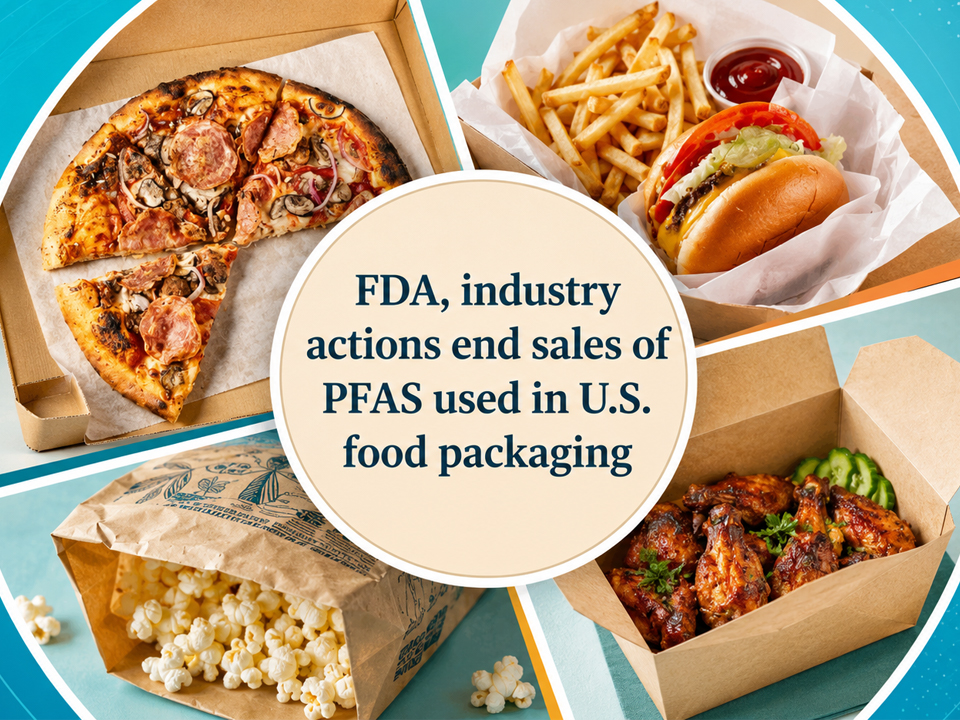
Yes, FDA announced PFAS grease-proofers for paper and paperboard food packaging are no longer sold into the U.S. market.
EU uses PPWR to set direct PFAS limits for food-contact packaging from 12 August 2026.
Are state rules important?
Very. California, Washington, Minnesota, Maine, and others can be stricter than a basic federal reading.
Member states matter for enforcement, but PPWR creates a common EU-wide rule.
Are exact PFAS limits central?
Depends on state. California uses a 100 ppm total organic fluorine trigger for regulated PFAS.
Yes. 25 ppb any targeted PFAS, 250 ppb sum of targeted PFAS, 50 ppm total PFAS including polymeric PFAS.
Does “compostable” solve PFAS risk?
No. Compostability does not prove PFAS-free status.
No. PPWR focuses on food-contact packaging chemistry, not just compostability claims.
What documentation should buyers demand?
Supplier declaration, test reports, certificates where required, state compliance review, shipment traceability.
Build to strict states, not only federal minimums.
Build to PPWR limits before the 2026 deadline.
What a PFAS-Free Food Packaging Spec Should Actually Ask For
Stop collecting pretty certificates.
Collect evidence.
A supplier file for paper food packaging PFAS restrictions, PFAS-free bagasse packaging, or coated fiber packaging should include these pieces at minimum.
1. A real no-intentionally-added-PFAS statement
Not “environmentally friendly.”
Not “green material.”
Not “natural fiber.”
The declaration should say no PFAS are intentionally added for oil resistance, water resistance, coating performance, release, processing, or surface treatment. It should cover the actual SKU, not a cousin product from the same catalog.
2. Total fluorine or total organic fluorine screening
Targeted PFAS testing looks for named compounds. Useful, yes. But it can miss things.
Total fluorine or total organic fluorine screening gives the buyer a wider warning signal. California’s 100 ppm TOF trigger and EU PPWR’s 50 ppm total PFAS threshold both push serious buyers in this direction.
Not perfect.
Still necessary.
3. Targeted PFAS testing
You still need targeted analysis because PPWR uses targeted PFAS thresholds. If the lab only gives you a generic “PFAS-free” statement without explaining method, analyte list, detection limit, sample ID, and test date, push back.
Hard.
4. Food-contact support
PFAS is not the only question. The packaging still touches food.
So the file should also include food-contact documentation for the intended market. U.S. FDA food-contact support. EU food-contact support where relevant. Migration logic. Material composition. Coating information. Heat and oil-use assumptions.
5. Batch traceability
A 2023 report does not automatically clear a 2026 shipment.
A report for a bowl does not automatically clear a tray. A report for a white product does not automatically clear a natural-color product. A report from Factory A does not automatically clear Factory B.
Buyers need lot numbers, production dates, lab report IDs, raw material references, and supplier signatures tied to the actual order.
Boring work. Expensive mistakes if skipped.
6. Change control
This is the clause nobody wants to discuss until there’s a problem.
Your supplier should notify you before changing pulp source, coating supplier, oil-resistance treatment, additives, inks, converting site, or subcontracted production. No silent swaps. No “same quality” substitutions without approval.
Because “same quality” often means “same appearance.”
Not same chemistry.
Why the Cheapest PFAS-Free Alternative Can Be a Trap
PFAS worked because it solved a real packaging problem.
Oil.
Grease.
Water.
Heat.
Remove PFAS, and the performance gap has to be filled with something else. Maybe starch-based chemistry. Maybe acrylic. Maybe water-based coating. Maybe a bio-coating. Maybe a supplier-specific treatment that sounds clean but arrives with zero useful disclosure.
Here’s the ugly truth: some PFAS-free products leak because the replacement barrier is weak. Others perform well, but the supplier can’t document why. Both are a problem.
If a buyer is purchasing packaging for dry bakery use, the risk is lower. If the buyer is purchasing hot sauced meals, oily school lunch trays, fried chicken clamshells, curry bowls, supermarket ready-meal trays, or compartment meal packaging, the risk jumps.
A lot.
That’s where I would spend testing money first.
The Science Is Turning Against Lazy Claims
Regulators are not moving in a vacuum.
The European Environment Agency has estimated that human exposure to PFAS costs Europe €52-84 billion annually in health-related costs. That estimate is broader than food packaging, of course, but it explains why European policy is getting less patient. See the EEA summary here: European Environment Agency PFAS overview.
A 2024 peer-reviewed review summarized evidence of 68 PFAS identified in food contact materials, including paper, plastic, and coated metal. The Food Packaging Forum summary is here: Overview of PFAS in food contact materials.
And Reuters reported in 2025 that the European Commission planned a broader PFAS ban for consumer products, with exemptions for essential industrial uses. That’s not directly the same as PPWR food-contact packaging, but it tells you where policy momentum is going: non-essential PFAS use is losing room to breathe. Source: Reuters: EU plans ban on forever chemicals in consumer products.
So if your packaging program still depends on “trust us, no PFAS,” you’re late.
Not doomed.
Late.
How I’d Buy PFAS-Free Compostable Food Packaging Now
I’d start with the strictest market.
Not the biggest market. Not the cheapest route. The strictest.
If your packaging may enter California, build with California in mind. If it may enter Washington, prepare the certificate file. If it may enter Minnesota, check the food packaging prohibition. If it may enter the EU after 12 August 2026, build toward PPWR thresholds now.
Still test them. Don’t get cute. But the functional stress is lower.
Medium-risk applications
Think sandwich clamshells, salad bowls with dressing cups tossed inside, paper food boxes for mixed menus, coated paperboard containers, and those molded fiber trays that look harmless until somebody fills one compartment with oily noodles.
This is the middle zone. Not terrifying. Not easy either.
At this point, the buyer has to stop judging the pack by hand-feel and start asking what’s doing the grease work—coating, additive package, wet-end treatment, surface sizing, or something the supplier would rather call “proprietary.”
High-risk applications
Hot fried food. Curry. Pasta sauce. Rice with meat juice soaking into the corner. School lunch trays. Airline meal trays. Supermarket ready meals. Delivery packaging that sits closed, warm, and sweaty for half an hour before anyone opens it.
That’s where the cheap spec starts coughing.
If the tray survives that use case without leaking, staining, softening, or needing fluorinated chemistry in the background, now we can talk. Until then, it’s just a nice sample.
For high-risk items, I’d ask for:
No-intentionally-added-PFAS declaration
Total fluorine or total organic fluorine screening
Targeted PFAS test report
Food-contact documentation
Oil and water resistance performance data
Heat and hold-time performance notes
Batch traceability
Coating/additive change-control clause
Destination-market compliance statement
Is that more paperwork than most suppliers want to provide?
Yes.
That’s the point.
The Spec Language I’d Put in the RFQ
Don’t bury this in a sustainability questionnaire nobody reads.
Put it in the RFQ. Put it in the purchase agreement. Put it in supplier onboarding. And if the order is going into more than one market, don’t let the supplier answer with a one-line “PFAS-free” stamp.
Use language like this:
“Supplier confirms that all food-contact packaging supplied under this program—including bagasse, molded fiber, paperboard, coated fiber, lids, trays, clamshells, bowls, and related foodservice articles—has no intentionally added PFAS. Supplier also confirms that the packaging is suitable for the declared destination market and can support applicable PFAS food packaging regulations, including U.S. federal FDA food-contact requirements, relevant U.S. state restrictions, and EU PPWR PFAS limits for food-contact packaging where applicable.
Supplier must provide current third-party laboratory testing, batch traceability, material composition support, and written notice before changing pulp source, coating system, additive package, ink, barrier treatment, processing aid, production site, or subcontracted manufacturing.”
Is it elegant?
No.
Good. Procurement language shouldn’t flirt. It should corner the risk.
FAQs
What do US PFAS food packaging rules mean for buyers?
For U.S. buyers, PFAS food packaging rules turn paper, paperboard, bagasse, molded fiber, and coated fiber items into documentation-heavy food-contact products, especially when the pack relies on grease resistance. The buyer’s job is to prove no intentionally added PFAS, not just collect a friendly supplier statement.
That means declarations, lab reports, state-by-state checks, certificates where required, and shipment traceability. FDA’s 2024 phase-out changed the federal baseline, but California, Washington, Minnesota, and other state rules still decide whether a product feels safe in a real buyer file.
What do EU PFAS food packaging rules mean under PPWR?
Under PPWR, EU-bound food-contact packaging gets judged by numbers, not by a supplier’s green wording: from 12 August 2026, the pack must stay below 25 ppb for any targeted PFAS, 250 ppb for the targeted PFAS sum, and 50 ppm for total PFAS, including polymeric PFAS.
That sounds tidy on paper.
In real buying work, it’s messy. A tray reformulation may pass oil hold but fail testing. A coating may pass one SKU and behave differently on another thickness. A supplier may need two lab rounds, maybe three. And if the first backup factory only starts looking at PPWR in late 2026, good luck. The stopwatch is already running.
Is compostable food packaging automatically PFAS-free?
No. A compostable claim tells you something about end-of-life behavior; it does not tell you whether the coating, wet-end chemistry, oil barrier, additive package, or recycled fiber stream is clean enough for PFAS food packaging regulations in the U.S. or under EU PPWR.
This is where buyers get seduced by the look of the thing.
Brown molded fiber feels honest. Plant-based sounds safer. A compostable logo calms the room. But none of that proves the barrier system is PFAS-free. If a supplier can’t explain how the bowl handles grease—or keeps dodging the question with “natural material”—I’d treat the file as unfinished.
How should buyers verify PFAS-free bagasse packaging?
For bagasse packaging, verification means tying the claim to the exact SKU: no-intentionally-added-PFAS declaration, total fluorine or total organic fluorine screening, targeted PFAS testing, food-contact support, batch traceability, and a change-control clause covering pulp, coatings, additives, inks, production sites, and subcontracted work.
Don’t accept the lazy “same material” answer too quickly.
Same pulp doesn’t always mean same coating. Same shape doesn’t mean same oil-resistance treatment. Same factory doesn’t mean same production line. The report should match the real item in the PO—size, color, coating, plant, production window, and batch trail. Otherwise it’s not proof. It’s paperwork decoration.
What is the safest sourcing strategy for U.S. and EU food packaging?
The safest sourcing strategy is to build one multi-market specification around the toughest jurisdiction the product may enter, instead of buying separate low-cost versions for different markets and praying the paperwork catches up later. For serious buyers, that usually means U.S. state discipline plus EU PPWR readiness.
I’d rather over-spec once than explain a failed tender, blocked shipment, or last-minute reformulation later.
The money saved on a thin test file looks good in a spreadsheet. It looks much worse when QA, legal, and the customer all ask the same question: who approved this?
Can a supplier’s PFAS-free declaration replace lab testing?
A supplier’s PFAS-free declaration cannot replace lab testing because it is only a written claim unless supported by current, SKU-specific, batch-connected laboratory evidence and a material-control system that prevents silent formula changes. Declarations help, but they are not the same as proof.
Treat supplier declarations like a door. They open the review. They don’t finish it.
Your Next Steps
If you’re buying compostable food packaging for U.S. and EU markets, stop asking the soft question.
“Is it PFAS-free?”
Ask for the file.
The real file.
No-intentionally-added-PFAS declaration. Targeted PFAS test. Total fluorine or TOF screening. Food-contact documents. Batch link. Coating explanation. Change-control clause. Destination-market statement.
And if a supplier can’t explain how a bagasse tray resists oil without PFAS, don’t spend three weeks trying to educate them for free.
Move on.
For buyers building a safer molded fiber or bagasse program, start with the products most likely to face hot, oily, sauced food: compartment trays, clamshell boxes, bowls, and coated paperboard containers. That’s where PFAS-free performance and regulatory proof matter most.
Need help building PFAS-free compostable packaging specs for multi-market sourcing? Contact Xcellink and ask for a compliance-ready packaging review before your next bulk order.