Vous envisagez de mettre en place un programme d'emballage ? Contactez Notre équipe de direction
Faites-nous part de vos besoins en matière de produits, des quantités souhaitées et du marché cible. Nous examinerons vos exigences et vous aiderons à déterminer les options adaptées, la quantité minimale de commande (MOQ), les possibilités de personnalisation et les prochaines étapes.
Discutez de votre programme d'emballage avec notre équipe de direction
Notre équipe de direction
Vous ne savez pas quel matériau, quelle taille ou quel format de produit convient à votre application ? Indiquez-nous l'utilisation prévue de votre produit, la quantité estimée, le marché cible, ainsi que vos exigences en matière d'image de marque et de documentation. Notre équipe vous proposera des options adaptées et vous aidera à déterminer la quantité minimale de commande (MOQ), à obtenir des échantillons, à définir les délais de livraison, à choisir l'emballage et à obtenir les documents de conformité disponibles.
Assistance pour votre demande
Compatibilité des produits et des matériaux
Planification annuelle des volumes et des capacités
Développement d'un portefeuille de marques de distributeur
Gouvernance en matière de qualité, de conformité et de livraison
Vous avez besoin d'un devis rapide ? Contactez Notre équipe commerciale
Faites-nous part de vos besoins en matière de produits, des quantités souhaitées et du marché cible. Nous vous aiderons à déterminer les options adaptées, la quantité minimale de commande (MOQ), les tarifs et les prochaines étapes.
Vous avez besoin d'un devis rapide ou d'aide pour trouver le produit qui vous convient ?
Notre équipe chargée des produits et du soutien à l'exportation
Indiquez-nous le type de produit, ses dimensions, la quantité estimée, le marché de destination et vos exigences en matière de personnalisation. Notre équipe commerciale vous aidera à identifier les options adaptées et vous confirmera les tarifs, la quantité minimale de commande (MOQ), les échantillons, les délais de livraison, les modalités d'emballage et les documents de conformité disponibles.
Assistance pour votre demande
Compatibilité des produits et des matériaux
Quantité minimale de commande, échantillons et délais de livraison
Options d'impression et d'emballage OEM
Documentation destinée aux marchés cibles
Vous envisagez de mettre en place un programme d'emballage ? Contactez Notre équipe de direction
Faites-nous part de vos besoins en matière de produits, des quantités souhaitées et du marché cible. Nous examinerons vos exigences et vous aiderons à déterminer les options adaptées, la quantité minimale de commande (MOQ), les possibilités de personnalisation et les prochaines étapes.
Discutez de votre programme d'emballage avec notre équipe de direction
Notre équipe de direction
Vous ne savez pas quel matériau, quelle taille ou quel format de produit convient à votre application ? Indiquez-nous l'utilisation prévue de votre produit, la quantité estimée, le marché cible, ainsi que vos exigences en matière d'image de marque et de documentation. Notre équipe vous proposera des options adaptées et vous aidera à déterminer la quantité minimale de commande (MOQ), à obtenir des échantillons, à définir les délais de livraison, à choisir l'emballage et à obtenir les documents de conformité disponibles.
Assistance pour votre demande
Compatibilité des produits et des matériaux
Quantité minimale de commande, échantillons et délais de livraison
Contrôle qualité de la vaisselle en bagasse : liste de contrôle en 15 points à l'intention des acheteurs
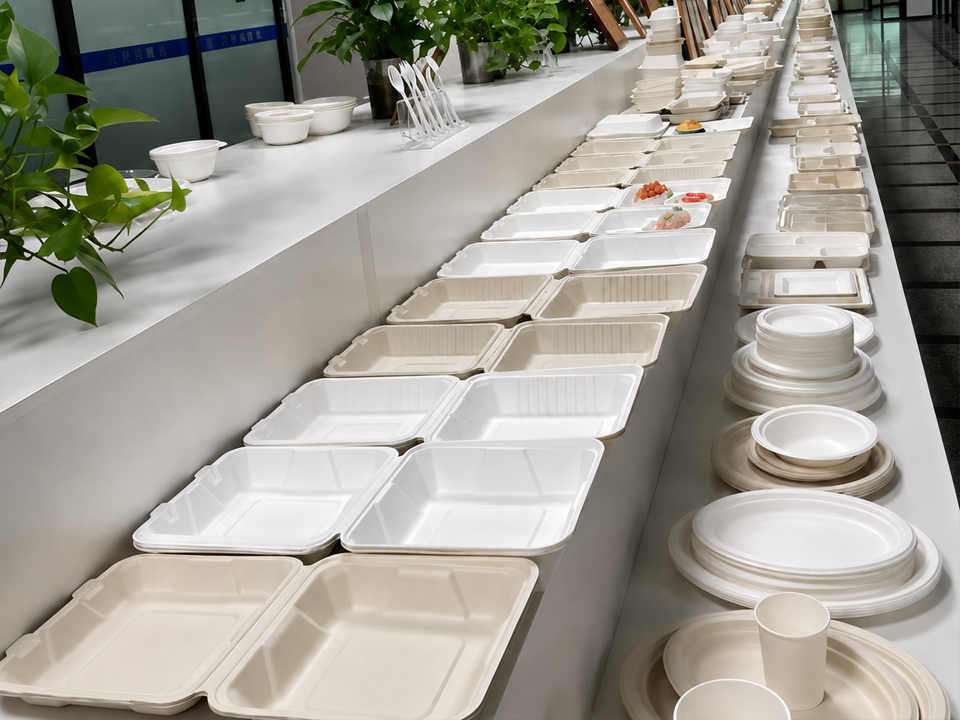
Le contrôle qualité de la vaisselle en bagasse est un système d'inspection défini par l'acheteur qui porte sur l'état des fibres, la précision de moulage, les dimensions, la résistance, la résistance à l'eau chaude et à l'huile chaude, la teneur en humidité du produit fini, l'hygiène, la conformité aux normes chimiques, l'emballage et la traçabilité des lots. Il doit permettre de démontrer que la livraison effective — et non un simple échantillon d'exposition — est capable de résister aux conditions d'utilisation alimentaire et au parcours de distribution prévus.
“ Ça a l'air bien. ”
J'ai entendu cette phrase près des presses à chaud, dans les entrepôts de produits finis et lors des contrôles avant expédition, généralement alors que quelqu'un brandissait un échantillon d'une propreté exceptionnelle sous l'éclairage vif de l'usine, en espérant secrètement que personne ne pose de questions sur l'humidité au cœur du produit, les variations de poids d'une cavité à l'autre ou ce qui se passe après vingt minutes de contact avec un curry épicé.
Ce n'est pas une inspection.
C'est du théâtre.
Et voici la triste réalité : la pâte moulée peut donner l’impression d’un produit presque parfait à la sortie de la chaîne de production, tout en présentant plusieurs défauts cachés à la fois : un emballage barrière dont l’épaisseur est insuffisante, un coin trop fin, une charnière à moitié durcie, une humidité excessive au cœur du carton et une configuration qui ne résistera pas à la charge du niveau inférieur d’un conteneur 40HQ.
Votre liste de contrôle actuelle permettrait-elle de repérer l'un de ces éléments ?
Pourquoi la vaisselle en bagasse, pourtant esthétique, ne parvient toujours pas à s'imposer
Le premier lot défectueux que j'ai vu n'avait rien d'affreux. Pas de petits trous visibles. Pas de bords déchirés. Les cartons étaient empilés avec soin, propres, et le fournisseur avait fourni un rapport d'essai sur lequel figurait en gros une mention “ CONFORME ” imprimée en vert sur la page de garde.
Puis de l'huile chaude l'a éclaboussé.
La base a d'abord noirci. Un léger anneau est apparu en dessous. Cinq minutes plus tard, la fibre moulée semblait ramollie au niveau de la zone en contact avec les aliments ; peu après, des suintements sont apparus. L'acheteur ne souhaitait ni rapport sur les mesures correctives, ni explication concernant les modifications apportées à la formulation sans fluor.
Ils l'ont rendu.
Tout ça.
Nous avions négligé le test anti-huile, qui constituait une condition stricte pour la mise en libre pratique. C'est là que réside l'erreur — et non pas dans la “ bagasse imprévisible ”, ni dans la nature complexe des denrées, ni dans une mauvaise utilisation de la part du client. Le cahier des charges était bâclé, et l'inspection s'y est conformée.
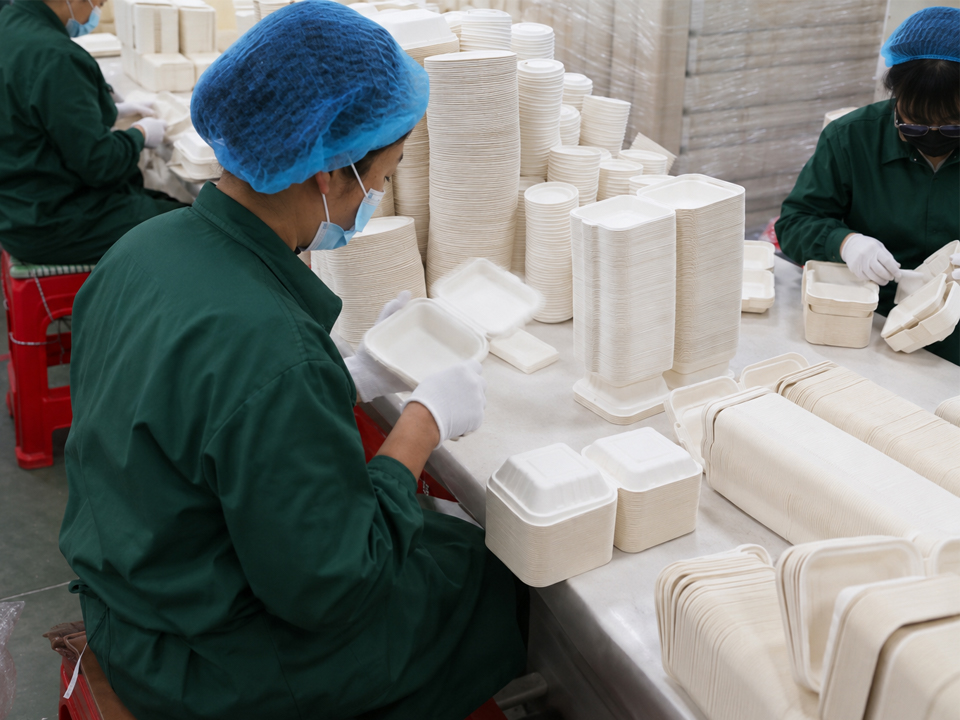
Le deuxième incident est passé plus inaperçu. Les produits ont quitté l'usine avec une surface extérieure sèche, ont été emballés alors que leur cœur fibreux, plus dense, contenait encore un excès d'humidité, puis ont passé plusieurs semaines à l'intérieur d'un conteneur maritime fermé. À leur arrivée, les cartons dégageaient une odeur de moisi et des taches de moisissure étaient apparues à l'intérieur des sachets en plastique.
Pas de fuite spectaculaire cette fois-ci.
Du stock tout simplement abîmé.
D'après mon expérience, les acheteurs passent beaucoup trop de temps à discuter des nuances Pantone et de la profondeur du gaufrage, tout en s'intéressant à peine à la manière dont le fournisseur contrôle la consistance de la partie humide, le temps de maintien sous presse à chaud, l'énergie de séchage, l'humidité du mandrin et la condensation sur les conteneurs. Ce sont ces détails, moins prestigieux, qui déterminent si les marchandises resteront utilisables après le transport maritime.
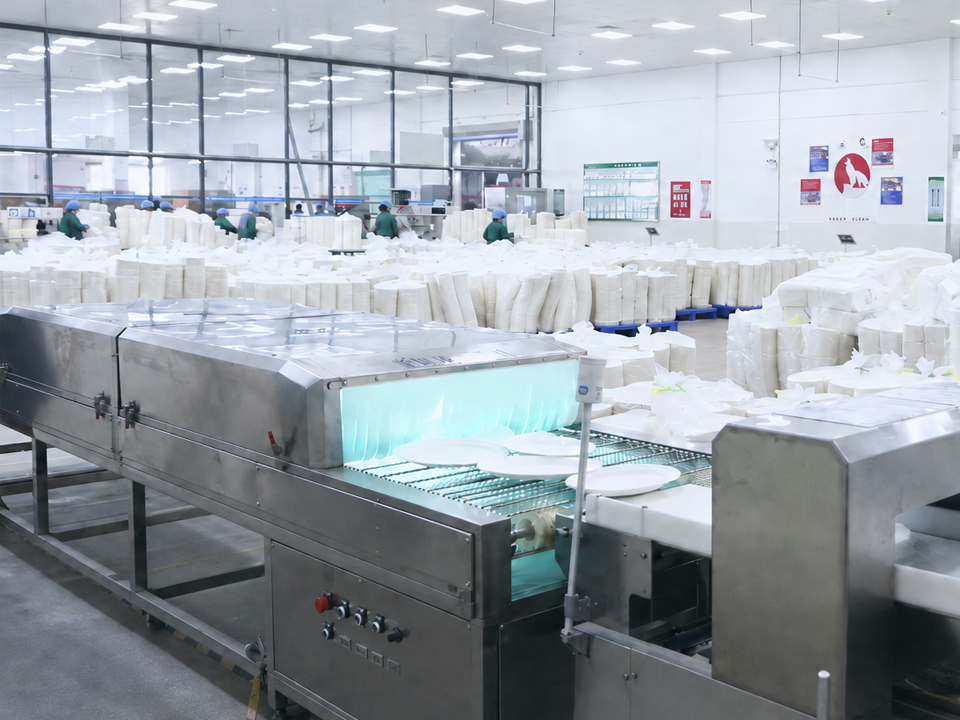
C'est pourquoi vaisselle en bagasse de canne à sucre Il ne faut pas le considérer comme un simple sous-produit agricole moulé. Il s'agit d'un produit à base de fibres transformées. Ses performances dépendent de la préparation de la pâte, de la composition chimique, du drainage, de la répartition du vide, de la température du moule, de la pression, du temps de maintien, du séchage final et des conditions d'emballage.
Beaucoup de choses peuvent dériver.
En silence.
La grille d'inspection en 15 points des articles de table en bagasse
Je ne copierais pas aveuglément les limites suivantes dans chaque bon de commande. Un plateau à en-cas peu profond, un bol à curry profond et une boîte à emporter à charnière ne sont pas soumis aux mêmes contraintes de charge, de température ou de durée de contact.
Mais j'insisterais pour que chaque ligne soit assortie d'une règle d'acceptation mesurable.
Non.
Point de contrôle
Éléments à inspecter ou à tester
Motif de rejet suggéré
1
Identité des fibres brutes
Origine des fibres, propreté, couleur, odeur, corps étrangers
Mélange de fibres non homologué, odeur chimique, contamination visible
2
Recette de pâte à papier et additifs
Formulation homologuée, système de résistance à l'humidité, chimie des barrières
Additif non déclaré ou modification de la formule non approuvée
Hors des limites du plan ou des tolérances approuvées
4
Épaisseur des parois et densité
Fond, parois latérales, angles, nervures, cloisons de séparation
Zones amincies, angles fragiles, variations importantes au niveau des cavités
5
Défauts visuels et de formage
Fissures, trous d'épingle, agglomérats de fibres, taches noires, bavures, déformations
Défauts affectant le contact avec les aliments, l'étanchéité, l'aspect ou la résistance
6
Ajustement du rebord, du couvercle, de la charnière et du verrou
Alignement des fermetures, cycles des charnières, emboîtement, maintien du couvercle
Le couvercle s'ouvre, la charnière se fissure, le rebord se déforme, compatibilité insuffisante
7
Résistance à sec et empilage
Compression manuelle, essai de charge, stabilité de la pile
Flambage, fendillement, déformation permanente
8
Résistance à l'état humide et tenue à l'eau chaude
De l'eau chaude ou un simulant de soupe pendant la durée convenue
Ramollissement, fuites, affaissement du rebord, séparation des fibres
9
Résistance à l'huile chaude et à la graisse
Huile alimentaire chaude ou aliments gras dans des conditions réelles
Pénétration profonde, infiltration, ramollissement rapide
10
Fuites et infiltrations
Exposition à l'eau, à la sauce, à l'huile et à des aliments mélangés
Gouttes, partie inférieure humide, fuite au niveau d'une couture ou de la base
11
Allégations relatives à l'utilisation au micro-ondes, à la conservation au congélateur et au remplissage à chaud
Tests confirmant toutes les allégations d'utilisation annoncées
Déformation, fissuration, manipulation dangereuse, perte de performance
12
Teneur en humidité du produit fini
Compteur étalonné et vérification périodique par séchage au four
Au-delà de la limite contractuelle ; je commence généralement à ≤10%
13
Odeurs, hygiène et présence de moisissures
Odeur, prolifération visible, exigences microbiologiques, propreté des locaux de stockage
Odeur de moisi, moisissures, traces de nuisibles, manques d'hygiène
14
Préparation de l'emballage et de l'expédition
Comptage, sacs, résistance des cartons, palettisation, état des conteneurs
Cartons humides, empilage instable, erreurs de comptage, risque d'humidité dans les conteneurs
15
Conformité et traçabilité
Contact alimentaire, PFAS, allégations de compostabilité, registres des lots
Documents génériques, périmés, non conformes ou non vérifiables
Points 1 à 6 : Détecter les problèmes avant le début des tests du produit
1. Déterminez quelle fibre a réellement été introduite dans le pulpeur
“ Fabriqué à partir de bagasse ”, ça ne m'apprend pas grand-chose.
La fibre a-t-elle été blanchie ? Non blanchie ? Mélangée à du bambou, de la paille de blé ou de la pâte de bois ? L'usine a-t-elle utilisé des chutes de fabrication non conformes aux spécifications ? L'utilisation de fibres recyclées a-t-elle été autorisée ? Qu'en est-il des azurants optiques, des agents d'encollage, des agents de rétention et des agents antimousse ?
Ce ne sont pas là des questions purement théoriques. En modifiant la composition, vous pouvez modifier la vitesse d’écoulement, la liaison des fibres, la couleur, l’odeur, la résistance à l’état humide, le démoulage et la quantité de composés barrières nécessaire pour obtenir le même résultat en matière de résistance aux graisses.
J'inscrirais les informations suivantes dans la fiche de contrôle des matières premières :
Types de fibres autorisés et restrictions en matière de mélanges
Exigence relative aux fibres blanchies ou naturelles
Gamme de couleurs autorisées
Limite relative aux corps étrangers
Règles relatives à la prévention de la moisissure et des odeurs
Identification des lots de matières premières
Conditions d'humidité de stockage et d'entretien
Autorisation écrite préalable à tout remplacement de fibre optique
Et ne vous contentez pas d'une “ qualité équivalente ” en guise de documentation relative au contrôle des modifications.
Ce n'est pas le cas.
Une usine peut opter pour une fibre plus courte ou plus transformée, car celle-ci s'écoule plus rapidement et permet à la machine de formage de fonctionner sans interruption. C'est très apprécié par les équipes de production. La pièce finie peut toutefois perdre en résistance au niveau des arêtes ou devenir plus poreuse, notamment au niveau des angles profonds et des parois des compartiments.
2. Figer la recette de la partie humide — ou accepter la dérive de la recette
La plupart des acheteurs approuvent un échantillon. Ils sont moins nombreux à approuver la formulation qui a permis de le produire.
Cet écart a son importance.
Votre cahier des charges n’a pas pour but d’obliger l’usine à divulguer tous les pourcentages propres à sa formulation, mais il doit préciser le système de matériaux approuvé : composition des fibres, catégorie de résistance à l’état humide, traitement de résistance à l’huile et à l’eau, adjuvants de fabrication, traitement de coloration, type de revêtement et absence de PFAS ajoutés intentionnellement.
Ajoutez ensuite une clause simple : aucune modification de la formulation ne peut être effectuée sans autorisation écrite et sans nouvelle validation des performances.
Ça semble évident.
C'est rare.
Le dosage des agents de barrière peut varier en raison d'un pompage imprécis, d'une consistance irrégulière de la pâte, d'une variation du pH, d'un ajustement effectué par l'opérateur ou d'une tentative délibérée de réduire les coûts liés aux produits chimiques. Il arrive parfois que l'usine n'ait pas du tout “ modifié la recette ” sur le papier : l'équipe de production a simplement modifié le débit de dosage réel.
C'est la réalité sur le terrain.
Demandez à consulter les registres de lots, les registres de dosage et les limites de contrôle de la partie humide. Si le fournisseur affirme que le dosage est automatique, demandez-lui quel paramètre permet de boucler la boucle. Le débit ? Le tonnage de pâte ? La consistance ? Le volume de la cuve ? Le jugement de l'opérateur ?
Ces deux éléments ne sont pas interchangeables.
3. Mesurer les dimensions et le poids des pièces par cavité
Les moyennes masquent les problèmes.
Imaginez un moule à 12 cavités produisant dix pièces conformes et deux pièces systématiquement trop fines. Si l’on regroupe les échantillons et que l’on calcule un poids moyen, le lot peut sembler satisfaisant. Mais dès que l’on expédie des millions de pièces, ces deux cavités continuent d’introduire des produits non conformes dans chaque carton.
C'est ce qu'on appelle la dérive de cavité.
Pour assiettes en bagasse, je mesurerais le diamètre, la hauteur du rebord, la planéité de la base, la géométrie des compartiments, la hauteur d'empilement et le poids de chaque pièce. Je poserais également l'assiette sur une surface plane. Les effets de basculement et de gondolage sont faciles à manquer lorsque les pièces restent empilées.
Pour les bols ou les récipients profonds, il convient de préciser ce que l'on entend par “ capacité ”. Jusqu'au bord ? Jusqu'à une ligne de remplissage de sécurité ? Jusqu'au point le plus bas de la jonction avec le couvercle ?
Les fournisseurs et les acheteurs citent souvent le même nombre de millilitres, mais en lui donnant des significations différentes.
Votre plan approuvé doit indiquer :
Longueur totale, largeur et profondeur
Capacité utile
Capacité maximale, le cas échéant
Objectif et tolérance de poids unitaire
Jante et géométrie de verrouillage
Hauteur de la pile pour un nombre fixe de pièces
Dimensions de l'interface du couvercle
Capacité des compartiments, le cas échéant
Et prélevez des échantillons tout au long du cycle de production, et pas seulement une fois que le technicien a réglé la machine.
4. Cessez de ne mesurer que le point d'épaisseur le plus facile
C'est sur la partie plate la plus épaisse que les inspecteurs inexpérimentés placent la jauge.
Bien sûr que ça passe.
Les défauts trouvent généralement leur origine ailleurs : transitions au niveau des flancs, coins inférieurs, intersections angulaires entre les compartiments, lignes de charnière, verrous de jante et centre d’une large base non soutenue. Ces zones peuvent présenter une mauvaise répartition de la boue, des sections de tamis obstruées, une aspiration inégale ou un dépôt incomplet de fibres.
Pour plateaux en bagasse, les intersections des cloisons méritent une attention particulière. Vues d’en haut, elles peuvent sembler nettes. Il suffit de retourner le plateau, de le plier légèrement pour que la face inférieure révèle parfois une tout autre réalité : des ponts de fibres trop fins, des liaisons fragiles ou un sillon infime susceptible de devenir une voie de fuite.
Mesurer une carte d'épaisseur.
Pas un seul point.
Je comparerais au moins la base, la paroi latérale, les angles, la jante, les nervures structurelles et les jonctions des cloisons. Des écarts importants ne signifient pas automatiquement un rejet, car la géométrie moulée crée naturellement des sections différentes, mais le profil doit correspondre à un profil homologué et rester stable d'un lot à l'autre.
5. Mettre en place un tableau des défauts avant que les inspecteurs ne commencent à se disputer
Qu'est-ce qu'un « point noir » exactement ?
Une fibre brûlée ? De la terre ? Du métal ? Un matériau naturel inoffensif ? Des restes d'insectes ? Personne ne devrait avoir à se prononcer de mémoire alors qu'un conteneur attend sur le quai.
Utilisez un tableau des défauts — des échantillons physiques lorsque cela est possible, ou des photographies nettes dans le cas contraire — et classez les défauts selon ce que l'acheteur considère comme critiques, majeurs ou mineurs.
Défauts critiques comprennent généralement la moisissure, les insectes, les corps étrangers coupants, les contaminations dangereuses, les odeurs chimiques fortes, les substances interdites et tout ce qui peut poser un risque pour la sécurité alimentaire.
Défauts majeurs notamment les trous, les fissures, les zones de finition trop fines présentant des fuites, les socles fortement déformés, les serrures cassées, les charnières fendues, les points faibles apparents, un empilement instable ou des dimensions qui empêchent le bon fonctionnement du produit.
Défauts mineurs peuvent présenter des marques de fibres acceptables, de légères variations de teinte ou de légères irrégularités superficielles qui n'affectent ni la manipulation, ni le contact avec les aliments, ni la présentation au client.
C'est là que les gens manquent de rigueur : l'argument du “ produit naturel ” sert à justifier pratiquement tout ce qui est visible.
Je n'y crois pas.
Les variations naturelles de couleur peuvent être acceptables. Les impuretés incrustées ne le sont pas. Il faut établir des normes photographiques distinctes, sinon chaque litige se transforme en négociation commerciale.
6. Considérer la fermeture comme un système chargé
Un boîtier à clapet qui se referme d'un coup sec sur une table d'inspection vide ne prouve pas grand-chose.
Pour boîtes à charnière en bagasse, remplissez le récipient, exposez-le à la chaleur et à la vapeur, fermez-le, empilez-le, puis manipulez-le comme le ferait un livreur ou un employé de restaurant. Ouvrez et fermez le couvercle à plusieurs reprises. Vérifiez qu’il n’y a pas de blanchiment, de fissures ou de perte de souplesse au niveau du pli.
Utilisez également un produit tiède.
Ça change la donne.
La vapeur peut assouplir le rebord, déformer le fond et réduire l'adhérence du système de fermeture. Une fermeture qui semble solide à 23 °C peut s'ouvrir d'un coup lorsque la boîte contient du riz chaud, du poulet frit ou du curry.
Pour récipients alimentaires en bagasse En utilisant des couvercles distincts, testez le couvercle commercial exact — et non un couvercle sélectionné manuellement parmi un autre lot de production. Les couvercles en PET, PP, rPET et fibre réagissent différemment à la chaleur, à la pression d'empilage et aux variations du rebord.
Je poserais quatre questions sans détours :
Le personnel de ligne peut-il le fermer rapidement sans abîmer le bord ?
Reste-t-il fermé après le remplissage à chaud et l'empilage ?
L'utilisateur peut-il le rouvrir sans déchirer le bord ?
Le couvercle s'adaptera-t-il encore lorsque les dimensions de la base atteindront leurs limites de tolérance ?
C'est cette dernière qui détecte les problèmes.
Points 7 à 11 : Tests de performance reproduisant les conditions réelles de la restauration
7. La résistance à sec ne se mesure pas en appuyant simplement avec le pouce
Vous l'avez sans doute déjà vu : un vendeur prend une assiette, appuie au milieu avec ses deux pouces, hoche la tête d'un air assuré et la qualifie de “ très résistante ”.”
Ce n'est pas un test de charge.
La résistance à sec doit refléter les conditions réelles d'utilisation : démêlage d'une pile compacte, prise par un seul côté, chargement de produits alimentaires décentrés, transport par le bord, pression exercée par les piles de cartons et vibrations pendant le transport.
Pour les assiettes, testez à la fois la charge centrale et le portement par un seul bord. Un produit peut rester rigide lorsqu’il est soutenu de manière uniforme, mais se plier lorsqu’un client le tient par un seul côté alors qu’il est rempli d’un repas complet.
Pour les grands plateaux, laissez une partie de la base sans appui et appliquez une charge répétable. Enregistrez la déformation, la déformation rémanente et le mode de rupture. Une mention “ Conforme ” sans chiffres est pratiquement inutile.
Et vérifiez le dégroupage.
Un mauvais dé-imbrication est un problème de production souvent imputé au personnel de restaurant. Des piles trop compactées, des bords irréguliers, une humidité résiduelle élevée ou des angles de dépouille inégaux peuvent entraîner le retrait simultané de deux ou trois pièces. Cela ralentit les chaînes d'emballage et augmente le coût réel par portion.
8. L'eau chaude, ce n'est pas de la soupe chaude
L'eau à température ambiante est douce pour la fibre moulée.
Un bouillon gras, ce n'est pas ça.
Pour bols en bagasse, adaptez le test au menu prévu. Une soupe claire, une soupe à la tomate, du porridge, une sauce au curry et un bouillon de nouilles gras n’agissent pas de la même manière sur le matériau.
Un protocole d'achat réaliste pourrait prévoir :
Température initiale de remplissage comprise entre 90 et 95 °C
Volume de remplissage défini
Séances de 30, 60 ou 120 minutes
Inspection à intervalles réguliers
Fuites, humidité sous le plancher, résistance des jantes et critères de déformation
Essai de levage après conditionnement
Observations concernant les odeurs et l'élimination des fibres
Ces chiffres sont donnés à titre d'exemple et ne constituent pas des limites universelles.
Mais écris quelque chose.
En l'absence de spécifications précises concernant la température et la durée, l'expression “ résistant à l'eau chaude ” peut simplement signifier que le fournisseur a versé de l'eau tiède dans un seul exemplaire, l'a observé pendant soixante secondes, puis est passé à autre chose.
Une fois l'exposition terminée, prenez le bol. Ne vous contentez pas de le regarder. Le fond peut paraître sec, alors que la paroi latérale a perdu suffisamment de résistance à l'état humide pour se plier sous une pression normale.
C'est aussi un échec.
9. L'essai à l'huile chaude doit servir de valve de décharge
Je vais être franc : c'est le test que les acheteurs négligent, juste avant de le regretter.
Les traitements traditionnels à base de PFAS conféraient au papier et à la fibre moulée une forte résistance à l'huile, tout en offrant une marge de manœuvre importante dans le processus de fabrication. L'industrie s'est habituée à ces performances. Aujourd'hui, avec les systèmes sans fluor, la qualité de la barrière peut devenir beaucoup plus sensible au dosage, aux conditions de la pâte à papier, à l'uniformité de l'enduction et au durcissement.
Nous y reviendrons plus tard.
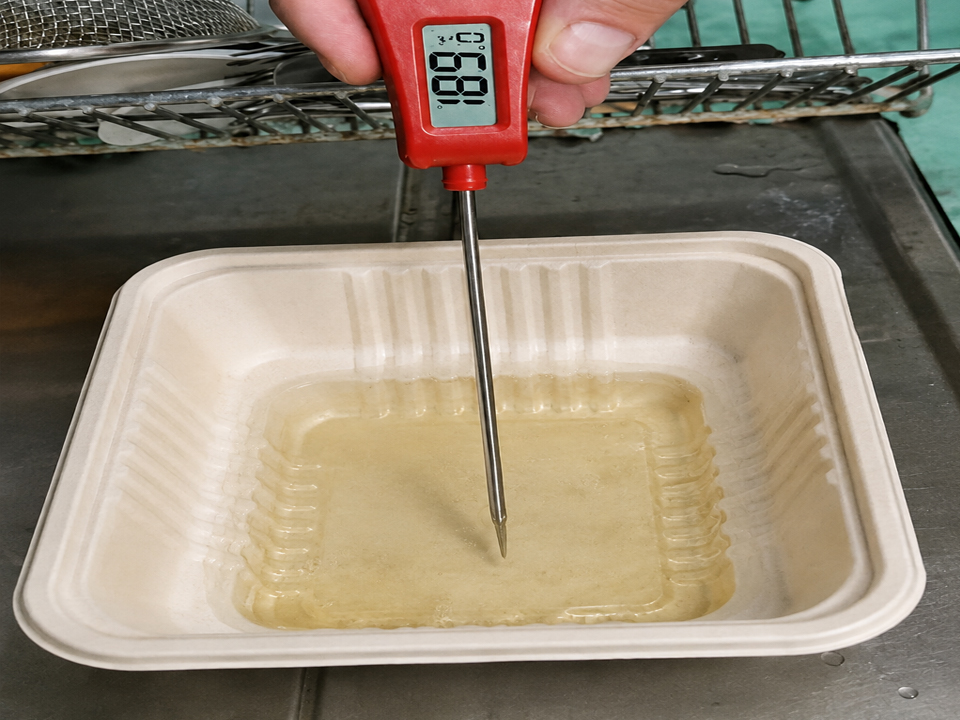
Pour l'instant, testez le produit fini avec de l'huile alimentaire chaude ou avec des aliments gras réels. Un programme raisonnable pourrait commencer à 100 °C et passer à 120 °C pour les applications à haut risque, en fonction de l'utilisation finale.
Vérifiez les points suivants :
Une ombre se profile à travers le mur
Taches d'huile sur le papier buvard placé sous l'échantillon
Kitsch
Perte de rigidité
Pénétration dans les angles
Localisation précise des suintements
Séparation des revêtements
Odeur résiduelle
Défaillance après des manipulations répétées
Et chronomètre-le.
Les trois premières minutes peuvent sembler parfaites. C'est à la quinzième minute que la vérité se révèle.
Le Méthode TAPPI T 559 de résistance à la graisse Il s'agit d'une méthode de test de résistance à l'écoulement en surface reconnue — le célèbre « Kit Test » —, mais la TAPPI elle-même précise que cette méthode a été conçue principalement pour le papier traité aux composés fluorés et avertit que son utilisation avec des barrières de type film ou sans composés fluorés doit faire l'objet d'une évaluation. Donc, non, une note obtenue au test du kit ne suffit pas à elle seule à prouver qu’une barquette à emporter sans PFAS résistera à une soupe grasse à 105 °C. (Tappi)
Notre retour s'explique par le fait que nous avons considéré les analyses de graisse comme une formalité administrative facultative.
Plus jamais.
10. Ne confondez pas les fuites, les taches et l'effondrement structurel
Les acheteurs disent souvent “ il y avait une fuite ” alors qu'ils veulent en réalité dire quatre choses différentes.
Un produit peut présenter une coloration foncée sans que la substance ait pénétré complètement. Un autre peut absorber de l'eau, tout en restant apparemment sec en profondeur, mais perdre suffisamment de résistance pour se déformer. Un troisième peut résister séparément à l'eau pure et à l'huile pure, mais céder complètement lorsqu'il est exposé à une émulsion chaude contenant des matières grasses, du sel, de l'acide et de l'eau.
Différents mécanismes.
Différents tests.
Votre rapport doit indiquer séparément :
Gouttelettes visibles
Face inférieure humide
Coloration foncée
Imprégnation totale
Adoucissement
Lifting par fibres
Délamination
Changement de forme
Effondrement de la jante
Défaillance de la fermeture
Pour le papier plat et le carton, ISO 535:2023 définit la méthode Cobb permettant de mesurer la capacité d'absorption d'eau dans des conditions normalisées. Il s'agit de données comparatives utiles, mais le champ d'application de la norme ISO se limite au papier et au carton ; un article moulé fini doit tout de même faire l'objet d'essais portant sur le produit dans son ensemble, car la géométrie, les gradients de densité, les angles et les défauts de moulage ont une incidence sur ses performances en service. (ISO)
Un bon indice de Cobb ne suffira pas à compenser un corner trop maigre.
11. Exiger des fournisseurs qu’ils justifient séparément chaque allégation d’utilisation
“ Compatible micro-ondes. ” “ Compatible congélateur. ” “ Convient aux aliments chauds. ” “ Résistant à l'huile. ”
Quatre cas. Quatre profils de contrainte différents.
Je pense sincèrement qu’il faut remettre en question les fournisseurs dès lors qu’un seul rapport de laboratoire générique est utilisé pour étayer l’ensemble de leurs rapports.
Un essai au micro-ondes doit être réalisé avec un aliment représentatif ou un simulant validé. Le passage au micro-ondes d'un récipient vide peut entraîner une surchauffe du matériau qui ne correspond pas à une utilisation réelle, tandis qu'un essai réalisé uniquement avec de l'eau risque de sous-estimer les aliments gras.
Un essai au congélateur doit permettre d'évaluer la formation de fissures, la fragilité, la tenue du couvercle, la condensation et les performances après décongélation. Les essais de remplissage à chaud doivent mettre en évidence la déformation immédiate ainsi que la perte progressive de rigidité qui suit l'exposition à l'humidité.
Et testez la référence finale.
Imprimé. Gaufré. Enduit. Personnalisé.
Un échantillon de papier standard fabriqué six mois auparavant ne constitue pas un substitut valable pour un lot de production sous marque de distributeur utilisant une couverture d'encre, des conditions de fabrication ou une composition chimique de la couche barrière différentes.
Points 12 à 14 : Humidité, moisissures et réalité du transport maritime
12. La surface peut être sèche alors que le cœur est humide
C'est là que les impératifs économiques de l'usine se heurtent à la qualité des produits.
Éliminer les derniers résidus d'eau de la fibre moulée demande du temps et de l'énergie. Un temps de maintien plus long réduit la cadence de production des moules. Un séchage plus long entraîne une consommation d'électricité plus importante. En haute saison — ou lorsqu'une commande a été tarifée de manière trop agressive —, la tentation de raccourcir la durée du pressage à chaud est évidente.
C'est l'extérieur qui sèche en premier.
Le noyau est à la traîne.
Un produit peut sortir de la zone de séchage en étant chaud et croustillant, puis redistribué de l'humidité après son emballage. Cette humidité n'a nulle part où aller à l'intérieur d'un sachet en polyéthylène et d'un carton ondulé fermés.
D'après mon expérience, une teneur en humidité cible du produit fini de 10% ou inférieur constitue un point de départ défendable pour de nombreux programmes d'exportation, à condition que le produit, la méthode et l'itinéraire aient été validés. Je ne présenterais pas la norme 10% comme une limite légale universelle. Il s'agit d'un point de contrôle contractuel.
La méthode d'essai a son importance.
Un appareil de mesure portable est utile pour effectuer des contrôles rapides sur la ligne de production, mais ses résultats doivent être recoupés avec une méthode de référence définie, basée sur un séchage au four. Sinon, l'usine risque d'obtenir des valeurs numériques apparemment convaincantes avec un appareil qui n'a jamais été étalonné en fonction de la densité du matériau ou de la géométrie du produit.
Extrait de :
Délais de production variables
Différentes cavités
Cartons du haut, du milieu et du bas
Emplacements des palettes à l'intérieur et à l'extérieur
Produits fraîchement emballés et conditionnés
Plus d'une zone d'entrepôt
Et ne vous contentez pas de tester le produit tant qu'il est encore tout chaud.
Les pièces chaudes peuvent fausser les mesures d'humidité et donner un sentiment de sécurité trompeur.
13. La moisissure n’est pas un “ problème mineur lié aux fibres naturelles ”
J'ai entendu un jour quelqu'un décrire la moisissure visible comme une “ oxydation normale de la bagasse ”.”
Non.
La moisissure est un défaut totalement inacceptable. Une odeur de moisi doit également donner lieu à une enquête, avant même l'apparition de traces visibles de moisissure.
Le Recommandations de l'Institut canadien de conservation en matière de climat explique comment les contenants hermétiques ou semi-hermétiques renfermant des matériaux hygroscopiques réagissent lentement aux variations d'humidité extérieures. Le contexte porte ici sur la conservation préventive plutôt que sur l'emballage alimentaire, mais le principe sous-jacent reste pertinent : les matériaux fibreux et les microclimats créés à l'intérieur de ces contenants peuvent retenir et redistribuer l'humidité pendant de longues périodes. (Le gouvernement canadien)
C'est ça, la réalité des conteneurs.
Un produit à base de bagasse peut être emballé dans un environnement humide, placé dans un sac en plastique, chargé contre la paroi froide d'un conteneur, puis soumis à des variations de température qui provoquent la formation de condensation sur les parois du conteneur. Si l'on ajoute à cela une humidité excessive du produit ou des palettes mouillées, le risque augmente encore davantage.
Vérifier les points suivants :
Odeur de moisi, aigre ou de fermentation
Dépôt blanc, gris, vert ou noir
Condensation à l'intérieur des sachets en plastique
Cartons ondulés mous ou humides
Palettes mouillées
Surfaces d'emballage sales
Activité des insectes
Stockage non contrôlé des produits finis
Produits conditionnés à chaud
Des procédures de quarantaine insuffisantes
Et voici une autre mauvaise habitude : trier la moisissure visible d'un lot contaminé et expédier le reste.
Je ne donnerais pas mon accord sans une enquête approfondie sur la cause première, un échantillonnage plus large et la preuve que les cartons prétendument non affectés n’ont pas été exposés aux mêmes conditions d’humidité.
Le fait qu'il s'agisse du même lot a une signification.
14. Vérifiez le système d'expédition, et pas seulement la vaisselle
Un inspecteur chargé du contrôle avant expédition peut passer des heures à mesurer des assiettes, puis jeter un coup d'œil aux cartons pendant trente secondes.
À l'envers.
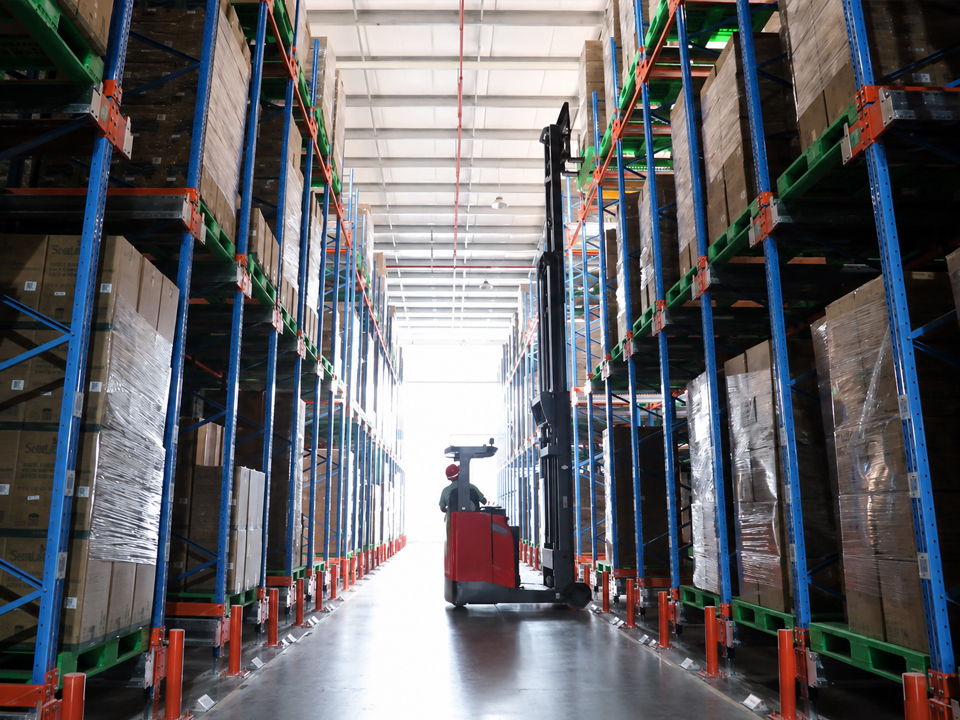
Le système d'emballage accompagne le produit tout au long de son parcours : empilage en entrepôt, manutention par chariot élévateur, transport terrestre, séjour au port, transport maritime et distribution à destination. Un carton de mauvaise qualité, des cartons trop remplis, des palettes humides ou une mauvaise conception des piles peuvent endommager des marchandises en parfait état.
Vérifier :
Nombre de pièces par sachet
Nombre de sacs par carton
Caractéristiques techniques du carton
Dimensions du carton
Poids brut et poids net
Soudure de la poche intérieure
Épaisseur du sachet en polyéthylène, le cas échéant
Performances de compression du carton
Disposition des palettes et porte-à-faux
Utilisation de cornières et de film étirable
Quantité et emplacement du dessiccant
État du plancher du conteneur
Odeurs, trous et rouille dans le conteneur
Distance par rapport aux parois du conteneur
Chargement des photos
Numéros de conteneur et de scellé
Le déshydratant n'a rien de magique.
Cela peut aider à réguler l'humidité, mais cela ne permet pas de sécher de la vaisselle mouillée ni de pallier le problème des palettes trempées et d'un conteneur qui fuit.
Vérifiez également le chargement des cartons situés au bas de la palette. Un carton qui semble en bon état lorsqu’il se trouve en haut d’une palette peut supporter une charge verticale de plusieurs centaines de kilogrammes près du fond du conteneur.
C'est là que commence l'écrasement de la pile.
Point 15 : Documents de conformité qui font effectivement partie intégrante du produit
Associez le rapport à la référence, à l'usine, à la formule et au marché
Un rapport d'essai de trente pages peut tout de même s'avérer inutile.
Regardez l'exemple de description. La mention “ assiette en pâte moulée ” n'est pas suffisante lorsque l'envoi contient plusieurs formats, des variantes naturelles et blanches, différentes formules de barrière et des produits provenant de différents sites de fabrication.
Je voudrais savoir :
Référence exacte
Dimensions du produit
Description du matériau
Couleur
Système de barrière ou de revêtement
Usine de fabrication
Date de production de l'échantillon
Date de l'examen
Portée du marché cible
Types d'aliments et conditions de contact
Lien entre le rapport et le lot expédié
Si ces champs ne correspondent pas, cela signifie que le fournisseur ne prouve pas la conformité de votre article. Il vous indique simplement qu'un produit vaguement similaire a déjà été certifié conforme à une norme quelconque.
Ce n'est pas la même chose.
Un dossier d'expédition complet peut contenir :
Cahier des charges approuvé
Dessin technique
Déclaration relative aux matériaux ou à la composition
Rapport d'essai relatif au contact alimentaire
Déclaration relative à l'absence de PFAS ajoutés intentionnellement
Rapport sur le fluor organique total ou sur les PFAS ciblés, le cas échéant
Contrôles des substances soumises à restriction
Tests de migration
Certificat de compostabilité lorsque cette allégation est formulée
Rapport d'inspection par lot
Numéros de lot de production
Références des lots de matières premières
Disque « Golden Sample »
Spécifications d'emballage
Déclaration relative au contrôle des modifications
Registre des mesures correctives
Certificat de conformité
Les certificats définissent le champ d'application.
Ils n'inspectent pas votre conteneur.
Le problème des produits sans PFAS dont personne n'aime parler
L'élimination des PFAS ajoutés intentionnellement dans les emballages alimentaires va dans la bonne direction.
Mais prétendre que la transition technique se fait sans heurts ? C'est là que je ne suis pas d'accord avec une grande partie du marketing du secteur.
Historiquement, les agents anti-graisse fluorés offraient une forte résistance à l'huile, à l'eau et à la chaleur, tout en tolérant des variations de production assez importantes. Ils étaient efficaces. C'est précisément grâce à cette efficacité qu'ils se sont généralisés dans les emballages alimentaires en papier d'emballage, en carton et en fibre moulée.
Puis, le cadre réglementaire a évolué — très rapidement.
Dans le cadre de son enquête sur les emballages alimentaires pour animaux de l'exercice 2024, les enquêteurs de la FDA ont prélevé 57 échantillons entre juin et septembre 2024. Du FTOH 6:2 hydrolysable a été détecté dans deux échantillons : une boîte en carton contenant des friandises pour animaux et un sac en papier enduit de cire. La FDA elle-même a précisé que cette enquête était limitée ; il ne faut donc pas interpréter à tort ces deux cas sur 57 comme un taux de prévalence général sur le marché. Cela démontre néanmoins pourquoi les déclarations et les stocks commerciaux doivent faire l'objet d'une vérification pendant une phase d'élimination progressive. (Agence américaine des produits alimentaires et médicamenteux (FDA))
L'Europe a désormais chiffré ce problème. Selon Règlement (UE) n° 2025/40, tiré de 12 août 2026, les emballages destinés à entrer en contact avec des denrées alimentaires ne peuvent être mis sur le marché de l'UE s'ils atteignent ou dépassent les seuils fixés pour les PFAS : 25 ppb pour tout PFAS visé, 250 ppb pour la somme des PFAS ciblés, et 50 ppm pour les PFAS, y compris les PFAS polymères, sous réserve des définitions et des dispositions relatives aux essais prévues par le règlement. (EUR-Lex)
Ces seuils ne sont pas interchangeables avec les règles de certification.
Pour la certification BPI, La réglementation de la BPI relative aux produits chimiques fluorés exige la présentation de fiches de données de sécurité des ingrédients, une déclaration du fabricant attestant l'absence de substances chimiques fluorées ajoutées intentionnellement, ainsi que des résultats d'essais indiquant une concentration inférieure à 100 ppm de fluor organique total. Cette mesure est entrée en vigueur le 1er janvier 2020. (BPIWorld)
C'est une autre question.
Une autre méthode.
Seuil différent.
J'ai vu des acheteurs demander “ un certificat PFAS ”, comme si un seul fichier PDF pouvait couvrir toutes les juridictions, toutes les méthodes d'analyse et toutes les allégations relatives aux produits. Ce n'est pas le cas.
Les barrières sans fluor sont efficaces, mais la marge de manœuvre est plus étroite
Voici mon opinion, qui ne fera sans doute pas l'unanimité : de nombreux produits à base de bagasse sans fluor peuvent offrir d'excellentes performances, mais ils sont moins tolérants vis-à-vis des défauts de fabrication que l'industrie ne veut bien l'admettre.
Les dispersions d'acrylates, les systèmes à base d'alginate, les revêtements au chitosane, les barrières d'origine biologique, les revêtements polymères à base d'eau et les traitements hybrides peuvent tous offrir une résistance utile à l'huile et à l'eau. La chimie n'a rien de factice.
Le problème de cohérence est bien réel.
A Étude de 2023 sur la pâte moulée, soumise à un examen par les pairs, par exemple, ont fait état d’un revêtement à base d’un composé sans fluor, composé d’alginate de sodium et de PDMS modifié. Dans les conditions de préparation et d’essai contrôlées par les chercheurs, les échantillons revêtus ont atteint un indice Kit de 11/12, un angle de contact avec l’eau de 121,9 degrés et une absorption d’eau de 25,81 TP3T. (MDPI)
Un travail prometteur.
Ne constitue pas une preuve des performances d'usine.
L'étude a été réalisée avec des rapports de mélange définis, une agitation contrôlée, un enrobage par immersion, un séchage au four à 60 °C et un conditionnement à 23 °C et à une humidité relative de 50%. Une ligne de fabrication de pâte moulée à grande vitesse, soumise à des changements d'équipe, à la réutilisation de l'eau de process, aux variations des pompes doseuses et à des cavités irrégulières, constitue un environnement différent. (MDPI)
C'est là l'écart que les acheteurs doivent bien comprendre.
Si la dose d'agent oléophobe diminue, la résistance diminue également. Si la répartition du revêtement devient inégale, un coin peut présenter des défaillances alors que le reste semble en bon état. Il suffit de modifier le raffinage de la pâte, la densité, le pH, le pressage à l'état humide ou le séchage pour que la même recette nominale ne donne plus les mêmes résultats.
Un manque de cohésion entraîne des fuites.
Une quantité excessive peut augmenter les coûts, compliquer l'adhérence, altérer l'odeur, modifier le toucher de la surface ou soulever de nouvelles questions en matière de conformité.
Et lorsqu'une usine subit une pression sur les prix ? Le dosage des produits chimiques et le temps de maintien dans la presse constituent des postes où il est tentant de réaliser des économies, car le produit peut tout de même passer un contrôle visuel rapide.
C'est pourquoi les caractéristiques “ sans PFAS ” et “ haute performance ” doivent faire l'objet de tests distincts.
Un produit peut être exempt de PFAS tout en étant de mauvaise qualité.
Un produit peut également être exempt de PFAS et d'excellente qualité, mais uniquement si les matériaux utilisés et les procédés de fabrication sont correctement contrôlés.
Comment je rédigerais le plan d'inspection avant la production
Commencez par un modèle d’excellence, mais ne le vénérez pas
Les échantillons « Golden » sont très utiles. Ils permettent d'harmoniser les attentes en matière de couleur, de géométrie, de gaufrage, de texture et de fermeture.
Elles suscitent également un faux sentiment de confiance.
Une seule pièce homologuée ne suffit pas à démontrer la capacité de production. Elle a peut-être été fabriquée lors d'un essai avec des temps de cycle lents, un dosage réglé manuellement et un technicien expérimenté à côté de la machine.
La production commerciale est plus compliquée.
Apposez votre cachet et votre signature sur l'échantillon de référence, mais joignez les données de mesure :
Poids unitaire
Dimensions
Capacité
Carte d'épaisseur
Hauteur de la pile
Ajustement du couvercle ou du verrou
Résultat pour l'eau chaude
Résultat à l'huile chaude
Résultat concernant l'humidité
Référence des couleurs
Configuration de l'emballage
Révision de la formule
Références des rapports d'essai
Conservez des échantillons aussi bien chez l'acheteur qu'à l'usine. Dans la mesure du possible, confiez-en également un à la société chargée de l'inspection.
Et ajoutez un déclencheur de péremption ou de révision. Un échantillon de référence approuvé il y a trois ans peut ne plus refléter la composition chimique actuelle, les outils utilisés ou les exigences légales en vigueur.
Utilisez correctement l'AQL — ou ne prétendez pas qu'il garantit la conformité du lot
Le courant ISO 2859-1:2026 définit des plans d'échantillonnage de conformité indexés sur la limite de qualité d'acceptation (AQL) pour le contrôle lot par lot. La troisième édition de 2026 a remplacé la version de 1999 et a ajouté des recommandations actualisées, notamment des procédures de « saut de lot » et des schémas d'échantillonnage simple, double et multiple indexés sur l'AQL. (ISO)
Un système pratique.
Souvent mal compris.
L'AQL ne signifie pas que l'acheteur a accepté qu'un pourcentage donné de chaque expédition puisse être défectueux. Il fournit un cadre d'échantillonnage statistique pour les décisions d'acceptation portant sur l'ensemble des lots.
Un point de départ pratique pourrait être le suivant :
Défauts critiques : tolérance zéro
Défauts majeurs : AQL 1,0
Défauts mineurs : AQL 2,5
Il s'agit là de recommandations commerciales, et non de règles universelles.
Et le principe de “ tolérance zéro ” ne signifie pas que les inspecteurs ont prouvé l'absence totale de défauts sur 100 000 pièces. Cela signifie simplement qu'aucun défaut critique n'a été détecté dans l'échantillon inspecté selon le plan de contrôle retenu.
En cas de présence de moisissures, de contamination dangereuse, de substances interdites ou de manquements graves aux règles relatives au contact alimentaire, je ne me fierais pas uniquement à un échantillonnage visuel aléatoire. Il convient de l’associer à des audits des processus, des analyses en laboratoire, à la traçabilité, à des contrôles de quarantaine et à des essais destructifs ciblés.
L'AQL n'est pas un bouclier.
Vérifiez à trois moments différents, et non pas à un seul
L'inspection avant expédition a lieu tardivement. À ce stade, les marchandises sont déjà emballées, le conteneur est peut-être déjà réservé et tout le monde a intérêt à négocier pour contourner les défauts constatés.
Divisez donc le contrôle en trois étapes.
Contrôle de pré-production
Vérifier la formule approuvée, les déclarations relatives aux matériaux, les plans, les visuels, l'état de l'outillage, la compatibilité des couvercles, les méthodes d'essai, les normes relatives aux défauts, les exigences d'emballage et les documents relatifs au marché de destination.
C'est également à ce stade que l'acheteur doit définir le type d'aliment, la température et la durée de contact.
“L'expression ” plats chauds » est vague.
“ Soupe huileuse à 95 °C, remplissage de 750 ml, maintien à température pendant 60 minutes ” : cette condition peut être testée.
Contrôle en cours de fabrication
Vérifiez la consistance de la pâte à papier, les registres de dosage, le poids unitaire, les variations de cavité, les dimensions, le taux d'humidité, la qualité des bords, le démêlage et les performances de la barrière rapide.
Réparez la dérive tant que la ligne peut encore être ajustée.
Et notez l'heure.
Un fournisseur qui ne contrôle que la première heure d'un cycle de dix heures risque de passer complètement à côté d'une détérioration due à l'obstruction d'un tamis, à des changements de boue, à l'encrassement d'un moule ou au changement d'équipe.
Contrôle avant expédition
Prélever au hasard des marchandises emballées. Répéter les essais destructifs à l'eau chaude et à l'huile chaude. Vérifier le taux d'humidité, le nombre de cartons, l'intégrité de l'emballage, l'état des palettes, les documents, les codes de lot et l'adéquation des conteneurs.
Ne laissez pas l'usine ouvrir un “ carton d'inspection ” déjà préparé.”
Choisissez vous-même vos cartons.
Les signaux d'alerte que je prendrais au sérieux
Une usine n'a pas besoin d'un hall d'accueil en marbre ni d'un anglais irréprochable.
Il faut effectivement le maîtriser.
Je ralentirais ou suspendrais la validation de l'expédition dans les cas suivants :
Le fournisseur ne précise pas si la composition a changé
“La mention ” sans PFAS » n'est étayée que par une ancienne déclaration
Le rapport de laboratoire ne mentionne pas la référence produit.
Le test à l'huile chaude utilise de l'huile à température ambiante
Le rapport indique “ réussi ” sans préciser la température ni la durée
On évalue l'humidité au toucher
Seule la surface extérieure est mesurée
Les produits sont mis en sachet alors qu'ils sont encore visiblement chauds
Les sachets en plastique contiennent de la condensation
Les palettes mouillées sont chargées
Une odeur de moisi est considérée comme l'odeur naturelle des fibres naturelles
Le tri des moisissures s'effectue uniquement par tri visuel
Les données relatives au poids unitaire ne sont pas ventilées par alvéole
Le fournisseur teste une pièce sélectionnée avec soin
L'ajustement du couvercle est vérifié uniquement avant l'exposition à la chaleur
Le rapport concerne une autre usine
La description des articles ne correspond pas à l'envoi
La résistance des cartons a été testée avec un nombre d'unités par carton différent.
L'usine n'est pas en mesure de retracer la date de production et l'équipe de travail associées à chaque carton.
Les mesures correctives consistent à “ rappeler aux salariés ”
Ce dernier revient sans cesse.
Cela signifie généralement qu'aucune cause première n'a été identifiée, qu'aucun paramètre de processus n'a été modifié et que le problème risque de réapparaître lors de la prochaine commande.
Foire aux questions
En quoi consiste le contrôle qualité de la vaisselle en bagasse ?
Le contrôle qualité de la vaisselle en bagasse est un système documenté mis en place par l'acheteur qui vérifie l'identité des fibres, la précision du moulage, les dimensions, la résistance structurelle, les performances à l'eau chaude et à l'huile chaude, la teneur en humidité du produit fini, l'hygiène, l'intégrité de l'emballage, la conformité aux normes chimiques et la traçabilité des lots avant qu'un lot de production ne soit accepté pour expédition.
Il ne doit pas se fonder uniquement sur l'aspect visuel. Le plan doit prévoir des tolérances mesurables, des températures d'essai définies, des durées d'exposition fixes, un catalogue des défauts, un échantillonnage représentatif et des éléments probants liés au lot commercial réel.
Comment procède-t-on à l'inspection de la vaisselle en bagasse ?
La vaisselle en bagasse est contrôlée en prélevant des échantillons représentatifs issus de différents cartons, périodes de production et cavités de moule, puis en vérifiant le poids, les dimensions, les défauts visuels, le bon fonctionnement des fermetures, la résistance à sec, la résistance à l'état humide, la résistance à l'huile chaude, l'étanchéité, l'humidité, l'odeur, l'emballage, la documentation et la traçabilité des lots, par rapport à un cahier des charges écrit et approuvé.
L'inspecteur doit consigner les résultats des mesures, et pas seulement indiquer “ conforme ” ou “ non conforme ”. Les photos, les températures mesurées, la durée d'exposition, la quantité d'échantillon et l'emplacement du défaut rendent le rapport bien plus utile en cas de sinistre.
Quelle teneur en humidité est acceptable pour la vaisselle en bagasse ?
Le taux d'humidité acceptable pour la vaisselle en bagasse correspond à une limite de livraison définie par l'acheteur, établie à l'issue d'une validation du produit et des conditions d'expédition ; pour de nombreux programmes d'exportation, j'utilise la valeur 10% ou inférieure comme point de départ raisonnable, à condition que la méthode de mesure, la procédure de conditionnement et les conditions de transport maritime soient clairement spécifiées.
Le pourcentage de 10 % ne constitue pas une limite légale universelle. Le fournisseur et l'acheteur doivent convenir de la méthode de référence, de la corrélation des compteurs, des points de prélèvement et du plan d'action à mettre en œuvre lorsque les relevés dépassent les spécifications.
Comment faut-il tester la résistance à l'huile ?
La résistance à l'huile de bagasse doit être testée en exposant des échantillons de produit fini à de l'huile alimentaire chaude, à une sauce huileuse ou à l'aliment gras auquel ils sont destinés, à une température et pendant une durée de contact convenues, puis en évaluant le noircissement, les infiltrations, les taches sur la face inférieure, le ramollissement, la déformation, l'adhésivité de la surface, la rupture au niveau des coins et la résistance à la manipulation restante.
Un test de formation de gouttelettes à température ambiante permet de contrôler la production, mais il ne doit pas être utilisé pour les produits destinés aux fritures, au curry, aux plats à base de viande ou aux soupes chaudes et huileuses.
Quels sont les défauts les plus courants que l'on retrouve sur la vaisselle en bagasse ?
Les défauts courants de la vaisselle en bagasse comprennent notamment : des coins trop fins, des trous d'épingle, des fissures, des bords fragiles, des bavures rugueuses, des agglomérats de fibres, des taches noires, des fonds déformés, un démoulage difficile, des dimensions incorrectes, des charnières cassées, des fermetures lâches, couvercles non adaptés, les fuites d'eau, la pénétration d'huile, une humidité excessive, les odeurs, la moisissure, les cartons écrasés et les erreurs de comptage dans les emballages.
L'acheteur doit classer ces défauts en trois catégories : critiques, majeurs ou mineurs, à l'aide de descriptions écrites et de photographies ; à défaut, les inspecteurs et les fournisseurs les interpréteront différemment.
Comment un acheteur peut-il s'assurer que la vaisselle en bagasse ne contient pas de PFAS ?
Un acheteur vérifie la conformité de la vaisselle en bagasse exempte de PFAS en obtenant une déclaration signée attestant l'absence d'ajout intentionnel de PFAS, en examinant la documentation relative aux ingrédients, en vérifiant si la formule commerciale a été modifiée et en demandant des analyses ciblées sur les PFAS, le fluor total ou le fluor organique total, conformément à la réglementation du pays de destination, au système de certification et à la référence exacte du produit.
Un “ certificat ” sans PFAS » » générique peut ne pas couvrir tous les seuils. Les limites fixées par le règlement PPWR de l'UE, les règles du BPI et d'autres exigences nationales imposent des exigences différentes en matière d'analyse et de documentation.
Quels documents un fournisseur de vaisselle en bagasse doit-il fournir ?
Un fournisseur de bagasse doit fournir le cahier des charges du produit, les plans approuvés, la déclaration des matériaux, les rapports pertinents relatifs au contact alimentaire, la documentation relative aux PFAS le cas échéant, la certification de compostabilité uniquement si celle-ci est revendiquée, les résultats des contrôles par lot, les codes de lot, les spécifications d'emballage, le registre de contrôle des modifications, la procédure d'actions correctives et un certificat de conformité au niveau de l'expédition.
Vérifiez attentivement les noms, les dates, les descriptions des échantillons, les adresses des usines et les références SKU. Un rapport de laboratoire authentique peut tout de même ne pas correspondre au produit acheté.
Une inspection selon la méthode AQL est-elle suffisante pour la vaisselle en bagasse ?
Une inspection AQL est un outil statistique d'acceptation des lots destiné à évaluer des produits prélevés par échantillonnage, mais elle ne suffit pas à elle seule à garantir la conformité chimique, à détecter l'humidité cachée au cœur des produits, à prendre en compte les modifications de formulation, à évaluer l'exposition aux moisissures ou à garantir les performances spécifiques à l'application dans l'huile chaude pour l'ensemble d'un envoi de vaisselle en bagasse.
Utilisez l'AQL pour les défauts visuels et dimensionnels mesurables, puis ajoutez des essais en laboratoire, le contrôle des processus, des essais de performance destructifs, la vérification de l'humidité et les contrôles de traçabilité.
Les prochaines étapes
N'envoyez pas de bon de commande indiquant uniquement :
“ Assiette en bagasse de 9 pouces, blanche, 500 pièces par carton. ”
C'est le nom d'un produit. Ce n'est pas une spécification technique.
Définir l'application alimentaire, la température de service, la durée de contact, l'exposition à l'huile, les dimensions, le poids, les emplacements d'épaisseur, la limite d'humidité, les défauts critiques, les défauts majeurs, l'AQL, la présence de PFAS, les documents relatifs au contact alimentaire, la méthode d'emballage et les essais de libération pour l'expédition.
Pour les boîtiers à clapet, ajouter les cycles d'ouverture et de fermeture de la charnière et du loquet.
Pour les bols, versez-y de la soupe chaude.
Pour les plateaux, renforcez leur rigidité.
Pour les récipients à couvercle séparé, testez la combinaison précise « base + couvercle ».
Et pour tout récipient destiné à contenir des aliments frits, gras ou huileux, veillez à ce que le test de l'huile chaude soit une règle incontournable.
Je demanderais également qu'une simple phrase figure sur chaque rapport préalable à l'expédition :
Les échantillons testés ont été sélectionnés au hasard parmi le lot fini et emballé, identifié par le numéro de lot de production et le numéro de bon de commande indiqués.
Car c'est là la question qui se cache derrière toutes les autres.
La question n'est pas de savoir si l'usine a déjà produit un bon échantillon.