Stai pianificando un programma di imballaggio? Rivolgiti a Il nostro team dirigenziale
Comunicateci le vostre esigenze relative al prodotto, le quantità richieste e il mercato di destinazione. Esamineremo le vostre richieste e vi aiuteremo a individuare le opzioni più adatte, il quantitativo minimo ordinabile (MOQ), le possibilità di personalizzazione e i passi successivi.
Discuti il tuo programma di imballaggio con il nostro team dirigenziale
Il nostro team dirigenziale
Non sai quale materiale, dimensione o formato di prodotto sia più adatto alla tua applicazione? Indicaci l'uso previsto del prodotto, la quantità stimata, il mercato di destinazione, i requisiti relativi al marchio e alla documentazione. Il nostro team ti consiglierà le opzioni più adatte e ti aiuterà a definire il quantitativo minimo ordinabile (MOQ), i campioni, i tempi di consegna, l'imballaggio e i documenti di conformità disponibili.
Assistenza per la tua richiesta
Abbinamento di prodotti e materiali
Pianificazione annuale dei volumi e delle capacità
Sviluppo del portafoglio di marchi propri
Governance in materia di qualità, conformità e consegna
Hai bisogno di un preventivo veloce? Contatta Il nostro team di vendita
Comunicateci le vostre esigenze relative al prodotto, le quantità richieste e il mercato di destinazione. Vi aiuteremo a individuare le opzioni più adatte, a definire il quantitativo minimo ordinabile (MOQ), a stabilire i prezzi e a definire i passi successivi.
Hai bisogno di un preventivo veloce o di aiuto per trovare il prodotto giusto?
Il nostro team di assistenza prodotti ed esportazioni
Indicateci il tipo di prodotto, le dimensioni, la quantità stimata, il mercato di destinazione e le esigenze di personalizzazione. Il nostro team commerciale vi aiuterà a individuare le opzioni più adatte e a confermare i prezzi, il quantitativo minimo ordinabile (MOQ), i campioni, i tempi di consegna, l’imballaggio e i documenti di conformità disponibili.
Assistenza per la tua richiesta
Abbinamento di prodotti e materiali
Quantità minima ordinabile (MOQ), campioni e tempi di consegna
Opzioni di stampa e confezionamento OEM
Documentazione per i mercati di destinazione
Stai pianificando un programma di imballaggio? Rivolgiti a Il nostro team dirigenziale
Comunicateci le vostre esigenze relative al prodotto, le quantità richieste e il mercato di destinazione. Esamineremo le vostre richieste e vi aiuteremo a individuare le opzioni più adatte, il quantitativo minimo ordinabile (MOQ), le possibilità di personalizzazione e i passi successivi.
Discuti il tuo programma di imballaggio con il nostro team dirigenziale
Il nostro team dirigenziale
Non sai quale materiale, dimensione o formato di prodotto sia più adatto alla tua applicazione? Indicaci l'uso previsto del prodotto, la quantità stimata, il mercato di destinazione, i requisiti relativi al marchio e alla documentazione. Il nostro team ti consiglierà le opzioni più adatte e ti aiuterà a definire il quantitativo minimo ordinabile (MOQ), i campioni, i tempi di consegna, l'imballaggio e i documenti di conformità disponibili.
Assistenza per la tua richiesta
Abbinamento di prodotti e materiali
Quantità minima ordinabile (MOQ), campioni e tempi di consegna
Portafoglio di imballaggi sostenibili per la ristorazione: guida alla gamma e ai quantitativi minimi d'ordine
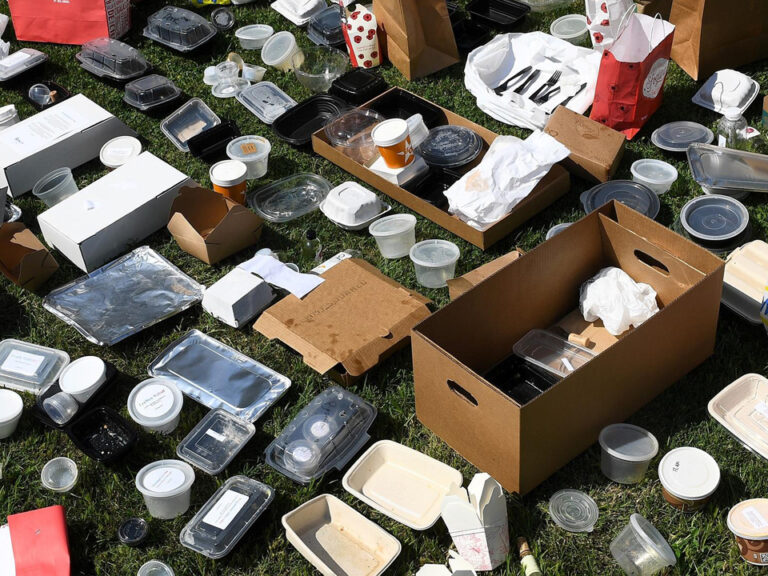
Permettetemi di essere schietto su una cosa. La maggior parte delle presentazioni sui “confezionamenti sostenibili per la ristorazione” che vedo consistono in un elenco di articoli dall’aspetto accattivante con una foglia verde sulla copertina del catalogo, senza alcuna considerazione sul fatto che un distributore possa effettivamente tenere quel prodotto in magazzino. Una gamma di prodotti senza una logica di quantità minima d’ordine non è un portafoglio prodotti. È una lista dei desideri.
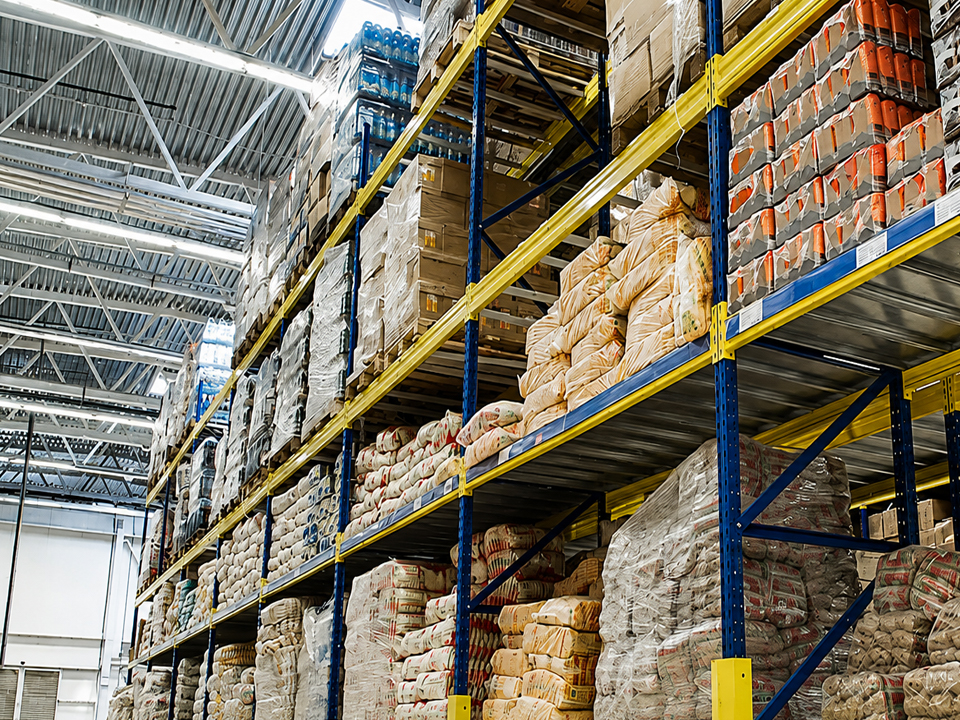
E i distributori non acquistano prodotti. Acquistano un portafoglio: un insieme coerente di SKU che possono immagazzinare, movimentare, documentare e riordinare senza ritrovarsi con un carrello elevatore pieno di merce invenduta che giace in un angolo. Questa distinzione può sembrare insignificante, ma è proprio essa a determinare se la vostra linea ecologica genererà profitti o, al contrario, ne causerà una silenziosa perdita.
Questa guida tratta quindi entrambi gli aspetti contemporaneamente: la gamma di prodotti che rientra effettivamente in una linea di imballaggi sostenibili per la ristorazione e la realtà dei quantitativi minimi d’ordine che determina se è possibile offrirla.
Perché il termine “portafoglio” è preferibile a “elenco dei prodotti”
Un singolo prodotto può essere sostenibile. Un portafoglio, invece, deve essere vendibile.
Ecco la differenza nella pratica. Una bella tazza rivestita in PLA è un prodotto. Un programma per il caffè — la tazza, il coperchio che ci si adatta perfettamente, il manicotto isolante, il portabevande, la documentazione di conformità e una quantità minima d’ordine (MOQ) che i clienti del vostro bar possono raggiungere — quello è un portafoglio. Gli acquirenti che ragionano in termini di singoli SKU si ritrovano con coperchi non compatibili, tre fornitori per una sola bevanda e un magazzino pieno di articoli orfani. Gli acquirenti che ragionano in termini di portafogli vendono sistemi.
E in questo momento, la pressione affinché tutto vada per il verso giusto proviene dalle autorità di regolamentazione, non solo da un brief di marketing.
Il regolamento sta riscrivendo il tuo catalogo al posto tuo
Questo è l'aspetto che i distributori continuano a sottovalutare. Le norme evolvono più rapidamente rispetto alla maggior parte dei cataloghi.
Prendiamo ad esempio la resistenza al grasso. Quelle “sostanze chimiche eterne”, i PFAS, un tempo erano proprio ciò che permetteva agli involucri dei fast food e al cartoncino da asporto di respingere l’olio. Ora non più. Il La FDA ha confermato il 28 febbraio 2024 ha comunicato che negli Stati Uniti era stata interrotta la vendita di rivestimenti antiaderenti contenenti PFAS destinati al contatto con gli alimenti e, entro gennaio 2025, ha dichiarato nulle 35 delle relative notifiche relative al contatto con gli alimenti. Se a ciò si aggiungono gli Stati — una dozzina dei quali, tra cui la California e New York, già limitano l’uso dei PFAS negli imballaggi alimentari —, l’espressione “senza PFAS” smette di essere uno slogan. Diventa una specifica che bisogna dimostrare per iscritto.
Ma chi paga per smaltire i rifiuti? Sempre più spesso, potresti essere proprio tu. Entro la fine del 2025, sette stati avevano in vigore leggi complete sulla Responsabilità Estesa del Produttore (EPR) per gli imballaggi — il Maine ha aperto la strada già nel 2021, il Minnesota ha aderito nel maggio 2024 — ed ecco la parte che dovrebbe far drizzare le orecchie a un grossista. Più di una di queste leggi estende il significato del termine “produttore” ben oltre la fabbrica, includendo importatori, distributori e, talvolta, anche i rivenditori. Quindi, se importi o vendi all’ingrosso imballaggi per la ristorazione, potresti essere tu il produttore chiamato a rispondere. Non si tratta di una semplice nota a piè di pagina. Si tratta di un obbligo di registrazione e rendicontazione a cui sei personalmente soggetto.
L’Europa stringe ulteriormente la morsa. Il regolamento PPWR dell’UE — Regolamento 2025/40 — è in vigore dall’11 febbraio 2025, ma le disposizioni più severe entreranno in vigore a partire dal 12 agosto 2026. Dopo tale data, ogni confezione presente sul Il mercato dell'UE dovrà essere riciclabile entro il 2030, c’è un obiettivo di riciclaggio dei rifiuti da imballaggio pari a 70% da raggiungere entro la fine di quell’anno e — la mia preferita — un limite massimo rigido di 40% per l’aria vuota contenuta in un pacco dell’e-commerce. Spedite nell’UE? Preparatevi una checklist PPWR-2026 e verificate subito la vostra gamma di prodotti in base a essa, finché c’è ancora tempo per riorganizzare l’approvvigionamento.
Quindi, prima di innamorarti di un codice prodotto, poniti la domanda noiosa: potrò ancora venderlo legalmente tra 18 mesi, in tutti i mercati in cui opero?
La gamma di cui un distributore serio ha effettivamente bisogno
Dimenticatevi del catalogo da 400 articoli. Il successo di una linea di prodotti alimentari sostenibile dipende da un numero ristretto di categorie chiave, ciascuna delle quali deve poter vantare una storia chiara sui materiali utilizzati e la relativa documentazione a sostegno.
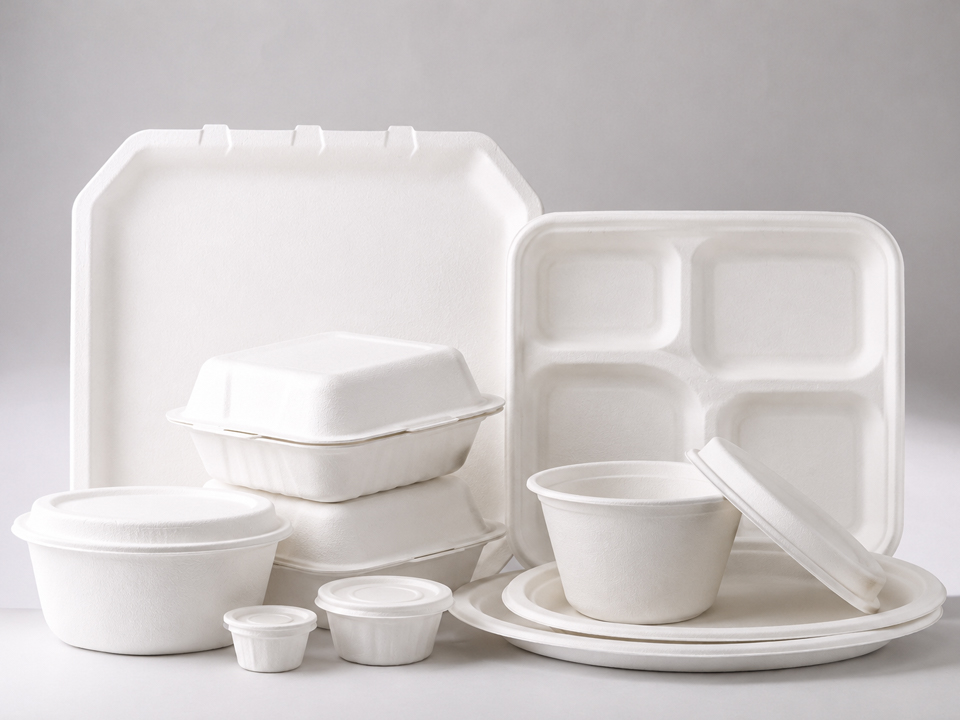
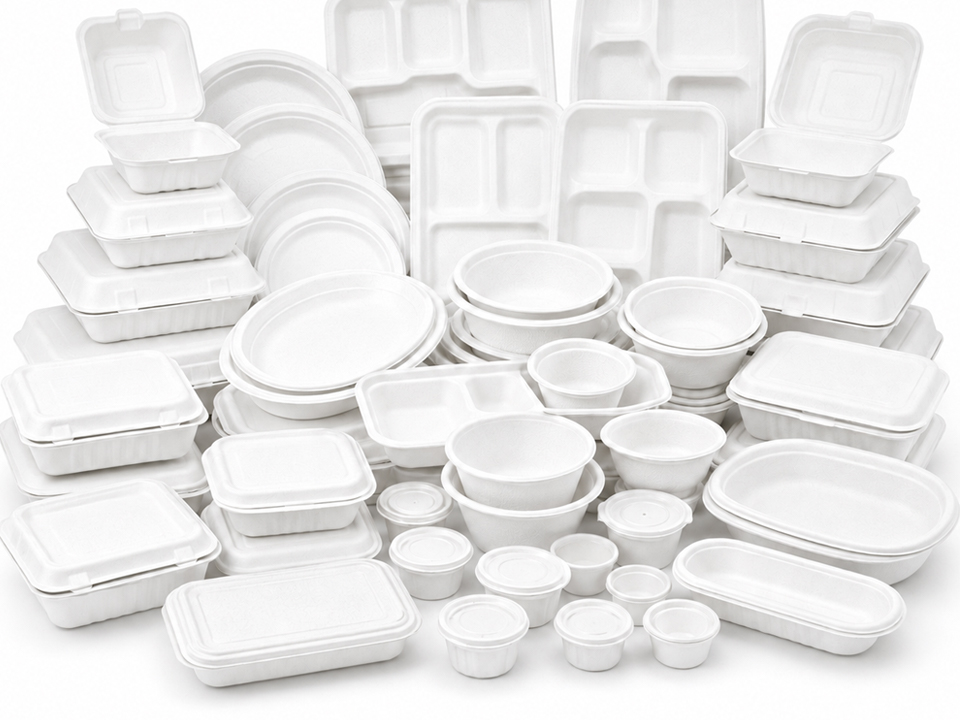
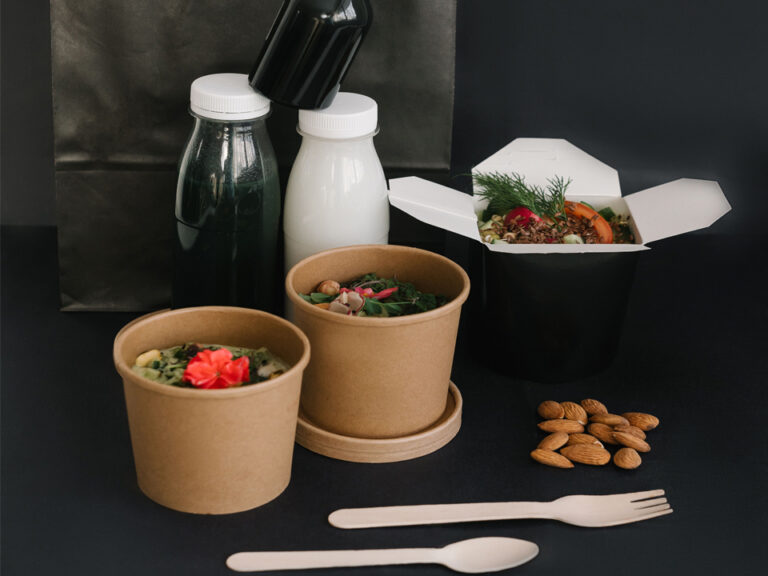
I contenitori in fibra sono la prima scelta, perché sono perfetti per il disordine. Il cibo da asporto, unto, ricoperto di salsa e bollente, non tornerà mai più in un flusso di riciclaggio pulito — ed è proprio per questo che la fibra stampata si guadagna il suo posto. Un solido programma all’ingrosso copre i formati che fanno il lavoro più pesante: un ciotola in bagassa con coperchio per pasti da asporto, un ciotola in fibra stampata con coperchio abbinato, e un contenitore rotondo in fibra stampata con coperchio da asporto È in grado di gestire la maggior parte dei lavori nel settore della ristorazione veloce (QSR) e del catering senza che nessuno debba riscrivere il menu. Basta verificare ogni volta che i prodotti siano privi di PFAS e controllare il rivestimento.
I bicchieri e le confezioni per alimenti sono i fattori che determinano il volume delle vendite. Bicchieri di carta per bevande calde e fredde, scatole in carta kraft per pasta, insalate e prodotti da forno: è proprio su questi aspetti che un fornitore di bicchieri di carta e confezioni per alimenti può conquistare o perdere una catena di caffetterie. Il punto cruciale sta nell’abbinare coperchi e capacità, il che è una questione di portafoglio prodotti, non di singolo prodotto.
Posate e accessori completano l'offerta. Posate in legno, bambù e CPLA, cannucce di carta, sacchetti di carta kraft: quei piccoli dettagli che i clienti dimenticano finché non mancano. Un programma di vendita all'ingrosso di posate usa e getta di qualità costante è proprio quel tipo di articolo poco appariscente che garantisce un flusso costante di riordini.
Nessuna di queste cose è fuori dal comune. La sfida sta nel mantenere l’ambito ristretto, i materiali giustificabili e la documentazione pronta.
La realtà del MOQ che nessuno menziona nelle brochure
Ed ecco la parte che determina effettivamente il tuo margine.
Il quantitativo minimo d’ordine (MOQ) è il punto in cui gli imballaggi sostenibili per la ristorazione diventano una realtà. Gli articoli in stock — non decorati, di dimensioni standard — hanno solitamente MOQ bassi, poiché la fabbrica li produce già. Le tirature con stampa personalizzata sono tutta un’altra storia. La stampa comporta l’uso di cliché, l’allestimento, la corrispondenza dei colori e una fabbrica che non avvierà una linea di produzione per soli 500 pezzi. Ecco perché il MOQ di un bicchiere con stampa personalizzata può essere da dieci a venti volte superiore rispetto allo stesso bicchiere in versione standard.
L’altra trappola è la combinazione degli articoli. Un acquirente vuole 2.000 di questo, 1.500 di quello, 800 dell’altro — e ogni articolo ha una propria quantità minima ordinabile (MOQ). All’improvviso, quel “piccolo ordine di prova” richiede un volume pari a un intero container solo per poter ricevere un preventivo. È proprio questo calcolo a cogliere di sorpresa chi acquista prodotti ecologici per la prima volta, quindi vale la pena capire come si sommano questi limiti minimi prima di confermare un singolo ordine di acquisto.
Ecco come si presentano gli intervalli tipici per una linea sostenibile. Considerateli come punti di partenza tipici del settore, non come preventivi: i vostri prezzi minimi effettivi dipendono dalla fabbrica, dal materiale e dalla stampa.
Categoria
Quantità minima d'ordine (MOQ) tipica per le scorte
Quantità minima d'ordine (MOQ) tipica per le stampe personalizzate
Tempi di consegna
Ideale per
Contenitori in bagassa
1.000–5.000 pezzi
10.000–50.000 pezzi
3–6 settimane
Ristorazione veloce, catering, cibo da asporto grasso
Bicchieri di carta (per bevande calde/fredde)
1.000 pezzi (≈1 cassa)
10.000–25.000 pezzi
4–8 settimane
Catene di caffetterie, offerte di bevande
Scatole per alimenti Kraft
500–1.000 pezzi
5.000–20.000 pezzi
3–6 settimane
Pasta, insalate, prodotti da forno
Posate in legno / CPLA
1.000–10.000 pezzi
Configurazione avanzata, richiesta
4–8 settimane
Sostituzione completa
Sacchetti di carta Kraft
500–2.000 pezzi
Oltre 5.000 pezzi
2–5 settimane
Cibo da asporto, vendita al dettaglio da asporto
Il modello è evidente una volta che lo si nota. Prodotti a magazzino = flessibilità e rapidità. Prodotti personalizzati = impegno e lentezza. Costruisci il tuo portafoglio in modo che gli articoli personalizzati con MOQ elevato siano i tuoi best seller, lasciando i prodotti della “coda lunga” a magazzino.
Come costruirei il portafoglio
Inizia da questi. Scegli le tre o quattro categorie che i tuoi clienti riordinano ogni settimana — di solito bicchieri, contenitori in fibra e confezioni in scatola — e assicurati che siano sempre disponibili come SKU di magazzino con una fornitura affidabile. Queste sono la tua colonna portante.
Tenete in magazzino i prodotti standard, personalizzate quelli di punta. Riservate la stampa personalizzata agli articoli per cui il volume giustifica l’allestimento e per i quali i clienti del vostro marchio se lo aspettano. Tutto il resto rimane in versione standard, in modo che un distributore possa evadere un ordine di piccole dimensioni senza dover raggiungere un minimo di 20.000 pezzi.
Allora rendete anche la documentazione un articolo sempre disponibile a magazzino. Dichiarazioni di assenza di PFAS, rapporti sul contatto con gli alimenti, certificati di compostabilità secondo la norma EN 13432 o BPI, dettagli sul rivestimento: teneteli sullo scaffale accanto al prodotto. In un mondo caratterizzato dall’EPR e dal PPWR, la documentazione contribuisce a vendere il pallet tanto quanto il pallet stesso.
La mia opinione impopolare
La maggior parte dei “portafogli sostenibili” è troppo ampia e troppo superficiale. Nel settore circola l’idea che “più ce n’è, più è ecologico”: più opzioni di materiali, più certificazioni, più SKU, il tutto con la presunzione che contribuisca a creare una linea migliore. Sono in parte d’accordo e in parte in disaccordo. Più opzioni significano anche più scorte invendute, più quantità minime d’ordine (MOQ) impossibili da raggiungere e più sistemi con scorte incomplete, in cui il coperchio non corrisponde mai alla tazza.
I distributori di successo non sono quelli che offrono il maggior numero di SKU. Sono quelli che offrono gli SKU giusti, con scorte abbondanti, la documentazione di conformità pronta e quantità minime d’ordine (MOQ) realistiche. Un approccio mirato e ben documentato è sempre preferibile a uno generico e ambizioso. Sempre.
Domande frequenti
Che cos’è un portafoglio di imballaggi sostenibili per la ristorazione? Pensatelo come un assortimento curato di articoli realizzati con materiali ecologici — contenitori in fibra, bicchieri di carta, scatole per alimenti, posate — selezionati per funzionare insieme come un sistema unico, con componenti coordinati, la documentazione di conformità già pronta e quantità di riordino che un acquirente può effettivamente raggiungere. È pensato per consentire a un distributore di tenere le scorte e rivendere, non si tratta semplicemente di un singolo prodotto che casualmente è compostabile.
Qual è la quantità minima ordinabile per gli imballaggi alimentari compostabili? Si tratta della quantità minima — il numero minimo di pezzi che un fornitore produrrà o venderà di un determinato articolo — e varia notevolmente a seconda del formato e della scelta di stamparlo o meno. Le scorte di articoli non stampati possono partire da centinaia o poche migliaia. Volete il vostro logo stampato sopra? In questo caso, spesso si parla di oltre 10.000 pezzi, perché la stampa comporta l’uso di cliché, l’impostazione e una linea di produzione che la fabbrica deve dedicare esclusivamente alla vostra tiratura.
Un distributore è considerato un “produttore” ai sensi delle leggi sull’EPR relative agli imballaggi? In diversi stati, sì — e molti grossisti se ne rendono conto solo quando ricevono una lettera. Queste leggi non si limitano ai produttori; la loro definizione di “produttore” spesso include importatori, distributori e persino rivenditori. Con sette stati che attueranno programmi completi di responsabilità estesa del produttore (EPR) per gli imballaggi entro la fine del 2025, un grossista di imballaggi per la ristorazione potrebbe trovarsi a dover adempiere agli obblighi di registrazione, rendicontazione e pagamento delle tasse, a seconda di dove vende e di come è strutturata la catena di approvvigionamento.
Gli imballaggi alimentari a base di bagassa sono davvero privi di PFAS? Può darsi — ma non datelo per scontato. La fibra nuda è una cosa; il rivestimento e la barriera anti-grasso aggiunti in fabbrica sono un’altra, ed è proprio lì che si nascondevano i PFAS. Dopo la graduale eliminazione da parte della FDA, a febbraio 2024, degli agenti anti-grasso contenenti PFAS, l’accortezza da adottare è semplice: richiedete una dichiarazione scritta che attesti l’assenza di PFAS, oltre ai dettagli sul rivestimento, per ogni codice prodotto (SKU) di bagassa. Fidatevi dei documenti, non della reputazione della fibra.
Come si fa a mantenere i MOQ a livelli gestibili quando si crea una linea di prodotti? Mantieni semplice la gamma di prodotti a coda lunga. Gli articoli di serie senza decorazioni hanno costi di produzione bassi, quindi riserva la stampa personalizzata con quantità minime elevate alla manciata di SKU che effettivamente vengono venduti in grandi volumi. Costruisci l’assortimento attorno a tre o quattro categorie che i tuoi clienti riordinano ogni settimana, raggruppa gli ordini in lotti in modo che la fabbrica operi in modo efficiente e conserva i documenti di conformità sullo scaffale come qualsiasi altro articolo in magazzino: in questo modo un piccolo acquirente non si troverà mai costretto a ordinare una tiratura che non può utilizzare.
Crea una gamma che faccia davvero la differenza
Se sei un distributore o un acquirente del settore della ristorazione e stai creando una linea sostenibile, non partire dal catalogo. Inizia chiedendoti quali prodotti i tuoi clienti riordinano, cosa i tuoi mercati consentiranno ancora nel 2026 e quali quantità minime d’ordine (MOQ) il tuo magazzino è effettivamente in grado di gestire.
Comunicateci i vostri mercati di riferimento, i formati più venduti, le vostre esigenze di personalizzazione e le vostre previsioni di volume, e vi aiuteremo a creare un portafoglio di imballaggi sostenibili per la ristorazione — contenitori in bagassa, bicchieri, scatole e posate — con una gamma e una struttura dei quantitativi minimi d’ordine (MOQ) pensate per favorire le vendite, non per rimanere invendute.