Planen Sie ein Verpackungsprogramm? Sprechen Sie mit Unser Führungsteam
Teilen Sie uns Ihre Produktanforderungen, die gewünschte Menge und den Zielmarkt mit. Wir prüfen Ihre Anforderungen und helfen Ihnen dabei, geeignete Optionen, die Mindestbestellmenge, Anpassungsmöglichkeiten und die nächsten Schritte zu ermitteln.
Besprechen Sie Ihr Verpackungsprogramm mit unserem Managementteam
Unser Führungsteam
Sie sind sich nicht sicher, welches Material, welche Größe oder welches Produktformat für Ihre Anwendung geeignet ist? Teilen Sie uns bitte den Verwendungszweck Ihres Produkts, die voraussichtliche Menge, den Zielmarkt sowie Ihre Anforderungen hinsichtlich Branding und Dokumentation mit. Unser Team wird Ihnen geeignete Optionen vorschlagen und Sie bei der Klärung von Mindestbestellmengen, Mustern, Lieferzeiten, Verpackung und verfügbaren Konformitätsdokumenten unterstützen.
Hilfe bei Ihrer Anfrage
Produkt- und Materialabstimmung
Jährliche Mengen- und Kapazitätsplanung
Entwicklung eines Eigenmarken-Portfolios
Qualitäts-, Compliance- und Liefermanagement
Benötigen Sie ein schnelles Angebot? Sprechen Sie mit Unser Vertriebsteam
Teilen Sie uns Ihre Produktanforderungen, die gewünschte Menge und den Zielmarkt mit. Wir helfen Ihnen dabei, geeignete Optionen, die Mindestbestellmenge, die Preise und die nächsten Schritte zu klären.
Benötigen Sie ein schnelles Angebot oder Hilfe bei der Auswahl des richtigen Produkts?
Unser Produkt- und Export-Support-Team
Teilen Sie uns Ihren Produkttyp, die Abmessungen, die voraussichtliche Menge, den Zielmarkt und Ihre Anforderungen an die individuelle Anpassung mit. Unser Vertriebsteam hilft Ihnen dabei, geeignete Optionen zu finden, und klärt Fragen zu Preisen, Mindestbestellmengen, Mustern, Lieferzeiten, Verpackung und verfügbaren Konformitätsunterlagen.
Hilfe bei Ihrer Anfrage
Produkt- und Materialabstimmung
Mindestbestellmenge, Muster und Lieferzeit
OEM-Druck- und Verpackungsoptionen
Unterlagen für Zielmärkte
Planen Sie ein Verpackungsprogramm? Sprechen Sie mit Unser Führungsteam
Teilen Sie uns Ihre Produktanforderungen, die gewünschte Menge und den Zielmarkt mit. Wir prüfen Ihre Anforderungen und helfen Ihnen dabei, geeignete Optionen, die Mindestbestellmenge, Anpassungsmöglichkeiten und die nächsten Schritte zu ermitteln.
Besprechen Sie Ihr Verpackungsprogramm mit unserem Managementteam
Unser Führungsteam
Sie sind sich nicht sicher, welches Material, welche Größe oder welches Produktformat für Ihre Anwendung geeignet ist? Teilen Sie uns bitte den Verwendungszweck Ihres Produkts, die voraussichtliche Menge, den Zielmarkt sowie Ihre Anforderungen hinsichtlich Branding und Dokumentation mit. Unser Team wird Ihnen geeignete Optionen vorschlagen und Sie bei der Klärung von Mindestbestellmengen, Mustern, Lieferzeiten, Verpackung und verfügbaren Konformitätsdokumenten unterstützen.
Angebotsvergleich für Bagasse-Lieferanten: Kosten, Spezifikationen und Lieferzeit
Günstige Angebote täuschen.
Ich weiß, das klingt vielleicht etwas zu unverblümt, aber nachdem ich schon genug Angebote für Bagasse-Geschirr gesehen habe, bei denen unter dem Deckmantel des “besten Preises” heimlich das Grammgewicht heruntergerechnet, das Kartonvolumen geändert, die PFAS-Sicherheitsvorkehrungen weggelassen oder der Unterschied zwischen EXW und FOB verschleiert wurde, ziehe ich es vor, den unangenehmen Teil gleich zu Beginn anzusprechen, anstatt so zu tun, als würde der Preis in US-Dollar pro Stück die ganze Geschichte erzählen.
Was vergleichst du denn eigentlich?
Nicht die Zahl.
Noch nicht.
Ein Anbieter von Geschirr aus Bagasse kann ein Angebot übersichtlich gestalten und dabei die Details auslassen, die Ihre tatsächlichen Gesamtkosten bestimmen: Produktgewicht, Randfestigkeit, Kartonmenge, Containerbeladung, Mustergebühr, Prüfkosten, Zahlungsbedingungen, Incoterms und die Lieferzeit, von der niemand zugeben möchte, dass sie erst nach Bestätigung der Schiffsbuchung feststeht.
Hier ist die bittere Wahrheit: Das günstigste Angebot für Geschirr aus Bagasse ist oft einfach nur das dürftigste Angebot.
Ich habe miterlebt, wie Einkäufer drei Tage lang um 0,002 US-Dollar pro Stück gestritten haben, um dann die Einsparung durch eine unglückliche Kombination aus minderwertigen Kartons, unzureichend beladenem 40HQ-Laderaum, einer überstürzten Prüfung und der Angabe “PFAS-frei” – die sich in Wirklichkeit nur auf einen alten Prüfbericht einer anderen Artikelnummer bezog – wieder zu verlieren. Schmerzhaft. Hätte vermieden werden können.
Und sehr häufig.
Die “USD pro Stück”-Falle, in die Käufer immer wieder tappen
Ein Einkäufer sendet dieselbe Angebotsanfrage an drei Fabriken.
Lieferant A bietet 0,061 US-Dollar an. Lieferant B bietet 0,058 US-Dollar an. Lieferant C bietet 0,064 US-Dollar an.
Die meisten Einkaufsteams richten ihr Augenmerk auf Lieferant B.
Ich verstehe schon. Die Tabelle spricht für Lieferant B. Ihr Chef ist wahrscheinlich auch für Lieferant B – bis Sie nach Nettogewicht, Kartonabmessungen, Verlademenge, dem Datum des PFAS-Berichts und der Frage fragen, ob das von Ihnen freigegebene Muster tatsächlich denselben Spezifikationen entspricht, nach denen die Serienproduktion erfolgen soll.
Dann fängt das Zitat an zu schwitzen.
Lieferant B verwendet möglicherweise einen 37-g-Körper, während Lieferant C bei 44 g liegt. Lieferant A hat möglicherweise EXW angeboten, obwohl der Käufer beiläufig von FOB ausgegangen ist. Lieferant C verpackt vielleicht weniger Stück pro Karton, belädt aber effizienter, da der Kartonraum besser ausgenutzt wird. Ein Lieferant verwendet möglicherweise ein besseres Scharnierdesign. Ein anderer spart vielleicht einen halben Cent, indem er Ihnen einen Deckel liefert, der aufspringt, wenn heißer Reis im Inneren dampft.
Eine 9×9-Klappschachtel ist nicht einfach nur “eine 9×9-Klappschachtel”. Sie kann sich hinsichtlich der Vertiefungstiefe, der Randgeometrie, der Stapelhöhe, der Zellstoffdichte, des Deckelverschlusses, der Ölbeständigkeit, der Feuchtigkeitsbeständigkeit und der Druckfestigkeit des Kartons unterscheiden. Das geht aus dem Katalogfoto nicht hervor. Und auch nicht aus dem ersten Angebot.
Ein echtes Angebot für Bagasse-Geschirr muss Substanz haben
Ich traue einem hübschen Angebotsblatt nicht.
Nicht allein.
Ein aussagekräftiges Angebot für Bagasse-Geschirr sollte es Ihnen ermöglichen, die Kosten lückenlos von der Formfaser-Produktionslinie bis zur Tür Ihres Lagers nachzuvollziehen. Ist dies nicht der Fall, vergleichen Sie keine Lieferanten. Sie vergleichen lediglich den „Charme“, und dieser übersteht die Zollabfertigung nicht.
Hier ist die grundlegende Angebotsübersicht, die ich mir ansehen möchte, bevor ich einen Anbieter in die Kategorie “ernstzunehmend” einordne.
Angebotsposition
Was Käufer normalerweise sehen
Was Sie tatsächlich brauchen
Stückpreis
USD/Stück
USD/Stück gemäß einem bestimmten Incoterm, wie z. B. EXW, FOB, CIF, DAP oder DDP
Produktgröße
“9 Zoll” oder “9×9”
Obermaß, Untermaß, Höhe, Hohlraumtiefe, Deckelhöhe, Randbreite und Toleranz
Grammgewicht
Fehlt häufig
Nettogewicht pro Stück, zulässige Toleranz und Sollgewicht nach der Fertigung
Verpackung
“200 Stück/Karton”
Innenverpackung, Kartonmenge, Kartonabmessungen, Bruttogewicht, Nettogewicht und CBM
Containerbeladung
Häufig geschätzt
Ladungsmenge für 20GP, 40GP und 40HQ nach Kartonanzahl und tatsächlichem Volumen
Einhaltung der Vorschriften
“FDA / kompostierbar”
Produktspezifische Unterstützung im Bereich Lebensmittelkontakt, PFAS- oder Fluor-Screening, Umfang der Kompostierbarkeit und Berichtsdatum
Lieferzeit
“25 Tage”
Musterbearbeitungszeit, Genehmigungszeit, Produktionszeit, Prüfzeit, Buchungszeit und Risiko einer versäumten Anlieferungsfrist im Hafen
Zahlung
“30/70”
Einzahlung, Auslösebetrag für den Saldo, Rechte auf Überprüfung vor Saldoausgleich, Bankgebühren und Folgen bei Zahlungsverzug
Beispielkosten
“Kostenlose Probe”
Mustergebühr, Versandkosten, Rückerstattungsbedingungen, Werkzeugkosten und Richtlinien für Nachfertigungen
Prüfung
Nicht erwähnt
Kosten für die Inspektion vor dem Versand, AQL-Grenzwert, Falltest für Kartons, Fotobericht und Richtlinien für Nachbesserungen
An dieser Tabelle wird das Zitat erst wirklich ehrlich.
Oder auch nicht.
Wenn ein Lieferant die Verpackungsangaben auslässt, ist Ihre Frachtkalkulation immer noch unvollständig. Wenn er das Gewicht in Gramm nicht angibt, wissen Sie nicht, ob der Preis auf Effizienz oder auf einer Verringerung des Faseranteils beruht. Wenn er angibt, dass eine “Zertifizierung vorliegt”, den Bericht aber nicht der tatsächlichen Artikelnummer zuordnen kann, weist Ihr Compliance-Ordner eine Lücke auf.
Ein kleines?
Vielleicht. Bis ein Kunde danach fragt.
Beginnen Sie mit den technischen Daten, nicht mit dem Preis
Ich bin ehrlich gesagt der Meinung, dass die Hälfte der Probleme bei der Beschaffung von Bagasse darauf zurückzuführen ist, dass man nach dem Preis fragt, bevor die Spezifikationen feststehen.
Falsche Reihenfolge.
Bei Lebensmittelverpackungen aus Formfaser, insbesondere bei nass- oder halbfeuchtgepressten Bagasse-Produkten, können zwei Produkte in einer PDF-Datei fast identisch aussehen, sich in einem Restaurant jedoch ganz anders verhalten. Heiße Nudeln sind nicht zimperlich. Brathähnchen ist nicht schonend. Soße läuft aus. Dampf macht die Kanten weich. Ein Lieferfahrer stapelt die Tüten auf eine Weise, die kein Labortechniker gutheißen würde.
Echtes Essen ist unhöflich.
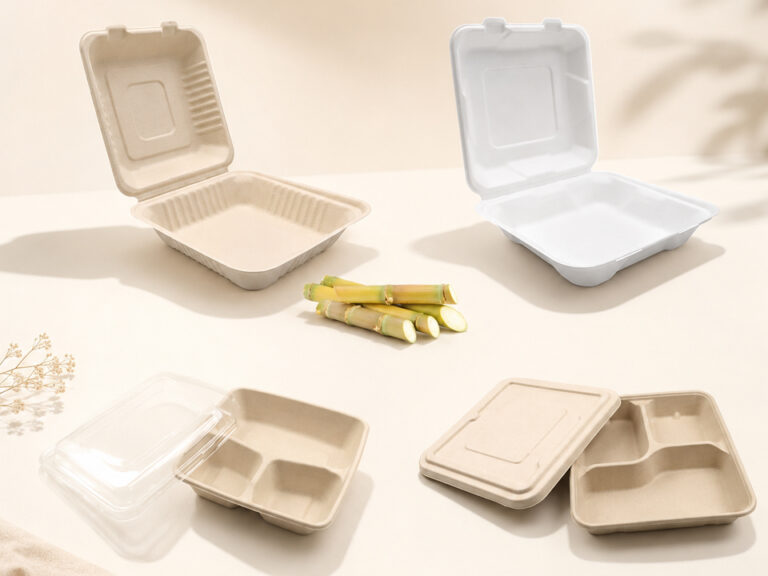
Für eine Bagasse-Klappverpackung mit 3 Fächern, das wird dann noch deutlicher. Drei Fächer bedeuten mehr Formspannung. Die Trennwand muss stabil genug sein. Der Deckel darf nicht in den Lebensmittelbereich einbrechen. Das Scharnier muss nachgeben, ohne zu brechen. Und der Rand – kleines Detail, großes Problem – muss seine Form behalten, wenn die Schale mit Reis, Eiweiß, Soße und vielleicht etwas zu viel Selbstvertrauen seitens des Restaurantpersonals befüllt wird.
Bevor Sie also die Preise vergleichen, sollten Sie folgende Punkte vergleichen:
Produktspezifikationen
Warum das wichtig ist
Nettogewicht pro Stück
Zeigt an, ob der Lieferant die Fasermenge reduziert, um den Preis zu senken
Maßtoleranz
Beeinflusst den Sitz der Deckel, die Stapelbarkeit, die Kartonanzahl und die Beschwerden der Käufer
Hohlraumtiefe
Gibt an, ob das Produkt den Erwartungen der Käufer hinsichtlich der Portionsgröße entspricht
Deckelverschluss
Ein ungenauer Verschluss führt zu Undichtigkeiten, Wärmeverlust und einer unordentlichen Abgabe.
Felgensteifigkeit
Beeinflusst die Handhabung, wenn die Speisen heiß, fettig oder schwer sind
Kartonabmessungen
Steuert CBM, Frachteffizienz und Lagerkosten
Stück pro Karton
Auswirkungen auf die Beladung, den Arbeitsaufwand, den Vertrieb und die Stückkosten
Ein Produkt mit geringerem Gewicht ist nicht automatisch schlecht. Seien wir mal ehrlich.
Manchmal verfügt eine Fabrik über eine bessere Form, eine bessere Zellstoffkontrolle, eine bessere Pressung und einen besseren Kantenschnitt, und das Produkt kann leichter sein, ohne billig zu wirken. Aber wenn der Lieferant diese technischen Details nicht erklären kann – wenn er nur sagt: “Gleiche Qualität, günstigerer Preis” –, dann kaufe ich das nicht ab.
Das ist kein Argument, das sich auf die technischen Daten bezieht.
Das ist Verkaufsgerede.
Normalisieren Sie jedes Angebot, bevor Sie den Taschenrechner zur Hand nehmen
Ein Angebot lautet FOB Ningbo. Ein anderes lautet EXW. Ein drittes lautet CIF Long Beach. Jemand wirft dann noch “DDP möglich” in den Raum, als wäre es ein Zaubertrick.
Genau hier werden Käufer nachlässig.
Die US-Behörde für internationalen Handel (International Trade Administration) Machen Sie sich mit den Incoterms vertraut Dieser Leitfaden ist nützlich, da er Käufer daran erinnert, dass Incoterms nicht nur Versandetiketten sind. Sie legen fest, wer für den Transport, die Ein- oder Ausfuhrzollabfertigung, die Versicherung, den Risikotransfer und die Kostenverantwortung zuständig ist. Die ICCs Incoterms 2020 Die Regeln sorgen zudem für mehr Transparenz bei der Kostenverrechnung im Rahmen der A9/B9-Struktur.
In der Sprache der Beschaffungsfachleute: EXW und FOB sind nicht dasselbe.
Lieferant A: 0,059 USD ab Werk Lieferant B: 0,064 USD FOB Shanghai
Was ist günstiger?
Antworte nicht zu schnell.
Bei EXW müssen Sie möglicherweise die Kosten für die Abholung im Inland, die Exportabwicklung, die Koordination der Zollformalitäten, den Transport zum Terminal sowie den Aufwand tragen, die lokale Logistik über das Werksgelände eines anderen Unternehmens zu koordinieren. FOB umfasst oft mehr Verantwortung auf der Exportseite, was die Abwicklung bei wiederkehrenden Importprogrammen vereinfacht.
Für den Preisvergleich von Geschirr aus Bagasse normiere ich in der Regel zunächst alle Angaben auf FOB-Basis. Anschließend berechne ich die Einstandskosten.
Nicht, weil FOB perfekt ist. Das ist es nicht. Aber es bietet mir eine klarere Ausgangsbasis, bevor Seefracht, Abwicklung am Bestimmungsort, Zölle, Zollabfertigung und Lieferung ins Lager ins Spiel kommen.
Ein einfaches Modell zur Berechnung der Gesamtkosten ist besser als ein hübsches Angebotsblatt
Hier ist ein vereinfachtes Modell. Es ist nicht perfekt, aber nützlich genug, um Probleme aufzudecken.
Zitatfaktor
Lieferant A
Lieferant B
Lieferant C
Stückpreis
0,061 USD
0,058 US-Dollar
0,064 US-Dollar
Handelsbegriff
EXW
FOB Ningbo
FOB Ningbo
Nettogewicht
41 g
37 g
44 g
Kartonmenge
200 Stück
200 Stück
150 Stück
Karton-CBM
0.072
0.078
0.067
Geschätzte Beladung eines 40-Fuß-HQ-Containers
190.000 Stück
175.000 Stück
201.000 Stück
PFAS-Bericht
Nicht produktspezifisch
Alter Bericht
Produktspezifisch
Produktionsdurchlaufzeit
25 Tage
30 Tage
35 Tage
Tatsächliches Käuferrisiko
Kosten im Inland fehlen
Schwache technische Daten
Höherer Stückpreis, übersichtlicheres Angebot
Lieferant B scheint günstig zu sein.
Vielleicht ist es das.
Aber vielleicht ist der Kartonwürfel hässlich, die Beladungsmenge geringer, das Produkt untergewichtig und die PFAS-Unterlagen stammen von einer abgelegenen SKU, an die sich niemand mehr erinnert. Sobald man die Frachtkosten pro Stück in das Modell einbezieht, verliert das “günstige” Angebot schnell seinen Reiz.
Genau diese Art von Fehler habe ich schon bei Großhandelsprogrammen für Geschirr aus Zuckerrohrbagasse beobachtet: Der Käufer spart zwar beim Stückpreis, zahlt dann aber mehr für die Seefracht, weil das Kartondesign überdimensioniert ist. Oder der Lieferant verpackt zwar mehr Stück pro Karton, aber der Umkarton ist zu schwach, sodass die oberste Lage zerdrückt ankommt. Dann streiten sich alle über Fotos.
Nein, danke.
Ein Angebot sollte langweilig sein, weil es vollständig ist. Wenn es spannend wirkt, weil der Preis seltsam niedrig ist, werde ich misstrauisch.
Die PFAS-Unterstützung ist nun im Preis enthalten
Manche Käufer betrachten PFAS-Berichte nach wie vor als reine Formsache.
Das ist veraltet.
Am 28. Februar 2024 gab die FDA bekannt, dass PFAS-haltige Fettschutzmittel von den Herstellern nicht mehr für den Kontakt mit Lebensmitteln auf dem US-Markt verkauft werden. Die Behörde wies zudem darauf hin, dass diese Stoffe in Fast-Food-Verpackungen, Pappbehältern für Speisen zum Mitnehmen, Mikrowellen-Popcorn-Beuteln, Tierfutterbeuteln und ähnlichen Verpackungen verwendet worden waren. Die offizielle Mitteilung finden Sie hier: Die FDA gibt bekannt, dass PFAS, die in Fettschutzmitteln für Lebensmittelverpackungen verwendet werden, in den USA nicht mehr verkauft werden.
Das ist wichtig.
Verpackungen aus Bagasse werden oft für fettige, heiße, feuchte Speisen aus dem Alltag verkauft. Curry. Brathähnchen. Reis mit Soße. Chiliöl. Pasta zum Mitnehmen. Burrito-Bowls. Speisen, die sich über vage Materialangaben nur lachen.
Wenn also ein Anbieter von Bagasse-Verpackungen in einer E-Mail “PFAS-frei” schreibt, bin ich davon nicht gerade begeistert.
Ich bitte um den Bericht.
Compliance-Punkt
Was ist zu prüfen?
PFAS-/Fluor-Screening
Produktname, Material, Prüfverfahren, Datum und Labor
Unterstützung durch die FDA im Bereich Lebensmittelkontakt
Ob der Bericht mit dem Produkt und dem Verwendungszweck übereinstimmt
Angabe zur Kompostierbarkeit
Ob sich die Zertifizierung auf das eigentliche Produkt, die Dicke, die Beschichtung und den Markt bezieht
Dokumente zur Werksprüfung
Ob das System des Lieferanten die Serienfertigung unterstützen kann
Rückverfolgbarkeit von Chargen
Ob der Bericht mit der tatsächlich versendeten Bestellung übereinstimmt
Ein Screenshot eines Zertifikats ist keine Dokumentation. Er dient lediglich der Dekoration.
Meiner Erfahrung nach weisen mangelhafte Dateien meist die gleichen Merkmale auf: vage Bezeichnungen der Muster, fehlende Artikelnummern, veraltete Daten, keine tatsächlichen Produktfotos, keine Materialbeschreibung oder eine Angabe wie “Behälter aus Papiermasse”, obwohl man eigentlich eine spezielle Clamshell-Verpackung für fettige Speisen zum Mitnehmen kauft.
Ist das nah genug?
Nein.
Nicht, wenn Sie an einen seriösen Importeur, Großhändler, eine Restaurantkette oder einen Einzelhändler verkaufen, der über ein Qualitätssicherungsteam verfügt, das weiß, welche Fragen zu stellen sind.
Lieferzeit: Die Zahl, die Lieferanten nennen, bevor die Realität dazwischenkommt
“Lieferzeit: 25 Tage.”
Schön. Woher denn?
Anzahlungstermin? Freigabe des Druckentwurfs? Freigabe des Musters? Bestätigung der Kartonage? Buchung des Produktionstermins? Bestehen der Endkontrolle? Restzahlung? Ladefrist?
Das ist von Bedeutung, weil die Bagasseproduktion mehr Schritte umfasst, als die Abnehmer gerne zugeben. Zellstoffaufbereitung, Formgebung, Beschnitt, Trocknung, Verpackung, Feuchtigkeitskontrolle, Kartonversorgung, Lagerbereitstellung. Kommt dann noch der Druck von Eigenmarken oder individuelle Kartonkennzeichnungen hinzu, sieht der Zeitplan schon nicht mehr ganz so rosig aus.
Ich gehe dabei am liebsten folgendermaßen vor:
Bühne
Praktisches Planungssortiment
Versand bestehender Muster
3–7 Tage
Neues Muster oder geringfügige Anpassung
7–15 Tage
Druckvorlage / Kartonbestätigung
3–7 Tage
Massenproduktion nach der Abscheidung
25–45 Tage
Prüfung vor dem Versand
1–3 Tage
Nachbearbeitungspuffer bei nicht bestandener Prüfung
3–10 Tage
Schiffsbuchung und Anmeldefrist für den Hafen
Je nach Jahreszeit unterschiedlich
Seetransport
Streckenabhängig
Und der Versand kann deinen Zeitplan völlig durcheinanderbringen.
Reuters berichtete am 31. Mai 2024, dass der Spotpreis für einen 40-Fuß-Container von China nach Nordeuropa 4.615 US-Dollar erreichte – fast das 3,5-Fache des Wertes vom 1. Mai –, während der Preis für die Strecke von China an die US- Ostküste der USA 6.061 US-Dollar gegenüber 2.772 US-Dollar am 1. Mai. Das ist keine geringfügige Abweichung. Dies kann Ihre Gesamtkosten nach der Genehmigung der Bestellung noch einmal erheblich verändern. Quelle: Reuters über Umleitungen im Roten Meer und Seefrachtraten
Und der Preis war nicht das einzige Problem. Reuters berichtete zudem, dass Maersk davor gewarnt habe, dass die Beeinträchtigungen im Roten Meer bis in die zweite Hälfte des Jahres 2024 andauern könnten, und die Kunden aufgefordert habe, längere Transportzeiten in ihre Planung einzukalkulieren. Quelle: Reuters über Maersks Warnung vor Beeinträchtigungen im Roten Meer
Wenn ein Lieferant also “30 Tage” sagt, schreiben Sie das nicht einfach nur auf.
Schneid es auf.
Fragen Sie nach: Produktionstage oder Tage bis zur Versandbereitschaft? Ist die Qualitätsprüfung darin enthalten? Sind Nachbesserungen darin enthalten? Ist die Planung für die Saison bereits realistisch? Erstellt die Fabrik das Angebot vor oder nach der Musterfreigabe?
Eine kurze Lieferzeit kann durchaus realistisch sein. Eine vage angegebene kurze Lieferzeit ist jedoch meist nur ein Lockangebot.
Probengebühren und Untersuchungskosten sind nicht der Feind
Käufer beschweren sich gerne über Mustergebühren.
Ich nicht.
Die Kosten für ein Muster, den Versand oder eine Prüfung durch Dritte sind verschwindend gering im Vergleich zu den Folgen, wenn ein falsches Produkt freigegeben wird und das Problem mit dem Scharnier erst entdeckt wird, nachdem bereits 150.000 Stück angeliefert wurden. Dann erscheint das günstige Muster plötzlich sehr teuer.
Befüllen. Dämpfen. Stapeln. Zweimal öffnen. Soße hineingeben. Ruhen lassen. An einer Ecke anheben. Auf den Rand achten. Auf das Scharnier achten. Auf den Boden achten.
Klingt ganz einfach.
Die meisten Fehler sind grundlegender Natur.
Eine ordnungsgemäße Inspektion vor dem Versand sollte mehr umfassen als nur das Zählen der Kartons. Ich möchte Angaben zu Abmessungen, optischen Mängeln, Anzeichen von Feuchtigkeit, Verschluss der Kartons, Kartonbeschriftung, Verpackungsart, Bruttogewicht, stichprobenartiges Öffnen von Kartons und im Idealfall eine Fallprüfung der Kartons, falls die Transportroute holprig ist.
AQL ist nicht gerade glamourös. Aber es erspart Streit.
Wenn der Lieferant sich durch eine Überprüfung beleidigt zeigt, sagt mir das etwas. Nicht immer bedeutet das Unehrlichkeit – manchmal sind es einfach nur mangelhafte Abläufe –, aber so oder so ist es ein Warnsignal.
Das Verhalten des Lieferanten ist Teil des Angebots
Hier ist eine Tatsache aus dem Beschaffungswesen, die niemand gerne in die Angebotsanfrage-Vorlage aufnimmt: Die Art und Weise, wie ein Lieferant Fragen beantwortet, ist Teil des Produkts.
Ein starker Lieferant kann Gewichtsabweichungen ohne Panik erklären. Er kennt das CBM seiner Kartons. Er braucht keine drei Tage, um Ihnen mitzuteilen, ob der PFAS-Bericht zur jeweiligen SKU passt. Er kann FOB von CIF unterscheiden, ohne dabei einen Nebelvorhang aufzuziehen. Er korrigiert Fehler schnell.
Ein schwacher Lieferant schreibt: “Lieber Freund, mach dir keine Sorgen.”
Ich mache mir Sorgen.
Denn wenn die Angebotsphase chaotisch verläuft, wird die Produktion nicht wie von Zauberhand ordentlich ablaufen. Die Angebotsphase ist die Vorschau. Verspätete Antworten, unklare Unterlagen, sich ändernde Kartonspezifikationen, uneinheitliche Produktbezeichnungen und Antworten wie “wie bisher” sind Frühwarnsignale.
Nicht immer tödlich.
Aber sie werden in meiner Wertung erfasst.
Die Formel zum Vergleich von Angeboten, der ich tatsächlich vertraue
Ich wende die Methode „Der niedrigste Preis gewinnt“ nicht an.
Ich benutze das hier:
Tatsächlicher Angebotswert = Produktleistung + Compliance-Stärke + Einstandskosten + Zuverlässigkeit der Lieferzeiten + Genauigkeit der Kommunikation
Eine unübersichtliche Formel. Die Realität ist besser.
Ein Lieferant mit einem etwas höheren Stückpreis, aber besserer Kartoneffizienz, aktueller PFAS-Unterstützung, stabiler Verpackung, ehrlichen Lieferzeiten und strenger Dokumentenkontrolle kann unter Berücksichtigung von Frachtkosten, Prüfungen, aussortierten Kartons, Kundenbeschwerden und Verwaltungsaufwand letztendlich günstiger sein.
Hier ist das Bewertungsmodell, das ich für einen fundierten Vergleich von Anbietern von Bagasse-Geschirr verwenden würde.
Punktbereich
Gewicht
Was ist zu überprüfen?
Übereinstimmung der Produktspezifikationen
25%
Größe, Gewicht in Gramm, Funktion, Toleranz, Passgenauigkeit des Deckels, Stapelbarkeit
Unterstützung durch die FDA, PFAS-Bericht, Angabe zur Kompostierbarkeit, Werksunterlagen
Liefertermintreue
15%
Produktionszeitfenster, Freigabe der Muster, Prüfpuffer, Versandtermin
Verhalten der Lieferanten
15%
Qualität der Antworten, Genauigkeit der Dokumente, Korrekturgeschwindigkeit, Transparenz der Angebote
Das ist keine theoretische Frage.
So vermeidest du es, dir Ärger zum Schnäppchenpreis einzuhandeln.
Warnsignale, die ich niemals ignorieren würde
“Genau wie auf deinem Foto.”
Nein. Ein Bild ist keine Spezifikation.
“Von der FDA zugelassen.”
Zeigen Sie die Halterung für den Kontakt mit Lebensmitteln.
“PFAS-frei, kein Problem.”
Zeigen Sie den Prüfbericht vor.
“Kartongröße später.”
Dann stimmt die Frachtkalkulation nicht.
“Lieferzeit 20 Tage.”
Ab welchem Stichtag?
“Nur heute zum besten Preis.”
Das ist keine Beschaffung. Das ist Druck wie auf dem Straßenmarkt, getarnt als B2B-Vertrieb.
Der beste Anbieter von Geschirr aus Bagasse muss sich nicht hinter vagen Formulierungen verstecken. Er kann Ihnen Größe, Gewicht, Toleranz, Kartonvolumen, Lademenge, Konformitätsunterlagen und Produktionsplan mitteilen, ohne so zu tun, als sei jedes Detail ein Staatsgeheimnis.
Das ist genau der Richtige für dich.
Vielleicht nicht das günstigste. Meistens auch nicht das lauteste.
Aber derjenige, der das liefern kann, was er angeboten hat.
Häufig gestellte Fragen
Was ist ein Angebot für Geschirr aus Bagasse?
Ein Angebot für Bagasse-Geschirr ist das schriftliche Angebot des Lieferanten für geformte Verpackungen aus Zuckerrohrfasern, doch die aussagekräftige Version enthält mehr als nur einen Stückpreis: Artikelnummer, Gewicht in Gramm, Kartonverpackung, Kubikmeter, Lademenge, Handelsbedingungen, Zahlungsbedingungen, Konformitätsunterlagen, Musterkosten und Produktionszeitplan.
Die vereinfachte Version ist leicht zu erkennen. Dort steht: “9×9 Clamshell, bester Preis, 30 Tage.” Für ein erstes Gespräch mag das vielleicht reichen. Für einen Auftrag reicht es jedoch nicht aus. Ein echter Käufer erwartet, dass das Angebot wie eine funktionierende Kostenaufstellung aussieht und nicht wie ein Verkaufsschreiben.
Wie vergleicht man Angebote von Bagasse-Lieferanten?
Vergleichen Sie die Angebote der Bagasse-Lieferanten, indem Sie jedes Angebot auf dieselbe Basis bringen: gleiche Artikelnummer, gleiches Gewicht in Gramm, gleiches Kartonvolumen, gleicher Incoterm, gleiche Anforderungen an Prüfberichte und dasselbe Auslöse-Datum für den Versand. Andernfalls vergleichen Sie nicht die Lieferanten, sondern nur die Informationen, die die jeweilige Fabrik preisgeben wollte.
Da wäre ich vorsichtig. Ein niedrigerer Stückpreis in US-Dollar kann zunächst hervorragend aussehen – bis sich herausstellt, dass der Karton unansehnlich ist, die Beladung des 40HQ-Containers schlechter verläuft oder sich die PFAS-Datei als alter Bericht zu einem anderen Produkt aus Formfaser entpuppt. So wird “günstig” plötzlich teuer.
Warum spielt das Gewicht in Gramm eine Rolle beim Preis von Geschirr aus Bagasse?
Das Grammgewicht spielt eine Rolle, da der Preis für Verpackungen aus Formfaser nicht allein von der Form abhängt, sondern auch vom Faserverbrauch, dem Formdruck, dem Trocknungsverhalten, der Steifigkeit und der Belastbarkeit, nachdem heiße Speisen eingefüllt wurden. Zwei 9-Zoll-Artikel können zwar gleich aussehen, sich in ihrer Leistungsfähigkeit jedoch erheblich unterscheiden.
Ich habe schon erlebt, dass leichte Produkte zwar optisch den Test bestanden haben, aber beim Haptiktest innerhalb von drei Sekunden durchgefallen sind. Weicher Rand. Locker sitzender Deckel. Nachgiebiger Boden. Der Einkäufer hat einen Bruchteil eines Cent gespart und ein Produkt gekauft, das das Restaurantpersonal nur ungern verwenden wird.
Welche Zertifizierungen sollte ein Käufer von einem Anbieter von Bagasse-Verpackungen verlangen?
Ein Käufer sollte Unterlagen anfordern, die sich konkret auf den zu erwerbenden Bagasse-Artikel beziehen, und nicht nur ein allgemeines Werkszertifikat: Nachweis der Lebensmittelechtheit, PFAS- oder Fluor-Screening, Nachweis der Kompostierbarkeit, sofern angegeben, sowie alle vom Kunden geforderten Unterlagen zum Werkssystem. Der Bericht muss mit dem Produkt, dem Material, dem Anwendungsfall und dem Zielmarkt übereinstimmen.
Hier ist meine klare Grenze: Wenn der Lieferant das Dokument nicht mit der tatsächlichen Clamshell-Verpackung, der Schüssel, dem Teller oder dem Tablett im Angebot in Verbindung bringen kann, betrachten Sie es nicht als Nachweis. Betrachten Sie es als reine Dekoration. Schönes PDF. Schwacher Beleg.
Wie lang ist die realistische Lieferzeit für Großhandelsbestellungen von Geschirr aus Zuckerrohrbagasse?
Unter realistischer Vorlaufzeit versteht man den gesamten Prozess vom genehmigten Muster und der Anzahlung bis zur verladebereiten Ware, einschließlich der Überprüfung der Druckvorlagen, der Zellstoffproduktion, des Zuschneidens, der Verpackung, der Qualitätskontrolle, der Pufferzeit für Nachbesserungen, der Schiffsbuchung und der Annahmeschlusszeit im Hafen. Die bloße Angabe “25 Tage” gibt nur einen Teil des Gesamtbildes wieder.
Fragen Sie nach, womit die Frist beginnt. Mit der Anzahlung? Der Freigabe des Musters? Der Freigabe des Karton-Designs? Der Bestellung der Rohstoffe? Ich habe schon erlebt, dass Lieferanten Produktionszeiten angeben, als gäbe es keine Transportkapazitäten, keine Prüfergebnisse und keine Fristen für Restzahlungen. Doch die gibt es. Immer.
Ihre nächsten Schritte
Fragen Sie den nächsten Anbieter von Bagasse-Geschirr nicht nach dem “besten Preis”.”
Fragen Sie nach einem Angebot, das einer Prüfung durch den Käufer standhält.
Senden Sie jedem Lieferanten das gleiche Datenblatt: Größe, Grammgewicht, Toleranz, Kartonabmessungen, CBM, Beladung von 20GP/40GP/40HQ, Incoterms, Zahlungsbedingungen, Musterkosten, PFAS-Bericht, Nachweise zur Lebensmitteltauglichkeit, Prüfplan und Auslösewert für die Vorlaufzeit.
Kein Auslösezeitpunkt, keine echte Vorlaufzeit.
Ohne Kartonwürfel keine echte Frachtberechnung.
Ohne einen auf das Produkt abgestimmten Bericht gibt es keinen echten Compliance-Nachweis.
Bewerten Sie das Angebot dann wie ein Käufer und nicht wie jemand, der in einer Tabelle nach dem niedrigsten Preis sucht. Der “günstige” Anbieter könnte trotzdem den Zuschlag erhalten. Gut. Lassen Sie ihn nach der Kalkulation gewinnen, nicht davor.
Denn bei der Beschaffung von Bagasse ist der erste Preis nur der Einstieg.